How many women won the Nobel Prize?

The Nobel Prizes in Chemistry, Physics, Physiology/Medicine, Literature, and Economic Science are awarded annually in Stockholm by the Royal Swedish Academy of Science. The more famous Nobel Peace Prize is awarded annually in Oslo, Norway on December 10, the anniversary of Nobel’s death. The King and Queen of Norway attend.
Four women have earned the Nobel Prize in Chemistry. The best know is Maria Curie, in 1911, for the separation of pure radium. Her daughter won the Chemistry Prize in 1935 for the discovery of artificial radioactivity.

Two women won the Nobel Prize in Physics. Again, it was Maria Curie in 1903 for the discovery of radioactivity. The other was Maria Goeppert Mayer in 1963.

Ten women earned the Nobel Prize in the field of Physiology and Medicine. Best known would be Rosalyn Yalow (1977) for work in radioisotope tracing and Barbara McClintock (1983) for her efforts in genetics.

Pearl Buck is one of twelve women awarded the Nobel Prize in Literature. Her 1938 Nobel Prize cited her “rich and truly epic description of peasant life in China.” Her best know book is The Good Earth, which also won the Pulitzer Prize.

The first and only woman to win the Nobel Prize in Economic Sciences is Elinor Ostrom (2009) “for her analysis of how common property could be managed by groups using it.”

Fifteen women have won the Nobel Peace Prize. The most recognized would be Jane Addams (1931), founder of Hull House in Chicago, and Mother Teresa (1979), a native Albanian nun who found missions in India, starting in Calcutta.

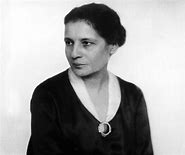
There is one woman that history now recognizes really got cheated out of a Nobel Prize.  That would be Lise Meitner. Born in Austria in 1878, Meitner was half of the team that discovered nuclear fission.  Meitner and Otto Hahn worked together at the Kaiser Wilhelm Institute in Berlin, Germany.

When Hitler came to power in 1933, Lise Meitner, born of Jewish parents, was protected by her Austrian citizenship. But after the Anschluss, the annexation of Austria into the Third Reich in March 1938, her situation became desperate. She made a daring undercover escape to the Netherlands, then traveled to neutral Sweden.

Lise Meitner corresponded with Otto Hahn and the two met in Copenhagen in November, 1938. They planned to carry out a new round of experiments on the fission of uranium, but Meitner could not go back to Nazi Germany, so the experiment was done by Otto Hahn and Fritz Strassmann.

It was Lise Meitner and her nephew Otto Frisch, who correctly interpreted the result of the experiment that detected the element barium after bombarding uranium with neutrons. Now the whole world knew that the uranium atom could be split, with a tremendous release of power and that several neutrons were also released. A chain reaction and the atomic bomb were possible.

Otto Hahn was awarded the Nobel Prize in 1944. Missing from the ceremony was Lise Meitner. In 1964, The Physics Today magazine concluded that “personal negative opinions lead to the exclusion of a deserving scientist from the Nobel Prize.” Element 109, “Meitnerium”, is named in her honor.


Posted in Uncategorized | Leave a comment

Journey from Scheckel farm to La Crosse in 1950

Continuing our journey from the Scheckel farm near Seneca to La Crosse, a trip we took twice a year when I was a boy, in the early 1950s.

There was a small plot of land near intersection of Highways 82 and 35 squeezed between the roadway and a steep bluff. It’s just where you make the turn onto the bridge that takes you to Lansing, Iowa. Every summer the Winnebago (now Ho Chunk) Indians built a wigwam there. Dad explained that the Indians built these wigwams in the summer when they came north to fish, and they went back south in the winter.

In De Soto, the Catholic Order of Brothers of Pius X had a house. One time on the way to La Crosse, we drove by and saw two Brothers hoeing in the garden. The Order was set up by Bishop Treacy of the La Crosse Diocese.

Young men who might later aspire to the priesthood went there to pray and farm. Some of the Brothers came to St. Patrick’s in Seneca to help with religious instruction. I thought at the time that they really looked sharp. They wore a white outfit with wide green bands over both shoulders. We heard that the Brothers of Pius X chanted the complete Divine Office and were in prayer four hours per day.


Posted in Uncategorized | Leave a comment

Thomas Jefferson Inventions

The third president of the United States was a busy and creative genius. Jefferson was an esteemed politician, statesman, farmer, writer, educator, and architect. He loved making things. “Nature intended me for the tranquil pursuits of science, by rendering them my supreme delight”, he wrote.

A steward of the soil, Jefferson made a huge improvement on the moldboard of the plow. The wooden plowshares of the time only dug down two or three inches into the soil. His improvement of the Dutch moldboard, based on a mathematical design, could dig down six  inches. The plow also turned the soil over better which helped prevent erosion. He never patented the improvements he made to the plow. Later steel plows were based on Jefferson’s design.

While serving as George Washington’s Secretary of State from 1790 to 1793, Jefferson needed a means of secretly communicating with his colleagues. Correspondence was frequently intercepted by foreign governments and read.  Jefferson devised a wheel cipher that had 26 cylindrical wooden pieces, that looks like large Oreo cookies, and threaded onto an iron rod. The letters of the alphabet were written in random order on the edge of each wheel. Turning these wheels, words could be scrambled and unscrambled. Variations of this code device were used by governments all the way up to WWII.

Jefferson devised a rotating stand that held 5 books. The book rests could be folded to make a box that would attach to a base. This ingenious book stand has been copied by libraries worldwide.

Jefferson’s Great Clock can be seen at Monticello, Virginia. It’s powered by cannonballs that were left over from the Revolutionary War. The cannonball weights hang from both sides of the doorway. The days of the week can be read from markings on the wall. The great clock face can be seen from both inside and outside the house.

To service the Great Clock, Jefferson devised a folding ladder that could also be used to prune trees. This kind of ladder is still used in many libraries to reach up to high bookshelves.

John Isaac Hawkins made a “polygraph” machine consisting of two connecting pens that moved synchronously to produce an exact and immediate copy of anything he wrote. Jefferson acquired one of the machines in 1804 and used it up to his death in 1826. He had one installed in the White House and one at his Monticello home. Jefferson made several improvements on the machine. (The term “polygraph” is used today to mean lie detector. Hawkins and Jefferson machines should really be called pantographs).

The gifted visionary made a mechanical dumb waiter which permitted servants to send wine bottles up from the cellar.

Jefferson produced a sundial that was shaped like a globe. The original was lost but reproductions are based on his 1816 letter to architect Benjamin Henry Latrobe.

In 1804, Jefferson had glass doors installed between the hall and the parlor in his home. A mechanism, with two wheels joined by a chain in a figure eight arrangement, and hidden under the floor, allowed both doors to move when one was opened or closed.

Thomas Jefferson also invented the swivel chair, a pedometer, and a hemp-treating machine.


Posted in Uncategorized | Leave a comment

Going to La Crosse

Several times a year our family would go to La Crosse. That was a big adventure for me when I was a little kid. We would pile into the car, head out past the Oak Grove Ridge school, and drop down into the Kettle Hollow valley. When we hit State Highway 35, known as the Great River Road, we could view the wide Mississippi River. Turn right, and the first town we hit was Ferryville.

Ferryville was perched between the Mississippi River and the bluff. Main Street seemed to be its the only street, which was Highway 35. A good portion of the “main drag” afforded a spectacular view of the river looking toward the west.

A mile north of Ferryville was a quarter mile of straight highway. Rush Creek came out of the hills of northwestern Crawford County and ran alongside Highway 35. Rush Creek turned sharply right, passed under a highway bridge, and emptied into the Mississippi River.

Several weeks earlier, a car went off the highway, hit a tree, and landed upside down in the water. Two men drowned. Dad heard about it on the radio news. He showed us where the bark was rubbed off the tree. We looked for the car, but it had been pulled out of Rush Creek some days earlier.

A few miles north of Ferryville was the Highway 82 bridge that crossed from Wisconsin to Iowa. Crawford County was on the eastern side of the bridge, and Lansing, Iowa, was on the western side. It was the only bridge that crossed the Mississippi River between La Crosse and Prairie du Chien.

There was no bridge there when I was younger. Dad said that the eastern part of the bridge had been knocked out by an ice floe in 1945. The western bridge was the high, steel cantilevered Blackhawk Bridge that allowed river traffic to pass beneath it.


Posted in Uncategorized | Leave a comment

Glucose in Our Blood

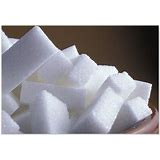
Glucose is a type of sugar that is in the blood. Glucose comes from carbohydrate foods and is the main source of energy used by the body. Insulin, a hormone produced by the pancreas, helps the body’s cells use the glucose.

When we eat, the blood glucose level goes up. This increase signals the pancreas to release insulin so that the blood glucose levels do not get too high. Levels that are too high (hyperglycemia) over time cause damage to kidneys, blood vessels, eyes, and the cardiovascular system.

Blood glucose tests check for diabetes. The most common is the eight-hour fasting blood sugar (FBS). A reading between 70 and 100 is good. (The units are mg/dl, which is milligrams per deciliter). Above 100 is reason for concern.

The other end of the spectrum is hypoglycemia, or not enough sugar. Dangers include seizures, unconsciousness, and brain damage.

Many people avoid too much sugar for a good reason. Eating too much sugar is a sure way to gain weight. But there are several other sound reasons to keep blood sugar levels in check.

Too much sugar from too many sweets ages the body in several ways. Too much sugar means a shorter life span. Too much sugar speeds up the aging process and makes the skin look older. Excessive sugar is not good for healthy teeth.

Researchers recently found a link between blood sugar and Alzheimer’s disease. High blood sugar levels lead to a decrease of brain activity in the hippocampus area of the brain. A decrease in brain activity can make Alzheimer’s worst.

So, in short, the answer is yes!  Too much sugar in the blood is bad for you, and yes, too much sugar increases aging. Sometimes it seems that life is just not fair. Many is the person that have asked himself/herself, “Why does something that tastes sooo good, like fudge, be sooo  bad for you”.  Perhaps it comes down to moderation. One piece of fudge, OK. Two pieces, too much.

Sources: WebMD  and a local doctor.


Posted in Uncategorized | Leave a comment

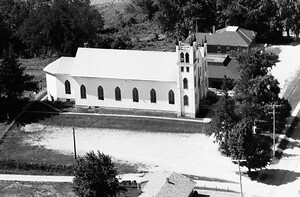
St. Patrick’s Church in Seneca

For six days of the week the Scheckel family worked the Oak Grove farm outside of Seneca in the heart of Crawford County. But Sundays were reserved for church and rest. Except for doing the farm chores, we never worked on Sunday.

St. Patrick’s Church was dedicated on October 25, 1874. When we moved to the Seneca farm in 1945, Father William Mooney was the pastor and said to be a very reverent priest. I recall talk of building a new church and Catholic school in the late 1940s. The sides of the church were bulging out, and it was in danger of collapsing.

The bulging wall problem was solved by Peter Nelson Construction Company from La Crosse. They came and used big turnbuckles to pull the sides back together. They also put in a new furnace, a basement meeting room, and new toilets.

A big statue of St. Patrick was inside the church. Later it was moved outside, where it remains today. The main altar was large and extremely ornate. There were two side altars: the Blessed Virgin Mary on the left side and St. Joseph on the right. Fourteen Stations of the Cross, seven on each side, were dioramas depicting the crucifixion of Jesus. Stained-glass windows adorned the sides of the church, including the altar or sanctuary area. The donors’ names for the windows were inscribed below the stained glass.

The entrance to St. Patrick’s Church had massive doors that closed toward each other. A left turn in the vestibule led to the steps to the choir. The rope that rang the church bell hung near the steps.

Altar boys had the great thrill of getting to ring the church bell. It took a minimum of two boys to do the job. Phillip and I would jump as high as we could to grab the rope and ride that rope down. The weight of sixth-grade boy and a fifth-grade boy was just enough to get the massive bell ringing.


Posted in Uncategorized | Leave a comment

Eat Food, Gain Weight?

If you eat a pound of food, do you gain a pound of weight?

Yes and No. Yes, if a 180-pound person ate one pound of “Death By Cheesecake” or “Better than Sex” chocolate, that person would weigh 181 pounds after ingesting the last morsel.

Same thing for water.  A pint of water weighs about one pound. If you drank a pint of water, you would weigh a pound more.

No, that one pound of cheesecake or chocolate does not mean a person gains one pound of body weight over time. And a few hours after drinking that pound of water, you would weigh about the same as you did before drinking the water.

It’s all about the calories, not the weight of the food. Calories are the amount of energy in food. A pound of fat is about 3,500 calories. For every 3,500 calories consumed beyond what the body needs for basic functions, you gain one pound of weight.

Some foods have more calories than others. Foods high in fat and sugar are also high in calories. A pound of chocolate pie has more calories than a pound of cereal.   If you eat more calories than the body uses, the extra calories are stored as fat.

In addition, foods high in fat usually are high in saturated and trans fats and increase LDL cholesterol, the “bad” cholesterol, and also increase risk of heart disease.

Another downer of high fat food along with too much food, is type 2 diabetes, or adult onset diabetes. More and more teens and young adults are being diagnosed with type 2 diabetes these days because of lack of activity and carrying excess weight. It is running rampant in our country and is starting to take a toll on our health care system.

The average adult uses or burns 2,000 to 2,500 calories a day. If a person takes in 3,000 calories in a day, he or she could “burn off” that excess 500 calories by being active or exercise to maintain their weight.

Weight loss people are always preaching two concepts about keeping excess weight off. Their advice has not changed in decades. “Eat less, and exercise more”. It is a simple formula. Easy to say, but not so easy to do. But in the end (no pun intended), it’s the only tried and true method that works long term.

There seems to be no magic bullet when it comes to nutrition and weight control. There are lots of commercials and infomercials on television that sell vitamins and diet drugs. A sizable portion of magazine advertising is aimed at weight control. Making lasting changes in eating and exercise habits is the way to lose weight and keep it off. It isn’t about deprivation, it’s about moderation.

Perhaps it comes down to Aristotle’s Golden Mean: “Everything in moderation, nothing in excess”.

Source:  www.mayoclinic.com and Joan Kortbein, Tomah Memorial Hospital Registered Dietitian


Posted in Uncategorized | Leave a comment

Electric Fence on the Scheckel Farm 1954

We had an electric fence unit that used a six-volt dry cell battery. It put out high-voltage pulses to discourage cattle from crossing the fence.

We sometimes took a blade of grass and lay it on the fence wire, enough to get a nice jolt. The fluid in the stem allowed it to be a conductor. It gave us a healthy respect for electricity.

The Kozelka boys, Jimmie and Gary, did not have an electric fence unit on their farm. When they came to visit one Saturday in late summer, they just had to test it out. One of them urinated on our electric fence, pointed a stream right at the wire. The boy got a jolt and tumbled backward onto his butt. His brother, along with my brothers Phillip and Bob, doubled over in howls of laughter.


Posted in Uncategorized | Leave a comment

Mending fences

Tales from the Seneca farm circa 1953. This time of the year, mid-August, we were done with first crop hay, shocking and threshing oats, and well into second crop hay. Mending fences was a never-ending job. We seemed to have more fences than we needed, but that was because we didn’t have a silo and kept our cows in the pasture. Our cows were fed hay, cornstalks, and ground corn.

We cut our own fence posts at the same time as we cut large logs for lumber and small stuff for our wood-burning furnace. We always had a supply of fence posts stored by the granary. Most were simply large dowel rods, while others were sharpened on one end for driving into the ground with a post mall.

The buzz saw was used for putting a point on one end of the smaller posts. The driven posts were used in wooded and rocky areas.

Many is the day when we would hitch the two-wheeled trailer to the Massey Harris ’44, and load up fence posts, fence wire, post hole digger, ax, post maul, wood splitter, nail box and nails, hammers, wire stretcher, tamper, and crow bar.

Off we would go to fix a fence. Either me or my two brothers, Phillip or Bob, would remove the old fence post. Another would be digging a new hole for a replacement post. The third one would put in a new post, setting it down in the freshly dug hole, holding it upright while placing dirt evenly around the post, and stomping it down with a wooden tamper. We used staples to attach the fencing, both woven wire and barb wire to the new posts. We sure went through a lot of fence staples!

We “drove posts,” pounding the sharpened posts into the Wisconsin soil with a 12-pound post maul. Some of our border fences went through woods. In the springtime, we had to “walk the fences.” We couldn’t drive the tractor and trailer with all the tools and fence posts up the steep hill in the woods. We carried our hammer, ax, staple box, a roll of barbed wire, and that blasted 12-pound post maul into the woods. If we needed a fence post, we cut one from a small nearby tree.

With the end of the sapling sitting on the ground, the ax was used to give the wood a sharpened point. Dad or Phillip would drive the post into the ground. The barbed wire was stapled to the new post.


Posted in Uncategorized | Leave a comment

How does a corn seed know which way to grow? 

 A plant response that involves a specific movement  is  called tropism from the Greek word  “to turn”. And any factor that brings forth such a response is called a stimulus.

Tests done way back in 1806 confirmed that gravity was the primary cause of plants growing in the correct direction. The tests showed that moisture was not the cause.  Plant shoots kept in the dark still grew up and roots grew down, so light was not the primary reason.

How did they prove that gravity was the culprit?  A Dr. Knight put seedlings in a rotating wheel, so they had an artificial gravity-like pull of centrifugal force.  The plant roots grew downward at a 45 degree angle. The 45 degree angle was the result of both centrifugal force and gravity. The tropism responsible for plants growing in the correct direction is geotropism, a response to gravity. NASA uses the term gravitropism.

Thigmotropism is a response to touch. It accounts for the twining or wrapping of a vine around an object and the climbing plants and ivy you see up the sides of buildings and old windmills out in the country.

Cells that are touched produce auxin, a plant hormone, and transport it to untouched cells. The untouched cells on the outside of a bend grow faster than the touched or contact cells. This causes the tendril or vine to curve toward the side of contact. It’s almost a miracle how that happens!

The Scheckel boys had to go through certain areas of the corn fields on that Seneca farm and pull the Morning Glories that wrapped around a corn stalk. We didn’t know at the time that we were at war with thigmotropism.

Another tropism is phototropism, where light is the stimulus.  Some sunflowers exhibit this phenomena. The sunflower plant head bends toward a light source, the sun, allowing more light to reach more cells to produce photosynthesis. That same plant growth hormone, auxin, moves to the dark side of the stem. The dark side grows longer causing the plant head to bend toward the light.


Posted in Uncategorized | Leave a comment