Continuing Down Crawford County

Continuing Down Crawford County 

We’re driving south on Highway 27, across the top of Crawford County in southwest Wisconsin. In our previous blogs, we passed through Rising Sun, past Fairview, Boma Ridge,  the 1926 Clara Olson murder,  Utica Lutheran Church, Mt. Sterling, and heading down to Seneca.

I have many memories of these roads, farms, and farm people. Quammes, Bolands, Olsons, , Lynchs, Andersons, and Vedviks along this four mile stretch of blacktop. The large Charlie Boland family was a half mile south of Mt. Sterling. My sister married one of the Bolands, Joe,  on his return from Korea where he was a medic in a MASH unit.Corn shocks

I went in the military with Bill Boland, who now lives on the Boland farm. A few farms away is the Dan Boland place. They have a cement culvert under the road that cows could pass through on their way to pasture.  I was amazed that people could build a cow tunnel right underneath a highway.

Around a sharp turn in Highway 27 is the Evergreen Cemetery. Standing in the middle of this cemetery affords a commanding view of the countryside, all farms, quiet, peaceful, not a bad place if one must pick a final resting place!

Lucille Fradette and her son Francis Fradette are here. The Bud Fradette family lived back on Oak Grove Ridge, and the Fradette kids attended Oak Grove School with us Scheckels. Most every family has some problems, but this family had some severe difficulties. For some years, the Fradette family lived “up on the Kuntz” farm and my brothers, Phillip, Bob, and I would be invited to watch The NBC Disney series of Davy Crockett at 6 PM on Sunday nights.

The Scheckels had no television.

Roger “Blackie” and Ronald “Whitie” Messling are interred in Evergreen Cemetery. They were in my class at Seneca High School. I got into a fist fight with “Blackie” at noontime over the possession of a volleyball in the gym. Not too proud of this episode.

Floyd and Della Sutton are buried here. They lived back on Oak Grove Ridge, good people and good farmers. Floyd would bring his Minneapolis Moline tractor with mounted corn picker over to the Scheckel farm and bring in the corn harvest on the acreage that we did not cut and shock with a corn binder.

On our next blog, we stay right on Highway 27 and come to Stony Point school.


Posted in Uncategorized | Leave a comment

Continuing Journey in Crawford County

Continuing Journey in Crawford County

We continue our drive down Highway 27, which runs down the spine of Crawford County, from Sparta, to Viroqua, and down to Prairie du Chien.  I grew up in the heart of Crawford County on the Scheckel farm 2 miles northwest of Seneca.

On our journey, we passed through Rising Sun, Fairview, and Utica Lutheran Church. We come to the spot where our neighbor, Tom McAreavy, rolled his car over in 1956 and was killed. Dad pointed out the spot to us boys, Phillip, Bob, and me on our way to get a haircut at Hanson’s Barber Shop in Rising Sun. I was 14 years old at the time, and reminder seeing the high bank on the left side of the Hwy 27 that his car ran up and rolled over and over. Rose Finley alerted the priest at St. Patrick’s Catholic Church and he went to the scene of the accident to administer the Last Rites.

Seems that every time I venture past that embankment, about a mile north of Mt. Sterling, I think of that tall lanky Irish farmer who lived off ShortCut Road. He was born in 1885 down in Delaware County, Iowa about half way between Dubuque and Waterloo. His parents were Irish immigrants, he married Margaret Kennedy, and they had 5 children. But the mother, Margaret,  died in 1925, leaving husband Tom with  5 small children.

Tom, and the two girls, Marie and Marguerite moved to the Crawford County area, and the three boys were left in Iowa to be raised by an aunt, Ann Kennedy. That splitting of families, due to a death, was quite common at the time.

One of Tom McAreavy’s daughters, Marie, married William Mahan and they had 17 children. That Mahan family lived back on Oak Grove Ridge for a time, and later, his brother Newell Mahan bought the farm.

Tom McAreavy remarried in 1930 to another Irish immigrant’s daughter, Anna Enright. They had no children, as she was about 49 years of age when she married. There’s a ton of Enrights buried in St Patrick’s Church cemetery in Seneca.Tom Anna McAreavy

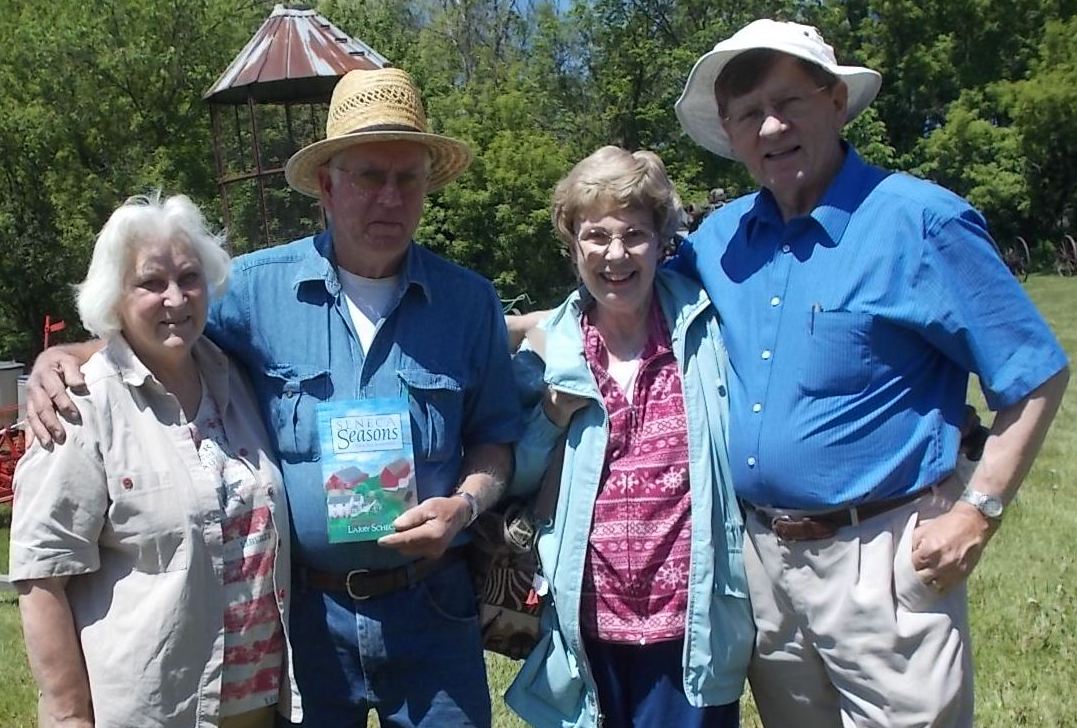
I remember seeing the horses, tractor, and farm machinery moving across the McAreavy farm, which abutted our Scheckel farm. My brother , Bob, and I sold Tom McAreavy and the Payne boys chances on a blanket for the annual Oak Grove School Basket Social. The story is elucidated in the book Seneca Seasons: A Farm Boy Remembers.

Anna McAreavy stayed alone on the farm for quite some years. Later she moved to Prairie du Chien and still later to a nursing home. It’s amazing how the brain works; pass by that spot on Highway 27, north of Mt. Sterling, and there’s a flood of memories of Tom McAreavy.


Posted in Uncategorized | Leave a comment

Journeys Through Crawford County

Source: Journeys Through Crawford County

Posted in Uncategorized | Leave a comment

Journeys Through Crawford County

Journeys through Crawford County

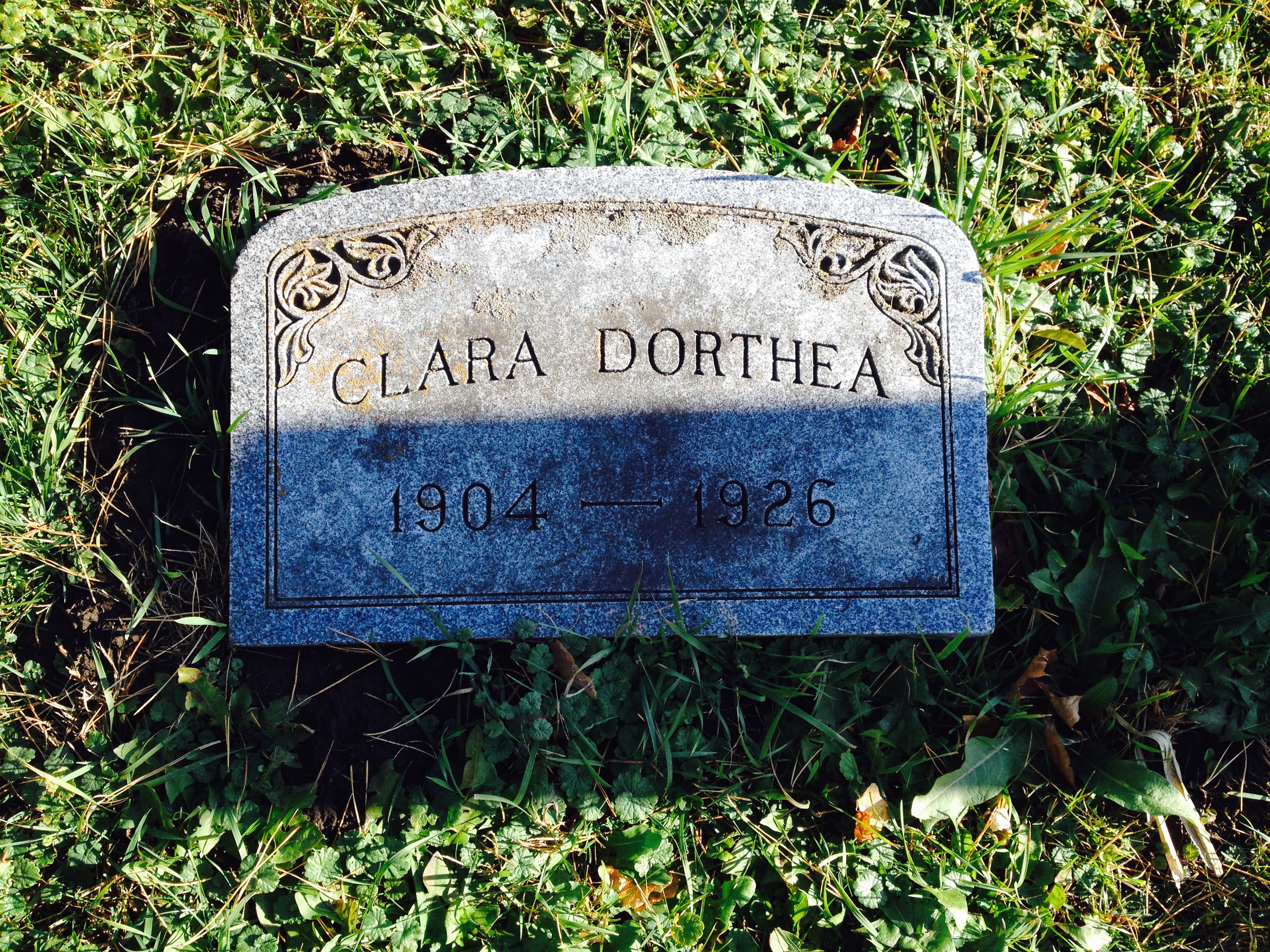
On our last blog, we were south of Rising Son, going past Fairview, Boma Ridge, and on to Utica Lutheran Church on our drive down Highway 27 from Tomah in Monroe County, where we live, through Vernon County, and entering Crawford County near Rising Sun. We discussed cheese curds from cousin Don Heiar and the 1926 Olson girl murder.Clara Dorthea Olson 1904 1926

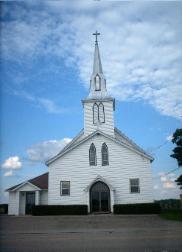
We drive slowly past the Utica Lutheran Church ‘cause that brings back a lot of memories. From our hill pasture on our farm out on Oak Grove Ridge, we could look a bit east of north and see the steeple of Utica. Look to the northwest and we could see the top of the cantilever-style  Black Hawk Bridge that carries Highway 82 from Wisconsin across the Mississippi River and into Iowa.

If you were a kid growing up in the 1940s and 1950s, in the heart of Crawford County, you knew that the Catholics went to and were buried at St. Patrick’s Catholic Church in Seneca. That’s the Church the Scheckel family attended. A walk through the cemetery have engraved names like Garvey, McNamara, Kelly, Bernier, Boland, Crowley, Kane, Finley, Foley, Fitzgibbon, O’Shaughnessy—and that’s just to the letter O. Most all of the old families came from Ireland. Utica Lutheran Church

The Utica Lutheran Church is Norwegian Lutheran. Names on the cemetery markers read like: Anderson, Aspenson, Enerson, Gunderson, Monson, Halverson, Hjelle, Knutson- and that is not all the way through the K letters.

Two of my Seneca High School English teachers are buried in Utica Cemetery, Laura Kvigne and Maria Turk. Clara Olson, the murdered young lady, and her parents, Christ and Dina Olson were laid to rest there. Jacob Vedvik and wife, and one of their sons, are buried in Utica Lutheran. We took logs up to Vedvik’s saw mill in Seneca, and brought home boards to make a corn crib and hog house.

In the early 1950s, my parents, Alvin and Martha Scheckel, hired two carpenters, a Tishammer and Quamme,  from the Mt. Sterling area, to do some remodeling on the kitchen and dining room of our rambling farm house. Right around 10 o’clock in the morning, they set their tools down, walked up to their pick-up truck, removed a lunch bucket, sat on the running board, and started eating. Me and my brothers Phillip, a year older, and Bob, a year younger, were amazed. Why are they eating dinner at ten in the morning, a whole two hours before we do? (For farm people, dinner is the noon time meal). Dad and Mom soon informed us boys about the Norwegian custom of eating a light snack in mid morning and mid afternoon. Yes, Tishammer and Quamme are both resting in Utica Lutheran Cemetery.

In recent years, my wife, Ann, and I have attended funerals at Utica Lutheran. A Kvigne gentleman plays the organ so beautifully I thought I might hire him for my funeral- decades from now, of course.

Lunch always follows a funeral service. And let me tell you, those gracious white-haired Lutheran ladies are the best cooks in the world. Their pies are to die for!!

In our next blog, we continue our journey down Highway 27 to Mt. Sterling and talk about the spot where McAvery rolled the car over.


Posted in Uncategorized | 1 Comment

Journeys through Crawford County

Journeys through Crawford County –The Olson Murder

On our last blog, we talked about the drive down Highway 27 from Tomah in Monroe County, where we live, through Vernon County, and entering Crawford County near Rising Sun.

On our way to get haircuts at Bernie Hanson’s barber shop, when we were grade school boys, our Dad pointed out to Phillip, a year older than me, and Bob, a year younger than me, the place in the woods (Battle Ridge) where the body of Clara Olson was found.Olson murder

The following is a paragraph from a newspaper printed ten years after she was found. “On Sept. 10, 1926, 22-year-old Clara Olson, of Mount Sterling, Wis., went missing. Her family thought she was eloping with her sweetheart, college student Erdman Olson, 18, the son of wealthy tobacco growers (no relation). Her relatives didn’t know she was six months pregnant with Erdman’s child, although Erdman’s parents knew. Almost three months after her disappearance, her badly beaten body was found buried face down in a shallow grave on a knoll called Battle Ridge near Rising Sun, Wis., just six miles from Erdman’s home. She had “terrific, crushing blows” to the back of her head. Erdman denied he had anything to do with her disappearance, but a love note found on Clara’s body showed Erdman had written her for a midnight tryst the night before her disappearance. Charges were filed against him in the slaying, but he disappeared after Clara’s father visited him at college and begged Erdman to return his daughter. Erdman has never been found.”

You can “Google” in this murder and get lots more details. Interestingly, people in Crawford County still talk about it.

Continuing south on Highway 27, we slow down for the community of Fairview. I think it has a population of about 13, if everybody is home. The most distinctive feature is a half dozen  tractors, mostly Minneapolis Moline, parked right beside the highway. It appears they are waiting for somebody to restore them, but I swear they have been rusting away there for going onto 6 decades.

On the edge of Fairview, right past the old building with the new Pepsi vending machine in front, is the turn onto Boma Ridge Road. That has special meaning for us Scheckel kids because Don Heiar had a cheese factory out on Boma Ridge, and our family would visit them several Sundays a year. They had cheese curds, right out of the cheese making bin, and Don and his wife MaryLou always made sure we got some.

Recall the Don Heiar was the son of Tony and Carrie (Scheckel) Heiar.  Carrie Scheckel was my aunt, sister to my Dad, Alvin Scheckel. A son of Don and Mary Lou is Donald J. Heiar, now Monsignor Heiar, in the Madison Diocese. He is also a chaplain in the United States Air Force. There is no extra charge for this family tree info! Next blog, we will continue our travels down Highway 27, to Utica Lutheran Church and Mt. Sterling.


Posted in Uncategorized | 3 Comments

Journeys Through Crawford Country

Journeys through Crawford County

My wife, Ann, and I, live in Tomah, Wisconsin, in Monroe County, which is named after James Monroe, fifth President of the United States. But I grew up in the heart of Crawford county, 2 counties south, on a farm 2 miles northwest of Seneca, named after William H. Crawford, who was a judge, Secretary of War, Secretary of the Treasury, and candidate for President in the early part of the 1800s.

We drive down through Crawford County several times a year, usually taking Highway 27, which runs down the spine of the County, from Sparta, to Viroqua, and down to Prairie du Chien. In the mid 1800s, Seneca was an overnight stagecoach stop between Prairie du Chien and Black River Falls.

The heart quickens when we get to Rising Sun, just inside Crawford County, when a flood many fond memories come gushing forth. Our Dad would take brothers Phillip, Bob, and me to Rising Sun to get our hair cuts when I was little tyke. Hanson’s Barber Shop was a one chair, first come-first cut facility. Twas actually a shack, half the size of a one-car garage. Bernie Hanson cut Dad’s hair, he would pay for all four of us, then he would go next door to Bill Crowley’s Tavern and have a beer or two. Hair cuts were 50 cents, and when Bernie Hanson raised the price to 75 cents, it was my Dad that was “incensed”.

Phillip was next in the barber chair, then me, than Bob. When we each had a fresh cut, we would go over to Bill’s tavern and sit on a stool. Dad would buy us a soft drink and the three of us were served a small glass and divided up the 12 oz bottle of pop.  Bill Crowley had a black and white television mounted up in the corner. That was quite a novelty, because was no television in the Scheckel farmhouse.

I loved seeing the Hamm’s Beer commercials, with the Hamm’s bear “in the land of the sky blue waters”. Dad talked farming and politics with Bill and other patrons.

Motoring south from Rising Sun was the St. James Church and graveyard. A few miles south of Rising Sun was the “place where they found that Olson girl” as Dad pointed into the woods. Dad said when he bought the farm on Oak Grove Ridge in 1945, our neighbor Joe Bernier showed Dad the burial site of Clara Olson on Battle Ridge near Rising Sun, a few hundred feet in the woods, off Highway 27.

In the next blog, more about this gruesome murder that grabbed worldwide attention.

Hanson Barbershop Crowley Travern

Posted in Uncategorized | Leave a comment

Publishing

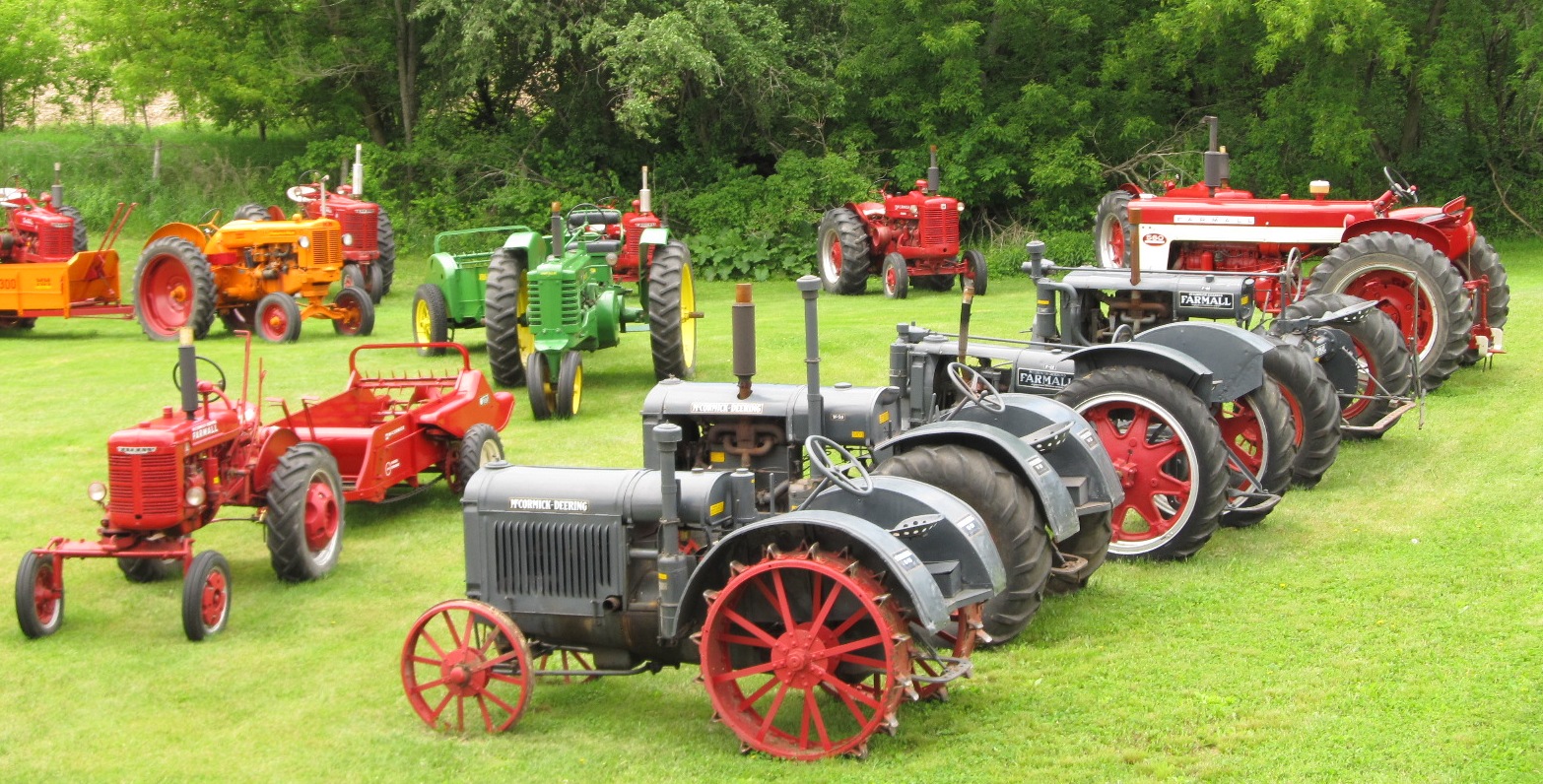
It is a source of pride and joy when any article I’ve written gets published in a major national magazine. This past week we received copies of Farm Collector magazine, “Dedicated to the Preservation of Vintage Farm Equipment”, as their cover page logo proclaims. Yes, it’s a niche audience to be sure; 125,000 readers in the U.S.Ras FarmLyndonStation 055 RaspillerScheckel

Farm Collector is one of nine magazines put out by Ogden Publications, based in Topeka, Kansas, that they proclaim “is the leading information resource serving the sustainable living, rural lifestyle, farm memorabilia and classic motorcycle communities.”

Its brands include Mother Earth NewsMother Earth LivingUtne Reader, Grit, Capper’s Farmer, Community Chickens , Farm CollectorGas Engine Magazine and Motorcycle Classics.

The article they published in their November issue of  Farm Collector magazine is entitled Treasures on a Wisconsin Farm: Tractors, Implements, and More Show All Aspects of Traditional Farm Life. Ann and I visited and interviewed Don and Dolores Raspiller on their 256 acre farm a few miles south of Lyndon Station, a bit north and west of Wisconsin Dells.

We talked with the couple and took about 50 photographs during their open house around Memorial Day. We visited again a month or so later, wrote up the article, selected 20 photos, and sent them off to the editor, Leslie McManus. We got an email a month later saying they would publish. This is the third story we’ve had in the Farm Collector magazine.

We had a chance to meet editor Leslie McManus at the Mt. Pleasant, Iowa Midwest Old Threshers Reunion, in early September, on our way out to the Colorado Rockies. She and coworkers were “manning” the Farm Collector booth. Very pleasant people. She even bought us lunch!

It’s interesting how this editing process works. They used 11 of the 20 photos I sent, did a beautiful layout of 4 pages, cut the article down somewhat, and left out a few of my good ‘rural living” jokes. We are very pleased with the job they did and are looking forward to a fourth article I submitted about a month ago.


Posted in Uncategorized | Leave a comment

Latest Blog

Source: Latest Blog

Posted in Uncategorized | Leave a comment

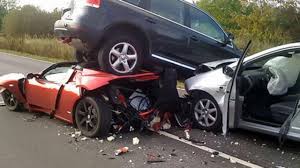
Chance of being killed in car crash

For a post this week, I’ve selected the article that ran in the Tomah Journal on Thursday, Oct 22, 2015.

QUESTION:

What are my chances of being killed in a car accident?

ANSWER:

They’re actually pretty good, about 1 in 9,000! This question brings up the fascinating topic of risk and how people perceive risk. Driving our cars is the single most dangerous activity we do on a regular basis. It’s not because you are a bad driver. It’s because of all those fools that are driving drunk, or distracted by texting or talking on cell phones, or eating while driving, or spaced out on drugs, or speeding, or dead (no pun intended) tired and fall asleep at the wheel.

A disclaimer here; I have scarfed down a few Chicken McNuggets, with honey, while tooling down the highway.

Calculating risks is fairly straight forward. Divide the number of people who ride in cars, which is nearly the population of the United States, around 300 million, by the number of people who are killed every year, about 33,000, and you come up with about 1 in 9,000 each year. It is about 1 in 80 over a lifetime. There is a 1 in 20 chance you and I will be in a car accident involving serious injury, over a lifetime.

Air travel is far safer than driving in a car, but our view and feelings about the risks are skewed. A plane crash is terrifying to contemplate, having a “high-dread” factor, if you wish. Remember the middle of July, 2014. In a little over one week, a Malaysia Airlines plane was shot down over the Ukraine, a Trans Asia plane crashed on landing off Taiwan, and an Air Algerie plane was lost in a dust storm in Mali. Three commercial plane accidents with a total loss of 462 passengers and crew, a tragedy that convinced many that they would never get on one of those things! During that same week, 735 people died in car crashes in the United States. Those car accident deaths make the local and statewide news, but do not garner the national spotlight.

The 9/11 attacks killed about 3,000 people, and we dutifully decry and mourn their loss. That same number, 3000, are lost in car accidents every month in the United States. At times we tend to go with our heart instead of our head. After the 9/11 terrorists attacks, many people decided to drive instead of fly. There was a spike in traffic deaths.

Cornell University did a careful study of the phenomena, and found that there were an additional 344 driving deaths per month in late 2001. The numbers decreased over time, of course, but the researchers attributed a total of 2,170 driving deaths due to the 9/11 attack. That is about 70 percent of the 3,000 directly killed in the attacks.

Life is a series of calculated risks. Most everything we do has some risk to it. And there is lots of just pure luck involved.

Sometimes our fears are not very rational. When those laser scanning devices, used to read the UPC label, were put in checkout counters in supermarkets in the 1970s, the word “laser” was never used by store owners and advertisers. Laser implied death rays, and who wants to die by getting zapped by a laser in the grocery store.

When those Nuclear Magnetic Resonance machines were introduced in 1977, people were reluctant to have anything to do with them and avoided them like the plague. They didn’t want to be associated with anything “nuclear”. So the profession changed the name to Magnetic Resonance Imaging (MRI), and this new kind of X-ray machine caught on.

Risks in any human endeavor can be reduced, but not down to zero risk. You can decrease the risk of getting killed in a car accident by never getting into a car. But people have been killed when a car slams into the house or cafe. You can lessen your risk of getting killed in an airplane by not flying in an airliner. But aircraft have slammed into houses and killed people. Risks can’t be minimized to zero.

We accept certain risks. There are over 5,000 kids admitted to hospitals (very few deaths)  every year when they swallow coins. We could make coins so large that kids couldn’t put them in their mouth. But that destroys the utilitarian value of carrying coins in our pocket.

What are the top accident killers of people following traffic accidents? Falls are number two, with a 1 in 14,000 chance of dying. Fires are number three, with a 1 in 33,000 odds, drowning is number 4 with 1 in 43,000 chance of parting this Earth.

When we get down to number 9, a lightning strike, with a 1 in 1,700,00 chance, people’s perception is interesting. The victim is out fishing, or playing golf, or standing under a tree on a hill, or carrying an umbrella in a lightning and rainstorm.  We don’t think or say that they deserved to get struck by lightning, but the feeling is they should have been more prudent. The odds of getting killed by lightning are so small, we tend to put some culpability on the one that got struck.

Fortunately, most people don’t dwell on thoughts of demise, death, and car accident fatalities. We just live our life and go about our activities and we expect nothing dreadful to occur. Teenagers definitely think that way. For teens, bad things happen to other people. And it is probably for the best, having a youthful optimism and bright future ahead.   Car crash
Posted in Uncategorized | Leave a comment

Calf to cow

For this week, I picked out a column from months ago that appeared in the Tomah Journal newspaper.

ASK YOUR SCIENCE TEACHER                 by Larry Scheckel

This week’s question was asked by: a youngster on the school bus

QUESTION:

When does a calf become a cow?

ANSWER:

There’s a whole herd of terms to describe the bovine barnyard population. Calves are born after a gestation (pregnancy) period of about 9 months. The birth of a calf is simply called calving.  A calf can stand up within a few minutes of being born. They typically start to suckle within an hour. A calf is able to follow its mother around after one week.

Calf is a term used from birth to weaning. Weaning is the removing of the suckling calf from its mother. Calves are ear tagged within hours of birth, so the mother can always be identified. In some places, such as Europe, it is a legal requirement. Calves are vaccinated and males are castrated within 2 months (ouch).

A heifer is a young female calf from birth until she has a calf of her own. When the heifer becomes a mother, usually after about age two or three, we call her a “cow”. A castrated male is called a “steer”. He is destined for the meat market (a really big ouch). Cattle that end up on our table are referred to as “beef cattle”.

A “bull” is an adult male that has not been castrated. His job is to impregnate the cows, sort of a one-on-one procedure, or to provide sperm for artificial insemination.

A cow or heifer that is near calving time is referred to as a “springer”. A “fresh cow” is a cow or first-calf heifer that has recently given birth. We say the cow has “freshened”.

Young calves slaughtered for human consumption provide veal. In the old West, an orphan calf that had lost its mother was termed a “dogie” as in “get along little dogie”.

A new mother cow will try to hide her infant calf. The newborn calf can’t keep up with the herd. We noticed this on our Oak Grove Ridge farm in Crawford County. Our cows were put out to graze in some pastures that were partially wooded. We Scheckel boys had the task of counting the cows as they came in for milking about 5 PM. If one was missing, we knew we had to go search for it in the woods.

Wisconsin has 1.3 million dairy cows living on 10,000 dairy farms. That’s an average herd size of 130 cows. Wisconsin is number the one producer of cheese in the United States, but number two behind California in milk production.

It only makes sense. The people population of California is about 38 million and Wisconsin is around 5.8 million. So California has almost seven times the population of Wisconsin. Shipping costs are high, so it is best to produce milk where the people reside.

Holsteins are the most popular breed in Wisconsin accounting for 90 percent of the total. Holsteins give the most milk. I am partial to Brown Swiss. Brown Swiss have the most beautiful eyes.

Oxen are castrated adult male cattle. They are trained to work and castration makes

them gentler. Early American farmers used oxen as draft animals, able to haul heavy loads, plow fields, move logs, thresh grain by trampling, and pull out stumps when clearing land. Oxen were often yoked in pairs. Oxen sported horns, which allowed them to back up and not have the yoke slip off.

It was oxen that got our pioneers westward on the Oregon Trail. Horses and mules were harder to handle, spooked easily, and needed good grass for grazing.

Oxen were slower, but more reliable, and much tougher than mules or horses. They could survive on rather poor grass. Oxen were easily trained, docile, and obedient. A man or older boy led the oxen with a leash. Contrary to the depiction in movies, those hardy people did not ride in the wagons and schooners; they walked from Missouri to Oregon and California.

Any breed of cattle can be trained to be “oxen”, but some breeds and individuals were selected for their size, intelligence, and willingness to learn. Both male and female cattle were used for what we call “oxen”. Oxen gave milk to those early farmers and west bound travelers. They could be bred to produce more oxen, giving the farmer replacements rather than buying new stock. At the end of their life, oxen provided food for the family.

So when does a calf become a cow? A calf becomes a cow when she has her own calf.

Assistance and suggestions by Dr. Steve Doll, DVM.

Email questions and comments to: lscheckel@charter.net


Scholars put the percentage of pioneer wagons pulled by oxen at one-half to three-quarters.   The cost of a yoke of oxen during the last half of the 1840s varied from a low of $25 to a high of $65.

Posted in Uncategorized | Leave a comment