Driving Through Eastman, Wisconsin

We’re lingering a bit in Eastman, Wisconsin in the heart of Crawford County. We’re recalling our times in the hill country around Rising Sun, Mt. Sterling, Seneca, and Eastman in the 1940s and 1950s.

Eastman had the big Fourth of July Celebration. A parade in the morning, softball and baseball games in the afternoon, food vendors all day long, and the much anticipated fireworks in the evening.

Some local school band, Seneca, Wauzeka, or Prairie du Chien, lead the parade, with color guard and American flag. People stood when the flag went by. If some youngster didn’t, a few older folks provided some prodding. Most of those guys were veterans also. People, as many as two deep, (remember that Eastman is a small town of perhaps 150 people, if everybody is home) clapped and cheered. Names were shouted out and band members turned and looked, beaming of course, and getting out of step, of course. At the end of the half mile parade, those band members were sweating profusely inside those hot wool uniforms under a hotter July sun.

There was the usual line up of tractors; John Deere johnny poppers, Allis Chambers, Farmall, Case, and Minneapolis Moline. A Ford Model A or Model T would sound its ooga horn. My brothers, Phillip and Bob, I loved the ooga horn. We tried to convince Dad to buy one for our tractor or pickup truck. Ah, to no avail. An ooga horn wouldn’t make any money. No need to have one on the Scheckel farm, you understand.

The Parade Marshall was usually a WWI veteran, seated atop the back part of a convertible car for better visibility, fittingly attired in his WWI uniform, a VFW hat, holding a small United States flag in one hand and waving to the crowd with the other. It was a different one each year. Sometimes one of the newly minted WWII vets drove the car or sat in the passenger seat.  They always seemed to be a bit uncomfortable, not grumpy, mind you, but sitting in that moving convertible getting all those accolades, as if they didn’t deserve to be there.

It wasn’t until much later that I realized that real heroes don’t think they are heroes.

Bringing up the rear of the 30 minute parade were the horses. It does make sense to put horses as the last units in a town parade. Horses have a unique exhaust system, if you get my drift. We loved the horses, and these riders were in saddles, wore cowboy hats and brightly colored checkered shirts, and had shiny metal dripping from the bridles. Oh yes, we Scheckels had horses and Phillip, Bob, and I rode Dolly, Prince, and Lightning, when they weren’t pulling the manure spreader, hay wagon, Van Brunt grain drill, John Deere 999 corn planter, or the 8 foot McCormick- Deering oats binder.

We brought up the subject of Dad buying a saddle or two. We showed Dad the saddles in the Sears and Montgomery Ward catalogs. We hinted widely that a saddle would look right nice on any of our three horses. What we heard was something like “work horses don’t need saddles”.

Phillip, Bob, and I never did get a saddle, but we survived; bareback riding with just a bridle for steering.

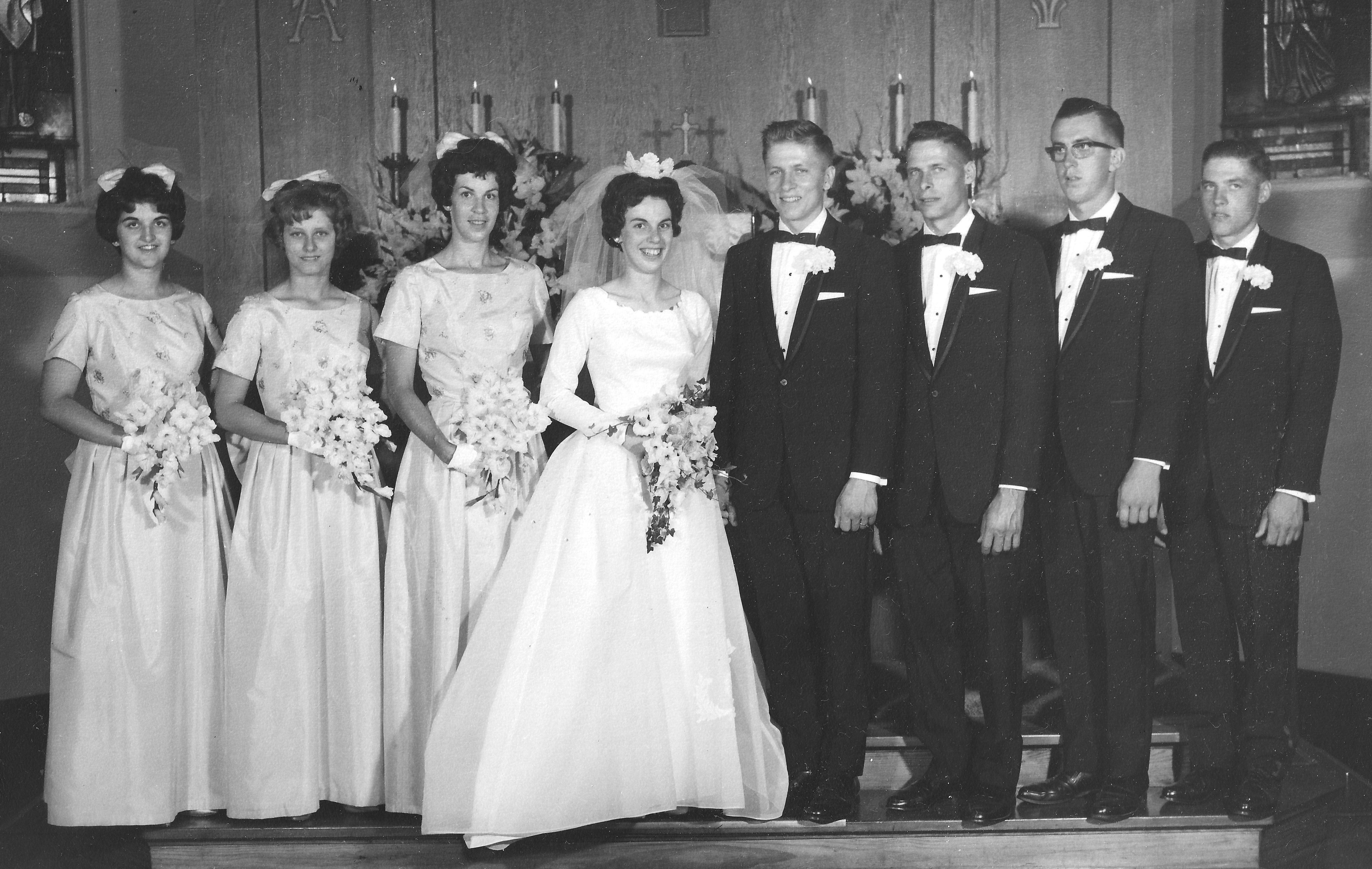
Next week, we’ll talk about St. Wenceslaus Church out on the edge of Eastman. That’s where Ann and I were married 50+ years ago. I will share all the details of our honeymoon!Larry and Ann Wedding
Posted in Uncategorized | Leave a comment

Driving Through Eastman, Wi

We’re doing a virtual drive through the heart of Crawford County on Highway 27, which runs from Rising Sun in the north to Prairie du Chien in the south. Highway 27 was known as the Black River Road. Seneca was the halfway point between Prairie du Chien and Black River Falls and an overnight stagecoach stop. We’re recalling our times in the hill country around Seneca in the 1940s and 1950s. Eastman

We’re driving slowly through Eastman, Wisconsin. Eastman holds fond memories of free shows in the summer time. Businessmen sponsored them and Leonard Martin, my future father-in-law ran the 16 mm movie projector. A bed sheet was hung from a rope tied between 2 trees. People brought folding chairs and kids sat on the grass. Western movies were popular, Lone Ranger, Gene Autry, Roy Rogers, Randolph Scott, John Wayne. Tom Mix.

Phillip, Bob, and I got our ice cream cone and waited for the movie to start, which was around 8:30 PM, still quite a bit of daylight in June and July. Of course, it got darker as the evening wore on. I don’t think we ever got through a full movie without the film breaking at least once, accompanied by loud groans.  A flashlight, some tinkering and rethreading, and few minutes later and the movie would be up and running, accompanied by clapping, cheers, and hoots.

The smells of popcorn and newly mowed grass and nearby fields of curing hay combined with the din coming out of Slama’s Bar, mixed with passing cars, and occasional bang, bang, as some hot shot teenager made an old pickup truck backfire.

Eastman holds other memories. Dad took us in to one of the bars in Eastman one afternoon in about 1950, when I was 8 years old.  He showed us a big dog behind the bar. I have a faint idea that the dog was a Great Dane, the “hugest” dog I ever saw. And I think it belonged to a Doc Lyons. The three Scheckel boys were most impressed by this dog.

There was another dog hopping around Eastman on 3 legs. It was missing a front leg, but  could move the good front leg out in front, right in the middle of its body, to keep balance. A marvel to see.

Next week, more Eastman, St Wenceslaus Church where my bride and I were married in 1965. Working on a book about the 1926 murder of Clara Olson in the Rising Sun, Mt. Sterling, and Seneca area. Garnered world-wide attention at the time and was considered the Crime of the Century.


Posted in Uncategorized | Leave a comment

Moving Through Crawford County

We’re recalling our times in the hill country around Seneca in the 1940s and 1950s. Doing a virtual drive through the heart of Crawford County on Highway 27, which runs from Rising Sun in the north to Prairie du Chien in the south. Last week we were at the site of the October 16, 1957 car accident that took the lives of four people, including two of my Seneca High School sophomore classmates.

The ambulance and sheriff’s car arrived.  Bob Chambers and Doc Johnson, two Seneca High School teachers, went down to the accident scene. The bodies had been laid out by the sheriff and ambulance people. Chambers noticed that one of the bodies moved. He yells to the police and ambulance people. An officer replies “they’re all dead.”  Chambers says “this one moved”. “They’re all dead”, the officer repeated. But someone checked.  The one that moved was Frank Pintz. Chambers probably saved his life.

From the Courier-Press

“Funeral services for Thomas Snell, Michael Sprosty, and Bernard Foley were held Saturday, Oct 19, from St. Patrick’s Catholic church, Seneca, and burial was in the church cemetery.

The Rev. J Kelly Cosgrove, pastor, officiated at the 9 AM services for Sprosty and the 10 AM services for Foley. Msgr. Thomas O’Shaughnessy, pastor of Blessed Sacrament church, La Crosse, who is a relative of the Snell’s, officiated at the 11 AM service for Thomas Snell.

Services for Bert Swatek were held at 9:30 AM, Monday, Oct 21, at St. Wenceslaus Catholic church, Eastman, the Rev. McMahon officiating, and burial was in the nearby cemetery. They awaited the arrival of a soldier brother stationed in Alaska.”

Phillip, Bob, and I were Mass servers at this time. We served Mass for the first two masses at 9 AM and 10 AM.

There were a total of 6 parents and 20 siblings of the 3 young people killed. A widow and 2 little girls mourned the loss of Tom Snell.

Frank Pintz and Joanne Snell recovered. Both suffered from those injuries for life. Frank Pintz was in the hospital from the date of the accident October 16, 1957, until April the following year. His parents brought him Thanksgiving dinner and Christmas dinner to his hospital bed. He was in a full body cast and had damage to his spine and lungs. Five years later he had surgery to his aorta, the doctor indicating there had been damage due to the accident. Two back surgeries followed.

Frank came back to visit the high school a year after the accident. He was in a wheel chair. I remember him being greeted warmly by the students. He never did finish high school but attended several reunions. We three Scheckel boys thought highly of Frank Pintz and talked occasionally about how lucky he was to survive such a horrific accident. Frank had nearly died, but he struggled and succeeded in making a good life for himself.

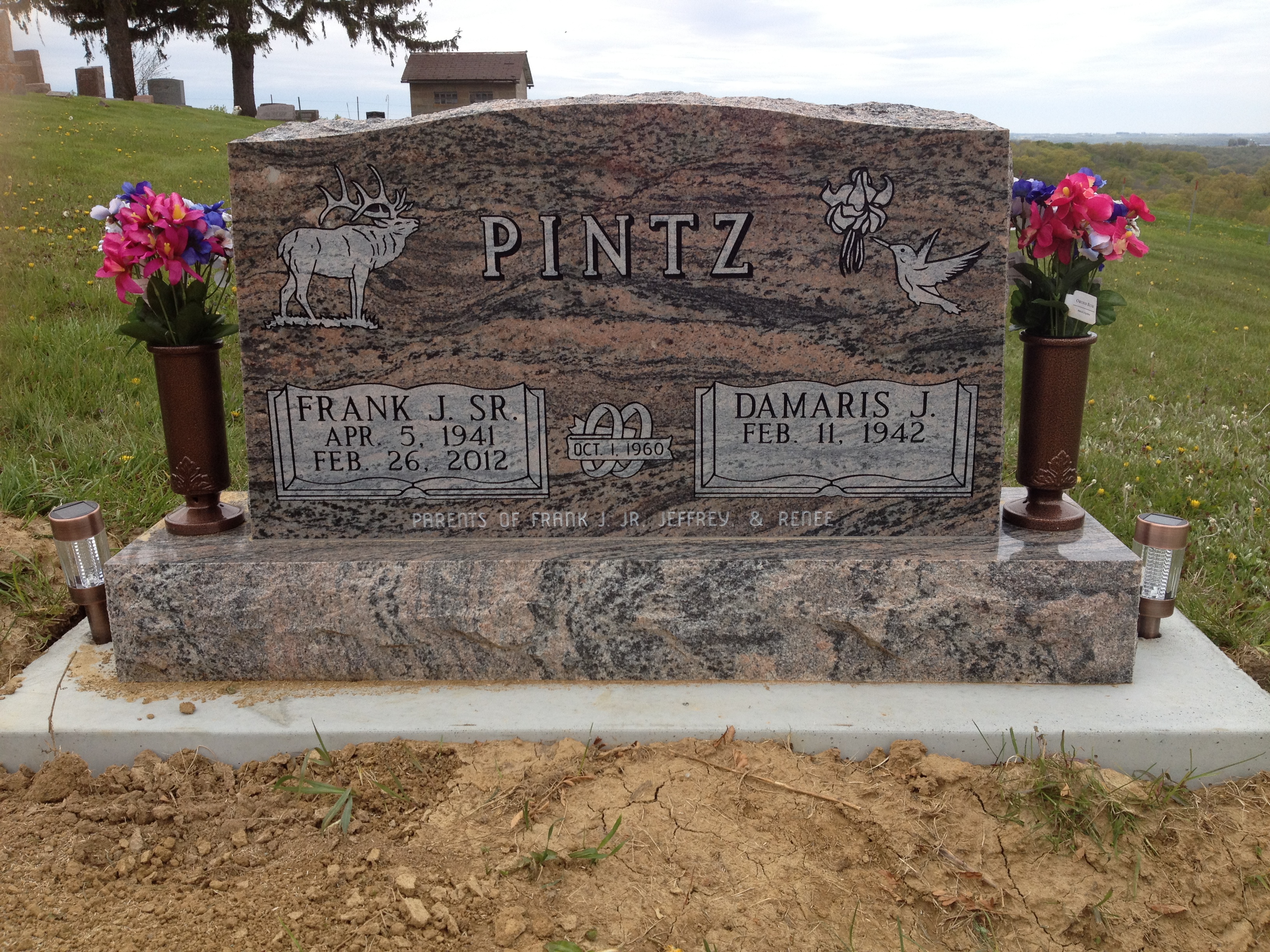
Frank Pintz married Demaris Graap on October 1960. They had 3 children. He became a farmer, bricklayer, mason, builder, and contractor. He was a supervisor for the City of Prairie du Chien.

Frank passed away in February, 2012 at age 70. He is a reminder to me that a person can be snatched from the jaws of death and somehow lead a full and productive life.FrankPintzCampbell

I, like Michael Sprosty, was 15 years old at the time of this tragedy. It was my first reminder of how sudden and capricious life can be. His death was an indicator that we are all a few heartbeats from eternity and how precious life is.

I visit St. Partrick’s Catholic cemetery in Seneca whenever my wife, Ann, and I visit the Seneca area. I walk behind the church and between the rows of pine trees. The wind makes a beautiful whistling sound through those trees. I pass by the graves of Seneca and Crawford County ancestors, the Garvey, Kneeland, Kane, Finley, McNamara, Oppriecht, Fitzgibbon, Joy, Ingham, and Boland graves.

I visit the graves of my parents, Alvin and Martha Scheckel. I view the graves of many of the people I knew as I was growing up on Oak Grove Ridge. I remember farmers that I helped with their hay crop. I was pallbearer for Tom Ingham. He died of a heart attack lifting milk into the cream separator.

Then I come to the Michael Sprosty and Bernard Foley tombstones. The “end date” of 1957. And that is something I know a bit about. I think to myself “what a waste”. This event did not have to happen. I think of the things these two boys missed in life; marriage, family, births, first communions, sending kids off to school, graduations, and family reunions. They will never have the opportunity to walk a daughter down the aisle. Never hold a grandchild in their arms. It could have been, should have been, so different.

Next week, we roll in Eastman, Wisconsin


Posted in Uncategorized | Leave a comment

Through Crawford County, Wisconsin

We’ve been doing a virtual drive down through Crawford County, on Highway 27, in southwest Wisconsin. In our previous blogs, we passed through Rising Sun, past Fairview, Boma Ridge,  the 1926 Clara Olson murder,  Utica Lutheran Church, Mt. Sterling, Seneca, pass the turnoff onto County Highway E that would take us to the Scheckel farm out on Oak Grove Ridge.

I grew up in this hill country in the 1940s and 1950s, leaving to go into the Army in the Fall of 1960. In our last blog we were just past the Severson farm south of Seneca, about 4 to 5 miles. That was the site of the worst traffic accident in Crawford County history, 4 people dead and 2 with injuries that lasted a lifetime.

From the Courier-Press:        

Headline  3 Youths, Man Die in Tragic Crash

2 Others Are Critical; Termed ‘Worst Yet’

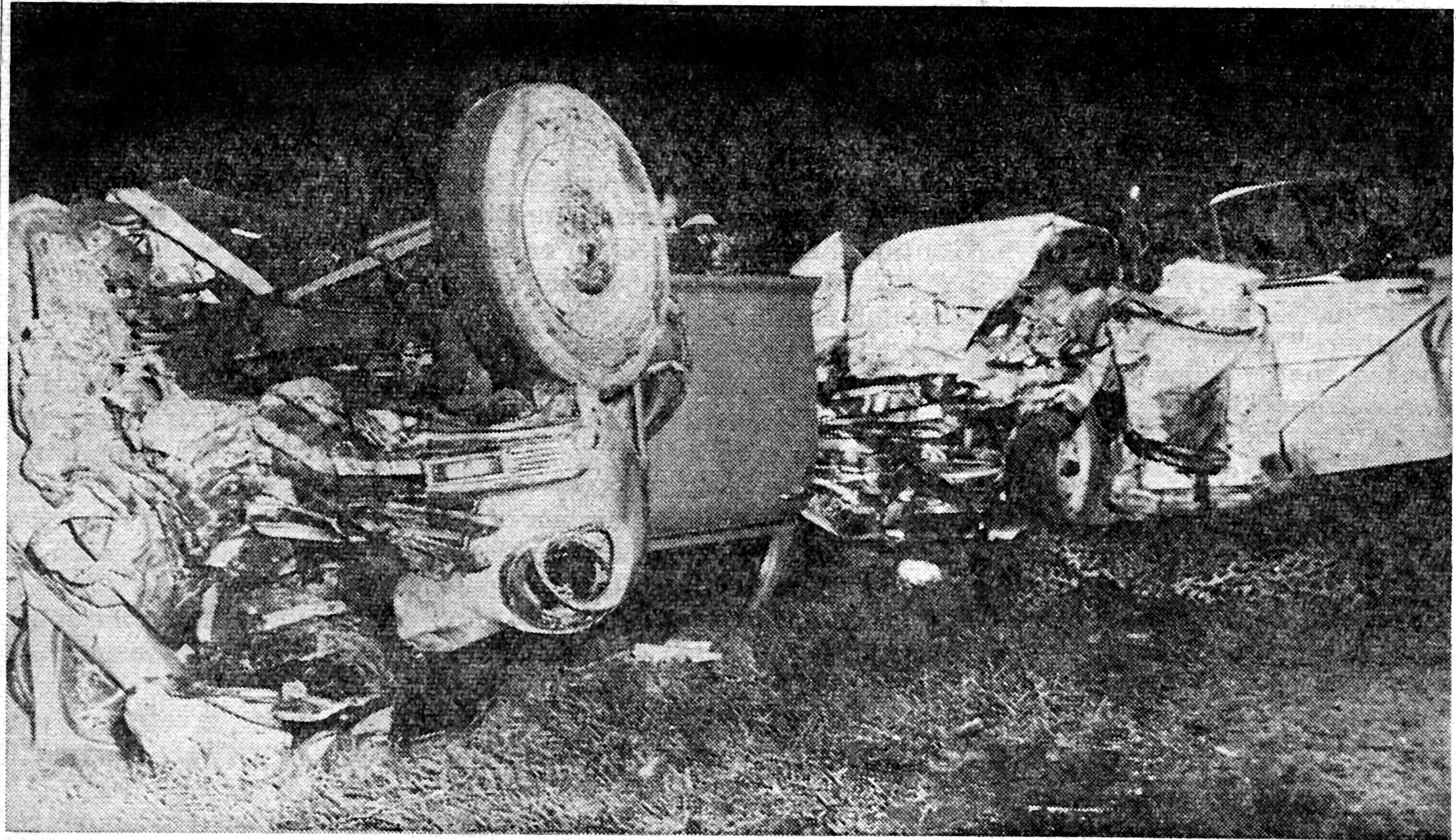
Four persons are dead and two critically injured as a result of one of the most gruesome two-car collisions in Crawford county. The accident occurred about 6 PM Wednesday evening Oct. 16, half way between East and Seneca on highway 27.

Dead are Thomas Snell, 42, Bert Swatek, 22, Michael Sprosty 15, and Bernard Foley, 18. In serious condition at Prairie du Chien General Hospital are Snell’s 10 year-old daughter, Joanne Marie, and Frank Pintz, 17. Pintz and Swatek are from Eastman. Sprosty is from rural Gays Mills and the others are from Seneca.

From the position of the wreckage, it was determined that Snell and his daughter were traveling north to their farm near Seneca, the turnoff for which was about one-half mile from the crash, at Severson’s Corner, where a blind curve has been the scene of several serious accidents in recent years.”  (I believe the age of Foley was 16, not 18 as listed in the newspaper)Bernard Foley Mike Sprosty 001

The Scheckel boys arrive back on the farm on Oak Grove Ridge. It’s after dark. Phillip puts the car in the garage and closes the large swinging door. Phillip, Bob, and I walked through the gate and down the grassy path to the front door of the house. We relay the news to Dad and Mom. They, like many parents, seize the “teachable moment”. They tell us how important it is to be careful, stay sober, drive carefully, and how fickle life can be. We listen attentively. We do know all these things. Then we go to bed. I lay there for a moment thinking about the day’s events. At noon, I’m playing catch with a good friend. That evening, he is dead.


Posted in Uncategorized | Leave a comment

Crawford County Travels

In our last blog we were passing the Sobeck farm, which was known as the County Poor Farm went I was growing up on the Scheckel farm out on Oak Grove Ridge in the 1940s and 1950s.

Now we’re passing the Severson farm and that is where that accident happened. I was 15 years old and it made a huge impression on me. Four people killed in the early evening of Oct 16, 1957. Two of those were my sophomore classmates at Seneca High School; Mike Sprosty and Bernard Foley. I was playing catch alongside Seneca High School with Mike Sprosty at noontime on that fateful day.

There was no football at Seneca High School in 1957. There were 5 Kickapoo Valley Conference baseball games in the Fall and 5 in the Spring. Winter was basketball. All the conference teams were in the Kickapoo Valley, except Seneca, Wauzeka, and De Soto. We played Gays Mills, Soldiers Grove, Readstown, Viola, La Farge, and West Lima.

There was a nighttime initiation program in the Seneca High School gym starting at 7 PM. The Scheckel boys had the chores and milking done at the usual time, about 6:30 PM. So we “cleaned up” and went up to the Seneca High school gym.

The audience was waiting. Seems we were getting started. Mr. Webster comes up on the stage and announces that “there has been a very bad car accident about an hour ago”. Rumors run through the crowd as we headed for our car. It was the deadliest automobile accident in Crawford County history.

At about 5:00 PM  Albert C. (Bert) Swatek pulled into McCullick’s Phillip’s 66 Gas Station in Seneca. Bert Swatek, age 22, worked at the Janesville auto plant.  McCullick’s was the teen hang out at the time.          Bert Swatek told a group of boys “hop in, I’ll take you to Initiation”.  Frank Pintz jumps in the back seat. Mike Sprosty and Bernard Foley climb into the front seat. Bert Swatek starts the car and instead of pulling around the block to Seneca High School, makes a different choice. He heads south out of Seneca on Highway 27. He tells the boys that he needs to go to Eastman to change clothes.


Bernard T Foley 1941-1957

The time is now about 5:45 PM. Bert Swatek is driving very fast. The boys implore him to slow down. They discussed grabbing the car keys. The southbound Swatek car rounded a curve near the Severson farm. The car crossed the centerline and collided head-on with a north bound car driven by Tom Snell. Snell and his 10 year old daughter, Joanne Marie, were going from one of their farms to another.

Continued next week.


Posted in Uncategorized | Leave a comment

Crawford Country Travels

We spent a few weeks hanging around Seneca, so now we continue our journey down through Crawford County and on to Prairie du Chien, Wi using Highway 27. The Scheckel farm was a couple miles NNW of Seneca out on Oak Grove Ridge. I grew up on that farm-from 1945 to 1960.

We pass the stockyards, then the O’Shaughnessy farm. Good Irish Catholics, my Dad would say. Big white frame house, farmstead in pristine condition. We pass the George Zach farm on the right. They went to our St. Patrick’s Church also. Donald Zach was in high school with me and also attended religion classes. A quiet kid and hard worker. I believe I heard that Mr. Zach lived to be over 100.

We’ll just go past the turnoff to Oak Grove Ridge, which would be County Hiway E, or Dixon Ridge as it is known. If you would take County Trunk E, you would go about 5 miles and drop down into the valley to the village of Lynxville along the Mississippi River.

But as we pass that County Highway E turnoff, let’s glance to the right to glimpse the Cora (mother) and Marcella (daughter) Reed farm. Small 40 acre farm with white barn with one of those rounded roofs. She was in my older brother, Ed’s class, never married and drove a small Allis Chalmers tractor and milked a few Holsteins.

About a mile more and we come to the “Poor Farm” on Highway 27. Many counties in Wisconsin had such a place where poor, old, slightly mentally deficient could be taken care of. It was an actual farm, people were expected to work if they were capable, and it had a huge house. In documents it was listed as the “Home for the Feeble Minded”.

In the 1950’s, many of these farms were discontinued as county institutions and sold at public auctions. The Sobecks bought the farm. The buildings were in terrible shape and they all needed painting. Rumor had it that part of the house was used as a pig pen. Ronnie Sobeck was in my class at Seneca High School.   A very fine congenial fellow who later got a few PopTarts ahead.

When I was about ten years old, Dad and I went over to Sobeck in our old green Chevy farm pickup. “Old man Sobeck” came out from behind the house to greet us, “come over here, look at the litter”.Browser in House - Copy (2)

There were about five or six long legged brown mutts, about three to four months old, yapping and dancing. I looked them over. I chose one that looked healthy and looked right at me as if to say “I want to come and live with you”. At least, that is how I interpreted dog talk.

So I picked out a puppy. With its long legs, the dog seems full grown to me. We climbed into our pickup and headed back to the farm, a five minute drive, puppy squirming on my lap. Dad said, “That’s your dog, give it a name and take care of it.” I think Browser was my “therapy dog”. I was having a few rough spots getting along with people at the time.

Next week we continue heading south to the village of Eastman.


Posted in Uncategorized | Leave a comment

Seneca Faiths

We continue our drive down Highway 27, lingering a bit in Seneca, in the heart of Crawford County. Seneca was a stagecoach stop about half way between Prairie du Chien and Black River Fall. The Scheckel farm was 2 miles NNW of Seneca out on Oak Grove Ridge.

The Norwegians and Swedes in the area were Lutherans and attended the Mt. Sterling Lutheran Church in Mt. Sterling or the Utica Lutheran Church on Highway 27 a couple miles north of Mt. Sterling.     Utica Lutheran Church

The Seneca area was settled by tons of Irish folks and they were die hard Catholics that attended St. Patrick’s Catholic Church on the southern edge of Seneca. There was a white church next to the High School and I believe it was of the Congregational persuasion, but I heard it was shared with the Methodist. Later, after I left the farm and went into the military, the Methodist built a reddish looking church on or near the site of the old Ingham and Maney grocery store that had burned down.

When I was a kid, all that remained was high wall of the foundation. Free shows were held in a space close to that foundation and we were fond of walking on that wall.

There was a Catholic Church (St. Mark’s) back on Oak Grove Ridge. Originally, it was located across the road from the Joan (Martin) Floyd Sutton farm. St. Mark’s was eventually relocated into the valley called Lawler Hollow. The graves were also moved. However, some were unfortunately missed.

When I was a teenager, I worked for the farmers back on Oak Grove Ridge and while baling hay for the Inghams, I remember seeing a gravestone with the name Robinson. That grave had somehow been left out of the move and remained in the hay field.

Somebody bought that Ingham farm and was going to bulldoze over that old cemetery. Frank Fradette, who lived on the next farm told him “If you bulldoze over those graves, I’m going to put a hex on you, and you will be dead in less than a year.”. The guy was buried six months later. Well, that’s the story as told by Frank Fradette.

There was another Catholic Church (St. Peter’s) on County Trunk E which is now the Lawrence Kneeland farm. Portions of St. Peter’s original cemetery remain to this day.

We had religious instruction at Seneca High School every week on Thursdays at 11 AM. The Lutherans went to one room, the Methodists to another and Baptists to yet another. The Catholics went to the biggest room, which was the study hall or assembly room. The library was an alcove off the side of the big room. There were more Catholics than any other religion, so they got the biggest room. If all the students in the high school had an assembly, program, guest speaker, or a talk by Mr. Bailey Webster, this was the room we met in. The Baptists were few in number, perhaps three or four at best.

If a student professed no religious affiliation, he or she went to the room across from the Catholics. It was an interesting spectacle to watch all the students shuffling into various rooms. One could determine their religious attachment. At the time, I “looked down” on those “non-believers” thought they were pretty much low-life. How could you possibly not go to church?

Such were my opinions at the time. These opinions were shared by other students as witnessed by their remarks. Some students who did not go to church on a regular basis, went with the “Lutherans” or the “Catholics” just to look good. A minster or priest came to each room. Father Cosgrove was there for my high school years. A small priest, he walked around with a cigarette extending from a long cigarette holder.

Attending one hour per week religious sessions at Seneca High School during the school day worked fine. Everyone seemed happy with the arrangement. That was, until some damn fool complained to Father Cosgrove that there was a conflict of church and state. So religion instruction at the High School was stopped. Now we had to go to St. Patrick’s Church every Monday night for religious instruction.


Posted in Uncategorized | Leave a comment

Going South Through Seneca

We’re driving through Seneca in Crawford County on Highway 27. I grew up on a farm two miles northwest of Seneca along with Dad and Mom and 8 siblings. In the mid 1800s, it was a two day stagecoach trip from Prairie du Chien to Black River Falls. Seneca was an overnight stagecoach stop. Seneca had a blacksmith shop, trading post, drug store, shoemaker, harness shop, and wagon maker. That blacksmith fellow was said to be “the best damn blacksmith in Crawford County, even if he was drunk half the time”.

When I was a kid on the farm, the term “going to town” usually meant going to Seneca. Seneca got started in 1857, when land owner Sam Langdon had 10 acres surveyed and platted. Seneca is named after a Seneca in New York State. Langdon built a hotel and the road thru Seneca became known as the Black River Road.

Going to town was exciting as a kid. There were always people walking about, greeting each other with waves, going in and out of stores. Tractors, wagons, and machinery moved right down Main Street. Main Street was actually Highway 27. Seneca had one other street. We called it “the back street”. Back street had a few houses and Ervin Walker’s garage. There was a turn off that went east out of Seneca, called Taylor Ridge. Ben Logan lived out on Taylor Ridge.

On the left side of the Highway 27 (Main Street) thru Seneca, going north to south, was the houses of Wallin, Bud Dagnon, Snell, and Doc Farrell. Dr. Farrell died in 1938 when he went out on a house call in heavy snow. He was shoveling to get to a house, and died of a heart attack.

Continuing south through Seneca on the left side was the houses of Waltz, Paulson, Kuntz, Vedvik, Brockway, Newcombe (big stone house on the corner), Briggs Café, Dick Homan (ag teacher), the bank, Kane’s IGA, Dagnon, the small barber shop, Johnson’s Grocery Store, Dagnon’s gas station, Sullivan’s tavern, and further down stood the Catholic Church. I may have some of those houses out of order, or wrong names, or skipped some. Memory has a way of doing that.

Still further south, past the Catholic Church and parsonage, was the stockyards. Most of the livestock on our Scheckel farm was purchased by buyers who sent a truck or had their own truck to load up hogs, or the beef cattle that grazed down in Kettle Hollow all summer.

Several times a year, Dad, and my brothers, Phillip and Bob, and me would load up a couple of hogs or a cow or heifer and take it up to the stockyards. Bill Berneir was the stockyard buyer and the usual ritual of haggling over price would begin and continue for 15 minutes or so, depending on whether there were other sellers coming in.

This verbal wrangling would go on over a 5 or 10 cents a pound, interspersed with talk of politics, Church doings, weather, neighbors, etc. Finally, the livestock would be unloaded, weighed, and a check written out. Dad would take the check to the Seneca Bank, which was run by Clarence Paulson. Then on to Kane’s IGA or Johnson’s Store, and an ice cream cone for us boys. When you’re a kid of six or seven, going to Seneca was a big adventure.


Posted in Uncategorized | Leave a comment

Motoring Through Seneca, Wisconsin

We continue our drive from Tomah, Wisconsin, in Monroe County, where Ann and I live, down through Vernon County, and into Crawford County where I grew up on a farm 2 miles northwest of Seneca.

We’re driving slowly south on Highway 27, the Main Street of Seneca as I remember it as a kid. Passing McCullick’s Phillip’s 66 gas station, later owned by Don Achenback, several houses perhaps owned by Ed and Ethel Ostrander, a stone foundation of the Ingham store that burned down years ago. then the Town Hall,              Next was the Methodist Church, Frank and Wilma McCormack, house who owner I believe is Bertha Heisz, Jim Honzel house and just south of that was his locker plant that did butchering and stored frozen meats.

Very near the locker plant was a wooden frame memorial to all the soldiers in various wars. The names were black lettering on white painted slats. Phillip, Bob, and I would read the names, some of which we recognized. A star signified that a soldier had been killed in action.

Seneca has “done it up right” now by constructing a beautiful monument on the site of McCullick’s gas station. The gas station had been torn down years ago and the site was quite an eyesore. The monument was dedicated this pass Veterans Day November 11. Ann and I attended and it was poignant and moving ceremony. It has the names of all the men and women from the Seneca area who served in the Armed Forces. My brother, Bob, and I have our names there, as does Bill Boland, with whom I went into the military in 1960. Also, Bill’s brother, Joe Boland, who married my sister Rosemary on his return from the Korean War. Joe was a medic in a MASH unit in Korea.

Feed Mill, Lamores Mobil station, then Dan Kane, the big Walch house, Stockyards.

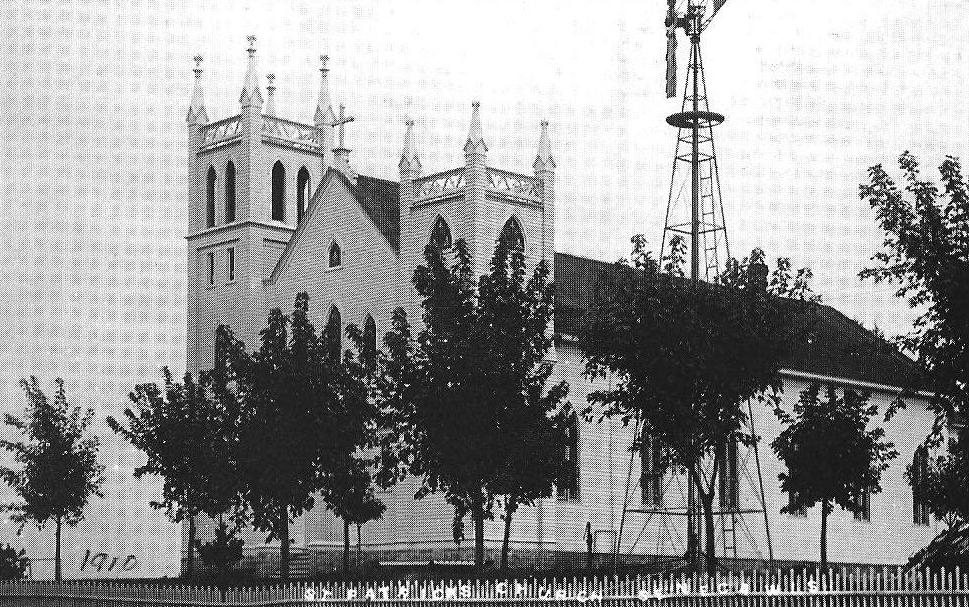
St. Patrick'sChurch 1910

Dick Homuth built a house just south of the stockyards, later owned by the High School principal, Woods, and then my parents, Alvin and Martha Scheckel bought that house when they sold their farm in about 1964. My mother lived in that house until she passed away in 2009 at age 96.

The Webers, Frank and Loretta, owned the big elegant house that was right across the street from St. Patrick’s Catholic Church. I believe they owned about 40 or 50 acres of land and did some farming there. Picture is St. Patrick’s Church in 1910.


Posted in Uncategorized | Leave a comment

Driving Through Seneca, Wisconsin

We continue our drive from Tomah, Wisconsin, in Monroe County, where Ann and I live, down through Vernon County, and into Crawford County where I grew up on a farm 2 miles northwest of Seneca.

We’re taking Highway 27, which runs through the heart of the Crawford County, from Sparta, to Viroqua, and down to Prairie du Chien. These people, descendants of northern Europeans, are close to my heart. I know these people, these roads, hills, and valleys.

We drive as slow as possible. On the right hand side of main street, which is really Highway 27, we note the Wilkinson house. Peter Wilkinson was a year behind me at Seneca High School, an excellent athlete, with an outgoing personality. Pete died of a massive heart attack in mid life.

We come to the Mike Linehan house. At various times, Varo, Grimsled, and Nederloe families lived in some of these houses.

Clarence Baker’s house is next, a banker I believe. Then the Clyde Johnson house-he was the local cheesemaker. Next is the Finley house, built in 1898-1899, an elegant structure. The Finleys had four acres behind the house and kept a cow or two in the years. Most town families had a little plot for a barn, a few cows, chickens, horses, and a large garden. Jack and Rose Finley raised a large family, always sat up front on the Blessed Virgin Mary side of the Church. Jack was the town constable and an insurance broker.

Continuing to drive slowly south through Seneca, we come to the Jake and Agnes Vedvik house. The Vedviks ran the sawmill on the north edge of Seneca and also had a portable mill they took out to farms.

Next is the Brockway and Lynch houses. Memory is fuzzy on which ones. Then the Bailey and Catherine Webster house. They had no children, came to our St. Patrick’s Church. Mr. Webster was the Superintendent and Principal at the Seneca High School, also the athletic director, guidance counselor, transportation director, and taught one section of math. Webster ran a tight ship and was well liked, but had a run-in with a board member in about 1961 and was let go. Most people thought it was very unfair.

A few more houses and we come to the Post Office. Our mail on the farm came out of Lynxville, and later from Eastman. As a high school kid, I was sent over to the Post Office by Mr. Webster to get the school mail. A Trehey man handed me the mail each time.

Once, when I was a sophomore (1957), I was helping run errands from the High School Office. Mr. Webster wrote a phone number on a slip of paper for me to dial. I didn’t know how to do the job. We had no telephone on the farm. It was one of those black ones with the dial, you put your finger in the hole and turn to the right until it stops. Mr. Webster had to show me how to dial a telephone. It was only one in a long string of embarrassments I suffered as a high school student. Somehow, by the grace of God, I survived.Car Accident 1957

On the corner, just south of the Post Office was McCullick’s Phillips 66 gas station. It was a small place, one bay, with a lift for doing car repairs, changing oil. One gas pump, I believe. It was the local teen hangout place. Hang out for “city kids” that is. No farm boys hung out there. They were out on the farms. Max and Betty McCullick sold soda pop, candy bars, and gum. McCullicks was the starting point in the early evening in mid Oct 1957, in which four boys got in a car, sped down Highway 27 and ten minutes later, three were dead. Two of them were my classmates.

Next blog, we continue our drive through Seneca and look at the houses on the right hand side.

Posted in Uncategorized | Leave a comment