Planting Potatoes

As soon as the frost was out of the ground, we planted potatoes. We were a large family with nine children. At any one time, seven or eight of us were living at home. We needed a lot of food, so we grew a lot of potatoes at two potato patch sites. The potato patch was plowed, disked, and dragged. Then Dad hitched up the large black hors, Dolly, to the plow and made a shallow furrow the length of the patch. Dolly and plow were turned around and made another furrow about 30 inches parallel to the first.

Then my siblings and I planted the first furrow. Dad used the second furrow as a marker to guide the horse and plow. We prepared the seed potatoes before heading out to the newly readied patch. Most every year, the seed potatoes were the healthy-looking potatoes in the basement bin that had been set aside for planting.

We cut the seed potatoes so that there was an “eye” left on each section that could be planted. “No eye, no potato plant,” Mom told us. We learned that the eye was where the roots would come from. I thought it was quite a miracle, those roots developing from that “eye.” Seed potatoes were put in a milk pail and hand carried to the field.

We placed a cut piece of potato in the bottom of the furrow and covered it with two inches of dirt. We were exhorted several times: “Don’t plant too deep, but deep enough.” Three barefoot boys, and later Catharine and Rita, joined in the annual ritual. We moved down the furrow, dropping the pieces into the plowed furrow and covering the potato with dirt by hand.

One might think that the work of the day was done when the last of the potatoes were in the ground. Not to be.  Dad said, “Boys, we gotta go fix fence.”


Posted in Uncategorized | Leave a comment

A Pound of Food

If a person eats one pound of food, does that mean one pound of weight is put on a person?

Yes and No. Yes, if a 180-pound person ate one pound of “Death By Cheesecake”, that person would weigh 181 pounds after ingesting the last morsel.

Same thing for water.  A pint of water weighs about one pound. If you drank a pint of water, you would weigh a pound more.

No, that one pound of cheesecake does not mean a person gains one pound of body weight over time. And a few hours after drinking that pound of water, you would weigh about the same as you did before drinking the water. That’s the essence of what the person really wants to know.

It’s about the calories, not the weight of the food. Calories are the amount of energy in food. A pound of fat is about 3,500 calories. For every 3,500 calories consumed beyond what the body needs for basic functions, you gain one pound of weight.

Some foods have more calories than others. Foods high in fat and sugar are also high in calories. A pound of chocolate pie has more calories than a pound of cereal. If you eat more calories than the body uses, the extra calories are stored as fat.

In addition, foods high in fat usually are high in saturated and trans fats and increase LDL cholesterol, the “bad” cholesterol and also increase risk of heart disease. Another downer of high fat food along with too much food, is type 2 diabetes, or adult onset diabetes. More and more teens and young adults are being diagnosed with type 2 diabetes these days because of lack of activity and carrying excess weight. It is running rampant in our country and is starting to take a toll on our health care system.

The average adult uses or burns 2,000 to 2,500 calories a day. If a person takes in 3,000 calories in a day, he or she could “burn off” that excess 500 calories by being active or exercise to maintain their weight.

Weight-loss people are always preaching two concepts about keeping excess weight off. Their advice has not changed in decades. “Eat less, and exercise more.” It is a simple formula. Easy to say, but not so easy to do. But in the end (no pun intended), it’s the only tried and true method that works long term.

There seems to be no magic bullet when it comes to nutrition and weight control. There are lots of commercials and infomercials on television that sell vitamins and diet drugs. A sizable portion of magazine advertising is aimed at weight control. Making lasting changes in eating and exercise habits is the way to lose weight and keep it off. It isn’t about deprivation, it’s about moderation.

Perhaps it comes down to Aristotle’s Golden Mean: “Everything in moderation, nothing in excess.”  Sources:  www.mayoclinic.com and Joan Kortbein, Tomah Memorial Hospital Registered Dietitian


Posted in Uncategorized | Leave a comment

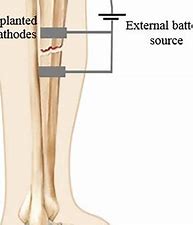
Electrical Bone Stimulation

Bone is one of the tissues in the body that has the ability to mend itself when injured in much the same way as skin and other tissue. Fractured bones go through a natural healing process that includes the growth of both bone mass and density. Most of the time a break will repair itself into a solid union within a few months.

But that doesn’t always happen. The normal process of bone calcification does not take place, as scar tissue and cartilage fill the gap where new bone was expected to grow.

Various technologies exist to stimulate bone growth. One is ultrasound and another is electrical bone stimulation. The most common unit of electrical stimulation uses capacitive coupling technology. This technology employs a stimulator unit with two lightweight, electrodes placed on either side of the bone break or bone fracture. A tiny electrical current passes between the electrodes. The patient cannot feel the current.

Electrical stimulation causes bone cells to proliferate. The idea is to increase the flow of calcium ions into osteoblasts, the cells that deposit new bone.

Electrical stimulation has been used successfully on breaks and fractures of the humerus,  that bone from the elbow to the shoulder, ulna and radius, the bones from elbow to hand,  the femur, the bone from hip to knee, tibia and fibula,  the bones from ankle to knee.

Electrical stimulation is especially useful on scaphoid fractures. The scaphoid bone is one of eight small bones that make up the wrist. These eight bones are in two rows, but the scaphoid bone links the two rows together, making it at high risk for injury.  Fractures of the scaphoid occur when a person falls on an outstretched hand.  This injury happens a lot with athletes.

Another type of unit uses pulsed electromagnetic field technology. A treatment coil is incorporated into the cast or placed directly on the skin over the fracture site. The unit can be programmed to the patient’s needs. A small electric current travels to the treatment coil and produces a pulsating electromagnetic field around the fracture.

The system is very safe, the patient feels nothing, and no surgery is required. There are no known risks and no side effects. About ten hours is the recommended time each day and the unit can be used while the patient is sleeping.

Electrical stimulation is used for spinal bone fusion. Spinal bone fusion is a term used to describe the surgical procedure designed to eliminate motion across a spinal segment. The technique involves the placement of a bone graft across the spinal segments. Two types of bone stimulators can be employed.

One device to promote spinal bone growth can be implanted during surgery. It consists of a battery pack which provides direct current to four electrodes. The battery pack is implanted just below the skin.

The second type uses a corset-like device that has magnetic coils implanted in it. The patient wears it while sleeping. Pulsating electromagnetic energy induces weak electrical current in the underlying tissue.  Sources: http://www.medscape.com, and  Dr. James Deming


Posted in Uncategorized | Leave a comment

Planting the Garden…continued

I enjoyed watching the plants come up. I would look for the tiniest of shoots to poke through the ground, knowing that I had helped plant seeds in that exact spot ten days earlier. I would stand on a row of corn and see if I could make out a line of sprouts. Sometimes I dug down an inch to find a seedling about to break through the ground. If stalks were thwarted by a small clump of dirt, I was told, “Leave them alone. They will come out on their own.”

We helped set out tomato plants and stake them up with binder twine. We spread corncobs among the rows of raspberries to keep the weeds down. We hoed weeds in the sweet corn, onions, and beans. The job I hated most was pulling weeds in the strawberry patch.

We grew lots of cucumbers. Pulling the weeds and harvesting cucumbers was back-breaking work, but it had to be done. A few cucumbers would be missed when harvesting and grew to huge sizes. We gutted the insides of those giants and carved them into boats. We had fun floating them in the cow tank.

Phillip, Bob and I fashioned sails for our cucumber boats and carried out naval warfare in the watering tank. Sticks were used for masts and pieces of tar paper, left over from shingling roofs, made functional sails. Truth be told, those sails were quite useless. We found that the best way to win a naval battle was to simply ram your cucumber boat into your brother’s boat.

Posted in Uncategorized | 2 Comments

Black Boxes on Airplanes

Those data recording Black Boxes are actually painted orange, so that they will show up better in any wreckage. There are usually two of them and they are stored in the tail of the airplane. Stored back there in the tail improves their chances of survivability. Did you ever hear of an airplane backing into a mountain?  Doesn’t happen.

The casing of a Black Box consists of two shells of stainless steel with a heat protective material between the shells. The case must withstand a temperature of 2,000 Fahrenheit for 30 minutes.

Inside the case, on shockproof mounts, are the plane’s flight data and cockpit voice recorders. The flight data recorder is continually fed information on the speed, direction, altitude, acceleration, engine thrust, engine performance, and position of the flight controls.  A total of about 100 different parameters. The data is recorded on stainless steel tape which has the thickness of aluminum foil. When the tape is played back, it generates a computer printout.

The cockpit voice recorder records the previous 30 minutes of the crew’s conversation and radio transmissions. This is a continuous loop tape, so only the last 30 minutes is saved.

New planes joining the airline fleets are using solid-state recorders, essentially stacked arrays of computer chip boards about 2 inches by 1 inch. No moving parts, greater reliability, less maintenance, and less chance of anything breaking in a crash. These newer units record 25 hours of flight data and 2 hours of cockpit conversations. Up to 700 sets of data can be recorded.

The cockpit voice recorder has 4 microphones; one in the pilot’s headset, one in the co-pilot’s (first officer) headset, one in the third crewmember’s headset, and one mounted in the center of the cockpit, so it can pick up alerts and alarms. Many modern planes have a cockpit crew of 2, instead of 3.

Black Boxes are also equipped with an underwater locator beacon. If the plane crashes into water, the beacon sends out an ultrasonic pulse that can be detected by sonar and acoustical locating equipment. A sensor is activated when touched by water. It pings once per second for 30 days.

Air France Flight 447 from Rio de Janeiro to Paris, a wide body Airbus A330, crashed into the Atlantic Ocean in June, 2009, killing all 228 people abroad. It took nearly 2 years to find the Black Boxes in deep water. It required an advanced robotic submersible and millions of dollars to find and retrieve the Black Boxes.

So now the thinking has changed. Why not stream the data in real time to either satellites or ground stations? The technology already exists. Anyone with a smart phone can receive streaming data from the stock markets.

The Canadian airplane maker, Bombardier, announced recently that their jets, starting in 2013, will transmit telemetry data in real time, as well as record it the traditional way on Black Boxes.

A recent patent, called Safelander, would enable a ground-based pilot to take remote control of an airplane in flight. This system, had it been in place, could have foiled the 9/11 hijackers. The military routinely flies drones in surveillance and combat missions. There are now discussions about cargo-only aircraft, such as United Parcel and Fed Ex, being flown by remote control, with no cockpit crew whatsoever. We are living in truly exciting and wondrous times!


Posted in Uncategorized | 1 Comment

Planting the Garden

After Dad had the gardens dragged smooth, it was time to plant. All the Scheckel kids helped plant the garden. Each kid planted according to our age and ability. Binder twine was rolled on a stick. Mom showed us how to push a stick into the ground. Then we would unroll the binder twine to the other end of the garden. We would pound in another stick and tie the binder twine. A trench was dug using a hoe held at an angle. Mom gave us the seeds, told us how far apart to place them, and showed us how to use our hands to cover up the seed.

Corn, peas, and bean seeds were easy to plant. But some seeds were hard to see and difficult to handle. I had trouble determining how far apart to plant the seeds for carrots, radishes, beets, and lettuce. Mom showed us how to place the seed packet over the stick to mark what was planted. We also planted string beans and cabbages.

We grew pumpkins among the sweet corn. Cucumbers took up a lot of space. Watermelon seeds were planted in a nearby field of corn, usually in the sandhill field.

Strawberries were perennials, so they came back without planting. Raspberries and rhubarb also came up every year. We had an entire row of rhubarb behind the garage. We would cut off a stalk and go to the house, and dip the rhubarb into a handful salt. We learned not to eat too much rhubarb at one time, because it would “clean a person right out.” Apparently, rhubarb was a natural laxative.

Asparagus grew wild in tall stalks alongside the gravel road. There was no need to cultivate or tend it. But asparagus would get covered with the dust of passing cars and need to be washed thoroughly before we could eat it. It was delicious and tender. Continued next week….


Posted in Uncategorized | 2 Comments

How do animals protect themselves from danger?  

 Animals have developed numerous remarkable defenses to keep from being devoured by their enemies. Grazing animals will feed in herds. The deer, buffalo, and zebra fall in this category. They will scatter when attacked, confusing their pursuers.

Some change their behavior. The opossum will play dead. Some beetles and millipedes will also fake death. The meadowlark pretends it has a broken wing.

Many animals have a keen sense of hearing, smell, and sight.  They survive by running or flying away. The crow is one of the best at sensing danger. Some creatures have horns or antlers that they will use to fend off predators.

There is a whole category of animals, such as garden snails, tortoises, crabs, and clams that are covered by a hard shell. Clams close up their shell. The tortoise or turtle can pull in its head and legs for greater protection.

Porcupines and starfish have needles or spines to ward off enemies. The sting of poison protects wasps, scorpions, centipedes, and some snakes.

Animals can change their color to match their surroundings. The arctic fox has grey fur in spring and summer. As fall and winter approaches, the fur changes to a white  to go with  the snow color. The chameleon and iguana change skin color to match its background. Camouflage is a powerful tool in the animal kingdom.

Tigers, raccoons, and bears have extremely sharp claws and teeth that discourage others from messing with them.

The daddy long-legs spider has a long, thin body that looks like a stick or twig. Its color blends in with trees and branches. Leaf insects are hard to sport as they merge in with the green leaf.

A few creatures don’t taste good to their foe. Many of these have bright colors to let their enemies know that they are not worth eating. Sea slugs are a prime example.

Squids emit a black ink to hide themselves in the water. The skunk smells bad. Some animals don’t hang around in the same place. Some migrate, others hibernate. Some stay close to home and can dart underground when danger lurks. The gopher and prairie dogs are examples.

Animals that find ways to protect themselves and live long enough to have families will survive. Creatures that do not find such means will be killed off by their enemies. It’s a cruel world out there!

When all the animals of any kind are easily killed by their enemies, or by cold, heat, or lack of food, that type of animal becomes extinct.

Sources: www.nature.com  and  http://www.greenwing.org


Posted in Uncategorized | Leave a comment

Garden and horseradish

As soon as the frost was out of the ground in the spring, Mom planted her gardens. She had three of them. Two gardens were in the enclosed fence and one was across the road. The smallest garden was south of the house next to the clotheslines.

Dad would first plow the gardens for Mom. He hitched Dolly, the big black horse, to the hand plow. Back and forth they went, Dolly’s head bobbing up and down, snorting a bit, foam gathering at her mouth. She was a gentle beast, and I loved riding on top of her, holding onto the hames.

The disk was not necessary, as there was no sod to break up. A single drag was used. Three drag sections fastened together were needed in the field, but the garden was so small only a single section could be used.

In early spring, the small garden yielded something unique and wonderful: horseradish. This was a perennial and came up every springtime, without us ever having to replant it. It was a tuber, much like a potato, but elongated and whitish-brown. Our horseradish had green leaves with white flowers.

Phillip, Bob and I trailed behind the plow with pails picking up the horseradish. The difficult part was taking the horseradish to the basement to mash through the meat grinder, the same hand-turned meat grinder we used for grinding pork and making sausages.

We cut the tuber into smaller chunks. Next, we pushed the horseradish down into the mouth of the grinder with one hand, using the other hand to turn the crank. Horseradish takes a toll on one’s eyes. Soon our eyes would water and start to burn. We would beat a hasty retreat for a few minutes and then go at it for another few minutes.

Mom canned the horseradish. It was excellent on meats and potatoes in the winter. All that work and anguish of grinding horseradish was worthwhile.


Posted in Uncategorized | Leave a comment

How many women have won the Nobel Prize?

The Nobel Prizes in Chemistry, Physics, Physiology/Medicine, Literature, and Economic Science are awarded annually in Stockholm by the Royal Swedish Academy of Science. The more famous Nobel Peace Prize is awarded annually in Oslo, Norway on December 10, the anniversary of Nobel’s death. The King and Queen of Norway attend.

Four women have earned the Nobel Prize in Chemistry. The best know is Maria Curie, in 1911, for the separation of pure radium. Her daughter won the Chemistry Prize in 1935 for the discovery of artificial radioactivity.

Two women won the Nobel Prize in Physics. Again, is was Maria Curie in 1903 for the discovery of radioactivity. The other was Maria Goeppert Mayer in 1963.

Ten women earned the Nobel Prize in the field of Physiology and Medicine. Best known are Rosalyn Yalow (1977) for work in radioisotope tracing and Barbara McClintock (1983) for her efforts in genetics.

Pearl Buck is one of twelve women awarded the Nobel Prize in Literature. Her 1938 Nobel Prize cited her “rich and truly epic description of peasant life in China”. Her best know book is “The Good Earth” which also won the Pulitzer Prize.

The first and only woman to win the Nobel Prize in Economic Sciences is Elinor Ostrom (2009) “for her analysis of how common property could be managed by groups using it”.

Fifteen women have won the Nobel Peace Prize. The most recognized would be Jane Addams (1931), founder of Hull House in Chicago, and Mother Teresa (1979), a native Albanian nun who found missions in India, starting in Calcutta.

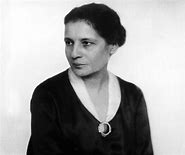
There is one woman that history now recognizes really got cheated out of a Nobel Prize.  That would be Lise Meitner. Born in Austria in 1878, Meitner was half of  the team that discovered nuclear fission.  Meitner and Otto Hahn worked together at the Kaiser Wilhelm Institute in Berlin, Germany.

When Hitler came to power in 1933, Lise Meitner, born of Jewish parents, was protected by her Austrian citizenship. But after the Anschluss, the annexation of Austria into the Third Reich in March, 1938, her situation became desperate. She made a daring undercover escape to the Netherlands, than traveled to neutral Sweden.

Lise Meitner corresponded with Otto Hahn and the two met in Copenhagen in November, 1938. They planned to carry out a new round of experiments on the fissioning  of uranium, but Meitner could not go back to Nazi Germany, so the experiment was done by Otto Hahn and Fritz Strassmann.

It was Lise Meitner and her nephew Otto Frisch, who correctly interpreted the result of the experiment that detected the element barium after bombarding uranium with neutrons. Now the whole world knew that the uranium atom could be split, with a tremendous release of power and that several neutrons were also released. A chain reaction and the atomic bomb were possible.

Otto Hahn was awarded the Nobel Prize in 1944. Missing from the ceremony was Lise Meitner. In 1964, The “Physics Today” magazine concluded that “personal negative opinions lead to the exclusion of a deserving scientist” from the Nobel Prize. Element 109, “Meitnerium”, is named in her honor.


Posted in Uncategorized | Leave a comment

Building a Hog House on the Scheckel Farm

I learned to drive a nail straight, how to use a level, what mixtures went into concrete, how to place a header, and how hinges worked. We had a small gasoline engine to power the cement mixer. I learned how to use the pedal to start the engine, how to fill the small gasoline tank, how to check for water that got into the gasoline, and how to clean the air filter. I was taught how to remove the wire from the top of the spark plug and to check if sufficient spark was produced to create ignition.

The pure drudgery of the work seemed overwhelming at times. But we knew it had to be done. We were very tired as night approached, with aching muscles, but the chores also had to be done. There remained the work of feeding the chickens, gathering the eggs, slopping the hogs, milking the cows, watering and feeding the horses.

The Scheckels had an excellent hog house when the labor was done. We poured a concrete apron for the pigs to walk on, and to hold their feeding troughs and watering stations. A nice walkway was made between the hog house area and corn crib. The hog house had windows on both sides and doors on each end. We gave it two coats of white paint.


Posted in Uncategorized | Leave a comment