Do fish sleep?

 Yes, fish do sleep. Fish spend part of each day sleeping. They don’t have eyelids that open and close. Fish are sleeping if they are at the bottom of the fish tank and don’t move, except for making the minimum correcting motions with its fins to keep it in position. They seem to be in a trance-like state of suspended animation. If you drop food in the tank while your goldfish is “sleeping”, you will perhaps notice the fish takes longer to respond.

Fish sleep is a bit different than the sleep we humans enjoy. For most fish, it is a period of rest and reduced activity, not the deep REM brainwave activity occurring in humans. Scientists have recorded brain waves (EEG) on catfish. They show a distinct difference in the patterns between being awake and being asleep.

Fish need the restorative nature of reduced activity and slower metabolism that comes with sleep. In that respect, they are the same as humans and most all others in the animal kingdom.

Researchers kept some zebra fish awake by repeatedly giving them a mild electric shock. They found the fish suffered from sleep deprivation and insomnia. These pestered fish tried to catch up on their lost sleep as soon as they were left undisturbed.

Fish sleep behavior varies widely. Some fish will wedge themselves in a spot in the coral or mud. Some build a little nest. The parrot fish secretes a mucus sleeping bag around itself. Other fish will change color slightly taking on a duller color, so they are less noticed. Sharks have to keep moving to have a flow of oxygen and water moving through their gills.

The behavior of minnows change when they are trying to get some zzzzz’s. They are very active in schools during the time they are awake. But they scatter and stay motionless during rest periods.

What do you call a fish with no eyes? Fsh

Sources: www.nefsc.noaa.gov/faq/fish  and http://www.newton.dep.anl.gov


Posted in Uncategorized | Leave a comment

Going to Town continued

Continuing the Going To Town story from Seneca Seasons: A Farm Boy Remembers. We loaded up some pigs and took them to the livestock market at the edge of Seneca. Dad and the stock buyer, Bill Bernier, haggled over price for 20 minutes, the hogs were unloaded and we drove to downtown Seneca.

Dad banked at Prairie City Bank, run by Clarence Paulson, which was located right next door to Kane’s IGA. Seems he was the only man in town that wore a suit on a weekday. The store was started by J.H. Finley and W.D. Kane, and later Kane’s son-in-law Harold Trehey came on board. He is the grocer I remember. He stood behind the counter and filled the order that Dad had on his list. Boxes of cereal were on shelves stacked up near the ceiling. Mr. Trehey used a long pole to tip a box of cereal over and catch it in his arms. He then put it with the other items on the counter. In those days, shoppers did not go up and down the aisles picking up items.

Entering the store, we were met with the distinct aroma of cheese, pickles, kerosene, vegetables, cattle feed supplements, dog and cat food, cured meats, leather, and tobacco smoke.

Dry goods were displayed on open wooden tables with a railing around each table. Shoes, clothing of all types, belts, gifts, knickknacks, household appliances of every description, salt blocks, tools and feed stocks for livestock.

Phillip, Bob and I wondered around the tables while Dad got the order filled. “Don’t touch stuff,” Dad would caution. Yet we did, especially the toys. Why put out toys if kids are not to touch them? was our thinking.


Posted in Uncategorized | Leave a comment

Contrails behind airplanes   

Contrail is a contraction of the two words “condensation trails.” Contrails are those long, thin, artificial clouds that can form behind aircraft.  At high altitudes, generally 25,000 feet or more, the warm exhaust from aircraft engines mixes with the moisture laden air at low temperature. The invisible water vapor condenses on the exhaust particles, essentially forming a momentary cloud.

We see the same phenomena taking place on the ground when we go outside in cold winter weather and notice a cloud formed by our breath.

Contrails were noticed back in the 1940’s, especially when the United States Eighth Air Force send hundreds of B-17 bombers from England to hit targets in Nazi Germany. Americans saw the contrails on Movietone News Reels seen in movie theatres.

The length of time that the contrails persist depends on the altitude, temperature, water vapor content, and sheer winds. If the winds aloft are calm, the contrail will keep its shape and be seen from horizon to horizon.

Sometimes, strong winds will spread out the contrail, so it looks like those high-altitude cirrus clouds, often referred to as “mare’s tails.”

Cloud seeding has been in operation in various locations around the globe since the 1950’s. Shooting silver iodine crystals into clouds causes the clouds to give up their water content. Cloud seeding has been used to relieve drought, increase snowfall, dissipate hurricanes, and suppress hail.

The Chinese government promised clear skies for the August 8 opening of the 2008 Summer Olympics. They launched 1,100 rain dispersal rockets from 21 sites around Beijing. Sure enough, no rain fell on their parade.

People in rural areas tend to pay close attention to the skies. They generally report seeing more contrails these days compared to decades ago. That is no doubt true, as there has been a large increase in jet traffic, both civilian and military.

In addition, much of that air traffic has been at higher altitudes, some as high as 40,000 feet, where winds aloft are less likely to disperse the contrails quickly.

There have been those stories, held by conspiracy theorists, that chemicals are being spread from planes for a certain purpose. They call them “chemtrails” rather than “contrails”.

Some of the chemtrail conspiracy stories that float around the Internet claim that barium, aluminum salts, thorium, and silicon carbide are being released. Other accounts have the skies being seeded with electrically conductive materials as part of a super weapons program. Other stated reasons are population control and alleviating global warming.

Studies done in the United States, Canada, and Great Britain found no scientific evidence to support the allegation that high altitude spraying is being conducted.

These operations may very well be going on, but thus far nobody has brought forth any proof or evidence. They remain, for now, just conspiracy theories.


Posted in Uncategorized | Leave a comment

Going to town

“Going to town” meant going to Seneca, two miles southeast of the Scheckel farm. Seneca was established in 1857, when landowner Sam Langdon had 10 acres surveyed and platted. The town was named after the town of Seneca in New York state. Langdon built a hotel and the road through Seneca became known as the Black River Road, the only route between Prairie du Chien and Sparta. Seneca became a stagecoach stop, featuring a blacksmith shop, trading post, drug store, shoemaker, harness shop, and a wagon maker.

Going to town was exciting to the Scheckel farm kids. There were always people walking about, greeting each other with waves, going in and out of stores. Tractors, wagons, and machinery drove right down Main Street, which was actually Highway 27. Seneca had only one other street, which we called “the Back Street.” Back Street had a few houses and Ervin Walker’s garage. Seneca also had a memorial to the servicemen who fought in the World Wars that resembled a white picket fence.

Mom would make out a grocery list as the days passed on the farm. Dad would most often pick up the list when he went to town. We kids always wanted to go with Dad. We would stop in Seneca after confessions on Saturday afternoon, or a brief stop after Sunday Mass. Both stores opened for a few hours on Sunday morning for the “church crowd.”


Posted in Uncategorized | Leave a comment

Mechanical Heart

In 1982, a 61-year-old dentist, Barney Clark, became the first human to receive a permanently implanted artificial heart. It was known as the Jarvik-7 after its inventor, Dr. Robert Jarvik. Barney Clark lived 112 days after the operation. William Schroeder lived 620 days after he received a Jarvik-7 mechanical heart in November 1984.

Several thousand people have received the SynCardia artificial heart. The SynCardia heart is a total heart, in that all four chambers are replaced. SynCardia is located in Tucson, Arizona. It has been approved in Europe and is undergoing FDA clinical trials in the U.S. as a bridge to transplant for both pediatric and adult patients.

SynCardia is totally implanted, and the internal battery is charged via two coils, one internal and one external to the body.  Power is transmitted, via magnetic force, across the skin without piercing the surface. The rechargeable battery is implanted inside the patient’s abdomen.

The advantage of this method of power delivery is that there are no wires or tubes coming out of the body. This technique lowers the chance of infection and allows greater patient movement. The “recharging through the body” permits the person an hour to get up out of the bed, take a shower, walk the dog, and go back and get a recharge.

Heart failure causes 40,000 deaths per year. Yet only about 3,000 hearts are transplanted each year. The need for human hearts greatly outpaces the supply. This makes a totally self-contained implanted mechanical heart a high priority item. People diagnosed with heart failure live 5 years on average. They will need a transplant or artificial heart to extend their life.

There are a number of problems to overcome to get a true “put it in and forget about it” mechanical heart. The power to operate a mechanical heart is substantial.  Much more than a pacemaker, which requires very little power. The power supplies for the Jarvik-7 resembled the farm milking machines. Two large plastic tubes went through the patient’s chest wall and were connected to a small refrigerator-size unit that did the pumping.

The heart is a pump, but not the kind of pump we use in our homes and cars. These pumps have impeller blades and can’t be used in an artificial heart. Impeller blades would crush the red blood cells. Artificial hearts use hemispherical diaphragms that inflate and deflate to move the blood.

The seams and valves are places where blood will clot. These clots can later break loose, and cause life-ending strokes. Rejection is a problem. The body tends to reject anything that is not “home grown.” Some parts of newer machines are made from chemically treated animal tissues or biomaterials.

Skumin syndrome is a mental disorder developed by a quarter of all patients who get an artificial heart, or even a valve replacement. There is something very disconcerting about feeling and hearing that pump working inside them. They have persistent doubts about the reliability of the devices, fear of breakdown, and suffer anxiety and depression.

Posted in Uncategorized | Leave a comment

Visit to La Crosse

Continuing our journey from the Scheckel farm near Seneca to La Crosse, a trip we took twice a year when I was a boy, in the early 1950s.

We were not allowed to walk alone because it was crowded with both people and cars. We had to hold Dad’s or Mom’s hand. We thought the buildings were skyscrapers, but they were only five stories high.

The lights and sirens and window displays were strange and new to me. There was a red three-foot-tall cone keeping a beach ball aloft by the airstream. Once a kid knocked the ball away and his mother yelled at him. Mom did her shopping. Dad took Phillip, Bob, and me to the Sears Store. The basement had all the farm supplies and small machinery.

We went into Penny’s store on Fifth Street. They had an escalator that went from the first floor to the second. How lazy are people that they can’t even walk up one flight of steps, I thought.

Jack Martin did live noontime street interviews for radio station WKBH. He was the station’s farm reporter. We watched him talk to somebody that passed by. Phillip, Bob, and I edged closer. We were curious. Dad shooed us away. No need to get involved.

Dad, with his three boys in tow, met Mom at the Bodega Restaurant on Fourth Street for noon dinner. It was the only time we ever ate at the Bodega, and the only time I ate in a restaurant until I was a teenager. Each of us got a tray and went down the line. Mom selected the food, Dad paid, and we found a table.

Posted in Uncategorized | Leave a comment

Animals Sense Storms

Yes, some animals are very keen in sensing a forthcoming storm or other natural phenomena such as an earthquake, tidal wave, and tsunami. There is evidence that some animals do make better use of their existing five senses compared to humans.

In December 2004, a huge tidal wave hit Southeast Asia and killed 200,000 people. Almost no wild animals died, except those penned up in cages.

Prior to a large tsunami that stuck Sir Lanka in 2005, elephants ran for higher ground, dogs would not go outside the house, and flamingos left their low-lying coastal breeding areas.

Just before the big earthquake and tsunami that slammed into Japan in March, 2011, people reported that animals behaved erratically. Some animals tried to get to higher ground, while others became distressed and anxious.

The prevalent feeling among researchers is that some animals can detect earthquakes and earth tremors as they are happening, even from a long distance away.

Animals are able to hear sounds that humans can’t hear. Frequencies below the range of human hearing are termed infrasonic. Humans can’t hear frequencies, tones, or pitches below about 20 cycles per second, or 20 Hertz.

Elephants can “hear” below 20 Hz. They hear through their big feet. Earthquake shockwaves and ocean waves occur at frequencies elephants can hear, but humans can’t.

Hurricanes produce large decreases in air pressure and water pressure. Sharks that were tagged with tracking sensors were observed to swim to deeper waters during Hurricane Charlie.

Birds and bees also are sensitive to air pressure changes. They will cover their nests or hives in advance of a severe storm. Many people observe that birds will hunker down as a big storm is approaching. Worms will avoid rising groundwater.

On the high end of the scale, humans can’t hear much above 20,000 Hz. Dogs and cattle can hear up to 40,000 Hz.

A question often comes up. Can the behavior of bears give any indication as to the severity of winter? Most researchers think the answer is no. What about the groundhog? Is Punxsutawney Phil accurate? If the Pennsylvania furry rodent sees his shadow on February 2, there will be six more weeks of winter. If no shadow, it’s an early spring. Phil has been correct 39 percent of the time according to StormFax Weather Almanac. Not a good record!

In short, scientists believe that many animals are attuned to their environment and that very small changes in that environment will cause them to move to a safer condition.

The Scheckel farm boys out on Oak Grove Ridge, outside of Seneca, in the heart of Crawford County, kept a sharp eye out for the wooly bear caterpillar. Lots of wooly bear caterpillars can be seen in late September and all through October. The ends of the wooly bear caterpillar are black and the band in the middle is a brown-orange.

It was common knowledge that the wider the middle brown-orange band, the milder the winter. Conversely, if the middle band was narrow, prepare for a long, harsh winter. All the farmers on Oak Grove Ridge had a deep and abiding faith in the wooly bear caterpillar. That rural lore was passed down from generation to generation. Wooly bear was better than the weather forecasters and as reliable as the Old Farmer’s Almanac!


Posted in Uncategorized | Leave a comment

  Going to La Crosse

Continuing our journey from the Scheckel farm near Seneca to La Crosse, a trip we took twice a year when I was a boy, in the early 1950s.

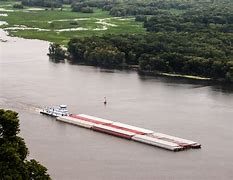
An artesian well was located near De Soto. It was clearly marked along Highway 35 on the right-hand side going north by a pipe sticking out of the ground. Water ran continuously from the hills, but I really didn’t understand artesian wells and springs at that time. We kept our eyes out for barges on the Mississippi River.

From our farm at night, we could see the towboat spotlights sweeping the hills and bluffs. We would spot a shaft of light as it illuminated fog and low clouds. Sometimes, if conditions were just right, we could hear the foghorn from a towboat. The next community north was Stoddard, named after Thomas B. Stoddard, the first La Crosse mayor. Stoddard had studied law under Aaron Burr. Burr killed Alexander Hamilton, the U.S. Secretary of the Treasury, in a gun duel on July 11, 1804. We read about the duel in our school lessons. On the southern outskirts of La Crosse, we spotted the impressive Holy Cross Seminary and its spacious lawn that spread out to Highway 35. We passed houses, factories, and apartment buildings. Dad parked the car in the lot near the La Crosse Tribune on Fourth Street.

Posted in Uncategorized | Leave a comment

Journey to LaCrosse-BlackHawk War

Continuing our journey from the Scheckel farm near Seneca to La Crosse, a trip we took twice a year when I was a boy, in the early 1950s.

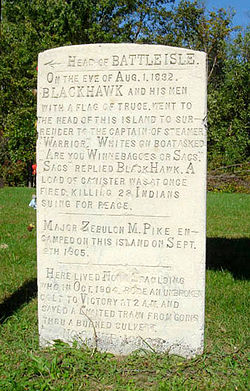
A few miles north of De Soto was Battle Hollow and the little community of Victory. Dad stopped the car so we could read the stone tablet markers put up to commemorate the Black Hawk War.

At that time, the big wooden markers that we now have in Wisconsin didn’t exist. Most roadside markers were white marble slabs that were identical to the grave markers prevalent in cemeteries. We got out of the car and walked up to the stone tablet. It read:

HEAD OF BATTLE ISLE. ON THE EVE OF AUG. 1, 1832, BLACKHAWK AND HIS MEN WITH A FLAG OF TRUCE WENT TO THE HEAD OF THIS ISLAND TO SURRENDER TO THE CAPTAIN OF STEAMER WARRIOR. WHITES ON BOAT ASKED ARE YOU WINNEBAGO OR SACS? SACS REPLIED BLACKHAWK. A LOAD OF CANISTER WAS AT ONCE FIRED, KILLING 28 INDIANS SUING FOR PEACE.

I recall being very impressed by these markers. I liked standing where a famous war had been fought. The U.S. Army pursued the Indians from below Madison, all the way up through Wisconsin Heights, Soldiers Grove, across the Highway 27 and down into the valley.

I later learned that the stone markers do not tell the whole story or accurate rendition of the Black Hawk War.

Posted in Uncategorized | Leave a comment

How do animals protect themselves from danger?

Animals have developed numerous remarkable defenses to keep from being devoured by their enemies. Grazing animals will feed in herds. The deer, buffalo, and zebra fall in this category. They will scatter when attacked, confusing their pursuers. Some change their behavior. The opossum will play dead. Some beetles and millipedes will also fake death. The meadowlark pretends it has a broken wing. Many animals have a keen sense of hearing, smell, and sight.  They survive by running or flying away. The crow is one of the best at sensing danger. Some creatures have horns or antlers that they will use to fend off predators.

                There is a whole category of animals,such as garden snails, tortoises, crabs, and clams that are covered by a hard shell. Clams close up their shell. The tortoise or turtle can pull in its head and legs for greater protection. Porcupines and starfish have needles or spines to ward off enemies. The sting of poison protects wasps, scorpions, centipedes, and some snakes.

                Animals can change their color to match their surroundings. The arctic fox has grey fur in spring and summer. As fall and winter approaches, the fur changes to a white to go with the snow color. The chameleon and iguana change skin color to match its background. Camouflage is a powerful tool in the animal kingdom.

                Tigers, raccoons, and bears have extremely sharp claws and teeth that discourage others from messing with them. The daddy long-legs spider has a long, thin body that looks like a stick or twig. Its color blends in with trees and branches. Leaf insects are hard to sport as they merge in with the green leaf. A few creatures don’t taste good to their foe. Many of these have bright colors to let their enemies know that they are not worth eating. Sea slugs are a prime example.

                Squids emit a black ink to hide themselves in the water. The skunk smells bad. Some animals don’t hang around in the same place. Some migrate, others hibernate. Some stay close to home and can dart underground when danger lurks. The gopher and prairie dogs are examples.

                Animals that find ways to protect themselves and live long enough to have families will survive. Creatures that do not find such means will be killed off by their enemies. It’s a cruel world out there!

                When all the animals of any kind are easily killed by their enemies, or by cold, heat, or lack of food, that type of animal becomes extinct.

Posted in Uncategorized | Leave a comment