Writing A Science Column

We have a new book, I’ve Always Wondered About That, published by Tumblehome Learning, coming out this Fall.

It is a Question and Answer format. Some of the questions are; Why is there a big E at the top of the eye chart? Why are some dogs afraid of thunderstorms? Do horses sleep standing up? If a person eats one pound of food, do they gain a pound of weight? Why don’t microwaves leak out through the holes in the microwave door? Who was the greatest scientist of all time? Why is the sky blue? If you hit a golf ball on the moon, how far will it go? How do airbags activate? What is an atomic clock? Is time travel possible? Do divining rods or dowsing rods actually find water or underground pipes? What happens when you split an atom? Why does hot water freeze faster that cold water? If you are in a falling elevator, can you save yourself by jumping up just before it hits ground level? Why is Chicago known as the Windy City?

It requires considerable time and yes, some effort, to write a science column. No one has expertise in every conceivable subject area. My background is in the physical sciences of chemistry and physics. When I receive questions from kids and adults about the biological sciences, about living things and the human body, I have to look stuff up. I run medical questions past several doctors before submitting to the newspapers.

I check things with a nutritionist, a dentist, an engineer, and a university professor. Several questions verging on religion and theology have been reviewed by a “man of the cloth.”

At the present time I am working on these questions: How come I can see lightning a long time before I hear the thunder? Why does Earth have air, or an atmosphere, but other planets don’t? What are the health benefits of eating alkaline foods and their effects on cancer and diseased cells? Why do giraffes have long necks? Why doesn’t the Earth have more craters, like the Moon? Can a hole be drilled all the way through the Earth?

If you have a question of any kind, email me at lscheckel@charter.net.


Posted in Uncategorized | 1 Comment

New Book Coming Out

The science column Ask Your Science Teacher has appeared weekly in the Tomah Journal since 1993. A similar column, Science Made Easy, has been published in the Monroe County Herald for the last two…

Source: New Book Coming Out

Posted in Uncategorized | Leave a comment

New Book Coming Out

The science column Ask Your Science Teacher has appeared weekly in the Tomah Journal since 1993. A similar column, Science Made Easy, has been published in the Monroe County Herald for the last two years.

It is a Question and Answer format. The questions come from both school children and adults. Students receive a coupon from McDonalds and Pizza Hut if their question is chosen to be in the newspaper. Past questions have been formatted for a book Ask Your Science Teacher published in 2011 and another book from Experiment Publishing entitled Ask A Science Teacher, which came out in 2013.

A new book, I’ve Always Wondered About That, by Tumblehome Learning, from the Boston area, is due out this Fall 2017.askascienceteacher-cover

I’ve included a column below from 1994.

Question: If you are in an elevator that is falling, can you save yourself by jumping up just before the elevator hits ground level?

Answer: A fine question and one that people have debated for many years. Good luck, but if the elevator falls any significant distance, jumping up will not make much of a difference. First of all, if a cable broke, you would be in free fall and floating around inside the elevator. The astronauts in the space shuttle are really in the same situation. They are in constant free fall.  There is only a slight chance your feet will be in contact with the floor when the elevator runs out of shaft. But let’s say your feet are ‘velcroed’ to the floor and you can somehow tell the proper time to jump upward. Pretend the elevator falls 10 floors, or about 120 feet. You would be going about 88 ft/sec or 60 mph. Let’s pretend you can jump up in the air a distance of 4 feet. (Only a few basketball players have a 4 foot standing jump). You would jump upward at 16 ft/sec or about 10 mph. So, if you subtract the 10 mph from the 60 mph, you’re still slamming into the ground at 50 mph. Now remember, most of us can’t jump up a distance of 4 feet. We’re lucky to do 2 feet.

Not to worry. If the elevator cable breaks, safety devices will stop the elevator from falling. Elisha Otis invented the safety elevator in 1885 for the ten story Home Insurance Company skyscraper in Chicago.


Posted in Uncategorized | Leave a comment

First Signs of Spring

We Wisconsinites always look forward to the first signs of Spring. I suppose those signs are unique and different for each of us. One of the first signs for me is baseball Spring Training, when pit…

Source: First Signs of Spring

Posted in Uncategorized | Leave a comment

First Signs of Spring

We Wisconsinites always look forward to the first signs of Spring. I suppose those signs are unique and different for each of us. One of the first signs for me is baseball Spring Training, when pitchers and catchers report to their team’s training facilities, either in Florida or Arizona.

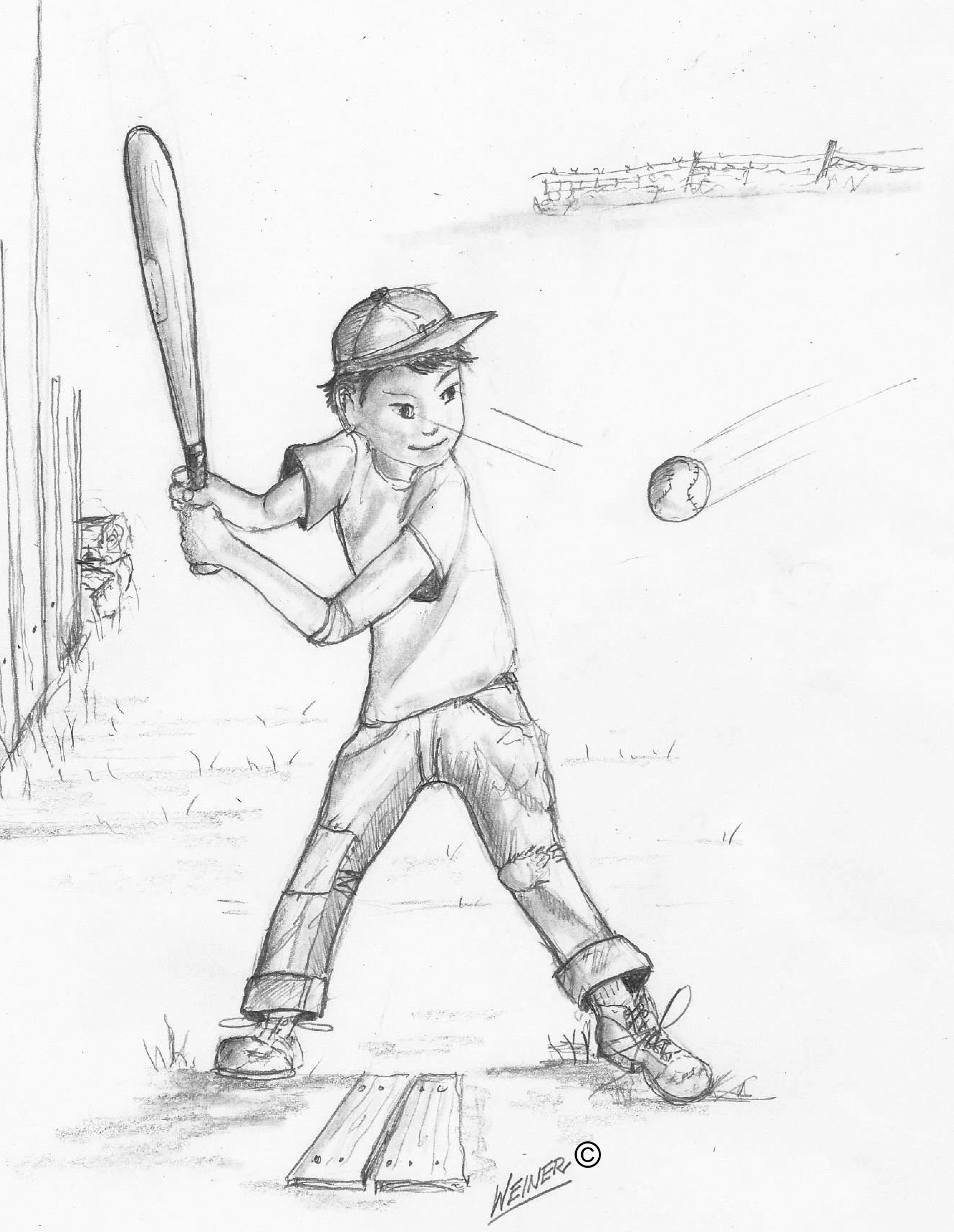
For this year, 2017, it was Tuesday and Wednesday Feb 14 and Feb 15. Tsk-40-softball-batterhe rest of the rosters will report next week, starting on Monday Feb 20. I believe the Dodgers will go to the World Series this year.

A sure sign of Spring is the maple trees. I look for the swelling of the buds. They don’t leaf out ‘till much later, but the buds swell in response to the longer daylight hours. We have 2 big maples in the back yard. The sap is running, but I’ve never got into the collecting of sap and boiling it down to syrup. You do know that there is some little sap in every family tree!

Of course, we do see the daylight hours increase, the Sun coming up a bit earlier and setting a bit later each day. As a kid on the farm, we noticed the Sun came up in the morning over Stovey’s farm buildings in the summer, but in the winter the Sun came up over Kuntz’s place. Stovey’s farm was to the northeast, and Kuntz’s to the southeast. Never understood why until much later.

Which reminds me of the story of my brother Bob and Gene Ingham who teamed up to play a bit of a prank on Willie Knutz. Willie raised goats and one or two of them were frequently tethered out by Oak Grove Ridge Road.  They were staked out so they could graze on the fresh grass.  We would see those goats each time we passed the Kuntz roadway, whether we were in the Scheckel car or on the school bus.

Bob and Gene, only a rumor you understand, removed the tether rope from the stake in the ground and they tied the end of the rope to the electric fence.  We don’t know if Willie ever determined who pulled this hoax. The goat came to no harm. But the deed lives on in Scheckel folklore and the tale is embellished at each family reunion. At last telling, the goat was fried!

Other signs of Spring in the past: breaking out the softball and bat at Oak Grove school, watching the snow melt go through the culver under the road by the Ingham farm, the V formation of flocks of geese heading north, Valentines Day at Oak Grove school, Ground Hogs Day, the first robins in the lawn, mourning doves, swallows returning and building their mud nests in the Small Barn, and seed catalogs arriving in the mail.


Posted in Uncategorized | Leave a comment

Paul Scheckel’s Gifts

Our son, Paul Scheckel, passed away on Tuesday, January 24, due to pneumonia. He was 50 years old. Paul was in the hospital for 10 days, the last 4 on life support. Ann and I were with him at the e…

Source: Paul Scheckel’s Gifts

Posted in Uncategorized | 2 Comments

Paul Scheckel’s Gifts

Our son, Paul Scheckel, passed away on Tuesday, January 24, due to pneumonia. He was 50 years old. Paul was in the hospital for 10 days, the last 4 on life support. Ann and I were with him at the end. He received the Last Rites. paul-scheckel

A transplant team from UW-Madison flew to La Crosse that same morning. When the ventilator tubes were removed, a doctor recited the 23rd Psalm.

Yesterday we received in the mail a beautiful package from the UW Organ Donation organization. The certificate read in part “Although he will be missed greatly by his family, friends, and neighbors, they can take comfort in knowing that through his compassion and concern he will hold forever a special place in the hearts of other individuals and their families and friends.”

“His liver was transplanted into a patient from Wisconsin who had been on the transplant waiting list since May 2016. His left kidney was transplanted into a patient from Wisconsin who had been on the transplant waiting list since March 2015. His right kidney was transplanted into a patient from Illinois who had been on the transplant waiting list since January 2012.”

It gives us a great measure of consolation knowing that Paul has helped 3 people live a better life, perhaps even saving a life.

Ann and Larry Scheckel


Posted in Uncategorized | 6 Comments

Books on the Farm

A traveling library stopped in Seneca, in the heart of Crawford County, once a week in the 1940s and 1950s. It came out of Prairie du Chien, the County seat, and made regular stops for several hours at a time,  in many small towns. The traveling library was a small van. You could walk up the steps in the back,  and the insides would be lined with books that you could check out.  Your limit was 4 books per person, good for 2 weeks. We checked out Zane Grey books, Red Ryder, adventure stories, history books on the Civil War, the Hardy Boys series. I tended to pick out a book that had an interesting cover. I figured if the cover was good, the book inside had to be good.

We owned very few books on the farm. Dad and Mom did not buy books, unless there were a few available at farm auctions that cost a few cents. One such book was from the Hardy Boys series, “The Sign of the Crooked Arrow”. I must have read that book 4 or 5 times. Joe and Frank Hardy fly down to New Mexico to help their cousin on the Crowhead Ranch. The ranch hands are disappearing one by one and the Hardy Boys help the police apprehend a vicious gang of outlaws.

We had one Roy Rogers book, forgot the name, but the bad guy is not known until the end of the book, and it turns out he was a blind man who was not really blind.

Quite often Saturday night would find us over to Boscobel to buy groceries. My sister Rita remembers that you could go into a used book store and buy a book for 10 cents, read it, and bring it back and sell it for 5 cents. She read many of the Nancy Drew books. I believe we boys did that also, but my memory is not clear on it.

We owned one encyclopedia, not a set, just one book, I believe it was the “N” volume. It was published in 1937, and refers to World War I as the “Great War”.

The mailman delivered the Sears, Roebuck catalog and the Montgomery Ward catalog. These were big, thick catalogs and seems to weigh a ton. But they were a window to the world for us kids. A farmer could order just about anything that was manufactured, including complete houses, cars, machinery, tools, household appliances, chickens, bees, clothes, and best of all- toys.

There was a section of female undergarments that became more intriguing as we boys got older. The Montgomery Ward catalog had “good”, “better”, and “best” categories of merchandise. Prices increases as you went from good to best. The catalogs were around the house all the time, and many a spare minute was spent just browsing through the thick books.

Jung’s and Burpee seed catalogs arrived in the dead of winter. The bright vibrant colors of the pictures of vegetables and fruits contrasted sharply with the barren fields and snow covered hills surrounding the Scheckel farm.


Posted in Uncategorized | Leave a comment

Radio Programs on the Seneca Farm

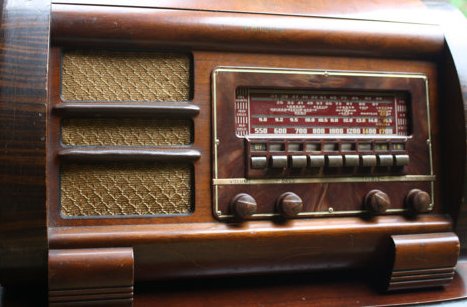
There was no television on the Scheckel farm out on Oak Grove Ridge in the middle of Crawford County in the 1940s and 1950s. Our Silvertone radio had an aerial, a wire that ran from the house to the windmill, insulators on both ends.

Westerns were our favorites. Other radio programs were Edgar Bergen and Charlie McCarthy. Edgar Bergen was the ventriloquist and Charlie McCarthy was his wooden dummy. He would interview famous guests such as Jimmy Steward and Mae West. Edgar Bergen had another wooden dummy named Mortimer Snerd. Whereas, Charlie McCarty was intelligent and sophisticated, Moritmer Snerd was a rube, a country bumpkin. Phillip, Bob, and I could identify with Snerd, let me tell you. We awaited to the end of every program for “Snerd’s Words for the Birds”, some pithy witticism such as “Always be sincere, even if you don’t mean it” or “To write with a broken pencil is pointless.”

We listened to Gangbusters and Dragnet. Many of the radio programs were aimed at adults, but we kids listened along with Dad and Mom to: Amos ‘n’ Andy, Fibber McGee and Molly, The Great Gildersleeve, Jack Benny, Bob Hope, Milton Berle and the Green Hornet.

I loved Jack Benny. I remember one of his skits. Jack was confronted by two street thugs. “Your money, or your life?”  they threatened.  There was a long, silent radio pause.  “Well, what’s it going to be, Mister?”, they asked.   Benny, the consummate miser, yelled back, “I’m thinking, I’m thinking!”

Jack Benny’s program featured an Irish tenor, Dennis Day, who had a beautiful voice.  Mom loved to hear Day sing, and would hush us kids up when he came on.  Dennis Day served in the Navy in WWII and stayed married to the same women his entire life. They had 10 children.

Rochester was Jack’s black valet. He had a deep gravelly voice.  “Oh, Mr. Benny, Mr. Benny,” he’d call.  “Yes, what is it Rochester?” Benny would ask. I later learned that Rochester made good wages, saved his money and became one of the wealthiest men in America.  He was the first black person to receive a regular radio job.

“The Shadow” sent tingling up and down my spine. An ominous sounding voice opened the radio drama with “Who knows what evil lurks in the hearts of men? The Shadow knows!” The words were followed by an ominous laugh and hair-raising music.

The Shadow was never seen, only heard. But he possessed incredible powers of strength and could speak any language, defy gravity and read men’s minds.  Each program ended with “The weed of crime bears bitter fruit. Crime does not pay….The Shadow knows!”

We loved the Green Hornet. He was a newspaperman during the day, but went out fighting crime at night as a vigilante. His partner, Kato, drove a car named Black Beauty that was 20 years ahead of its time. The Green Hornet, that sly fox, infiltrated the underworld, and left incriminating evidence that the police would find later.

Our family radio was turned on in the evening but Dad would listen to the Farm Report from WMT out of Cedar Rapids at noon.  While ironing clothes my older sister Rosemary, and later Teresa, would listen to Our Miss Brooks, Arthur Godfrey, Don McNeil’s Breakfast Club and Father Knows Best.

Posted in Uncategorized | Leave a comment

Radio Programs on the Seneca Farm

We did not have television or newspapers on our farm out on Oak Grove Ridge in the middle of Crawford County in the 1940s and 1950s. Our news came from our school Weekly Reader, the Movietone News which seared in my memory the Lowell Thomas authoritative voice describing the battles occurring in the Korean War.philco-radio

Our Silvertone radio was our window to the outside world. It sat on a low wooden stand in the corner of the living room.  Dad’s rocking chair was placed in front of the radio.  The heat register was nearby, bringing warm dry air from the basement furnace.

The all time favorite of Phillip, Bob, and me had to be the Lone Ranger program. It was broadcast on Monday, Wednesday and Friday nights at 6 PM.  In the winter, we tried to get our chores done, supper eaten, rosary said, and cows milked by 6.  We usually made it just in time.

One of us would turn on the radio. We’d lie on the floor of the living room, or sit in a chair by the table, reading or doing homework and listen to the soft soothing voice of the Masked Man “Bringing law and order to the Old West”. The Lone Ranger’s trademark was the Silver Bullet and he rode on a big white stallion by the name of Silver.

His faithful companion was the Indian Tonto. Tonto’s broken English would be totally politically incorrect today. He would say “Me thinks you right, Kemo Sabe”.  An outlaw would be referred to as “Him heap big bad man”.  Tonto’s mount was the sorrel paint named Scout.  At the end of the program The Long Ranger would be heard to yell, “Hi-yo, Silver! Away!”.  A voice would ask “Who was that masked man?”  Another knowing character would response with “Well, that’s the Lone Ranger!” and then a portion of the William Tell Overture would be heard.

Another favorite was Sergeant Preston of the Yukon. Sergeant Preston was a Canadian Mountie. Preston rode his horse, Rex and a canine companion, Yukon King, was always by his side. I can’t recall what breed of horse Rex was.  Remember, this was radio, not television. But the Scheckel boys knew that Yukon King was a Huskie, the strongest and swiftest lead dog breaking the trail. Every Thursday night at 6 o’clock, Sergeant Preston was in a relentless pursuit of lawbreakers in the 1890’s desolate western Canadian frontier. He went after gold crazed miners, murderers, claim jumpers and cutthroats.  There seemed to be a winter snow storm or blizzard in every episode.

We also loved the Cisco Kid radio series. We knew Cisco and Pancho were Mexican or at minimum, half Mexican. It seemed this pair of happy-go-lucky gun-toting caballeros was part outlaw. But they always seemed to help citizens in distress. At the end of each half hour program, one of them would tell a corny joke about the adventure they had just gone through.  They would both laugh, drawing out a long  ”Oooooooh Pancho! “Oooooooh Ceeesco!” and ride off into an imaginary sunset.


Posted in Uncategorized | 1 Comment