
The jury was treated with great care throughout the trial …. Excerpt from the book: The jury was brought in at 8:47 a.m. on March 29, 2022 and sworn in by the clerk. The Court made a seating chart. Judge Goodman read a set of instructions and told them that a set of written instructions would be given to them in the deliberation room. The jury will not be sequestered, but Judge Goodman admonished the 14-person jury to not discuss the case, nor view any social media, or any news reports of the trial proceedings or any computer accounts of the trial. He said, “Do not speak to the lawyers, witnesses, or family members. Do not investigate the case or visit the scene of the crime. You can talk to anyone about the trial after the trial is over. You may take notes except during the opening and closing arguments, but don’t let note taking distract you from carefully listening to and observing the witnesses. You may use the notes during deliberation. After the trial, the notes will be collected and destroyed. You will not have access to the transcript during deliberations, but you can ask to have portions of the testimony read back to you.” the 14-person jury to not discuss the case, nor view any social media, or any news reports of the trial proceedings or any computer accounts of the trial. He said, “Do not speak to the lawyers, witnesses, or family members. Do not investigate the case or visit the scene of the crime. You can talk to anyone about the trial after the trial is over. You may take notes except during the opening and closing arguments, but don’t let note taking distract you from carefully listening to and observing the witnesses. You may use the notes during deliberation. After the trial, the notes will be collected and destroyed. You will not have access to the transcript during deliberations, but you can ask to have portions of the testimony read back to you.” |
Murder in a Small Town: The Kyson Rice Case
Posted in Uncategorized
Leave a comment
Murder in a Small Town
The jury was treated with great care throughout the trial …. Excerpt from the book: The jury was brought in at 8:47 a.m. on March 29, 2022 and sworn in by the clerk. The Court made a seating chart. Judge Goodman read a set of instructions and told them that a set of written instructions would be given to them in the deliberation room. The jury will not be sequestered, but Judge Goodman admonished the 14-person jury to not discuss the case, nor view any social media, or any news reports of the trial proceedings or any computer accounts of the trial. He said, “Do not speak to the lawyers, witnesses, or family members. Do not investigate the case or visit the scene of the crime. You can talk to anyone about the trial after the trial is over. You may take notes except during the opening and closing arguments, but don’t let note taking distract you from carefully listening to and observing the witnesses. You may use the notes during deliberation. After the trial, the notes will be collected and destroyed. You will not have access to the transcript during deliberations, but you can ask to have portions of the testimony read back to you.”
Posted in Uncategorized
Leave a comment
Murder in a Small Town
As with any court case, great care was taken to select a jury to hear this particular case. Excerpt from the book: “It is DA Croninger’s turn to question the men and women who may be on the jury. He talked about how difficult this cas e could be, given it was the death of a three-year-old boy and there will be graphic autopsy photos that may be difficult to view. Some called up are dismissed upon questioning. One lady was let go because she does not believe she can deal with such possible vivid photos. Another prospective juror was dismissed due to religious beliefs. Another is let go because he knew many people in the law enforcement and medical field. One worked as a firefighter that dealt with children being mishandled. Another worked at Tomah Health and was quite familiar with the case.” e could be, given it was the death of a three-year-old boy and there will be graphic autopsy photos that may be difficult to view. Some called up are dismissed upon questioning. One lady was let go because she does not believe she can deal with such possible vivid photos. Another prospective juror was dismissed due to religious beliefs. Another is let go because he knew many people in the law enforcement and medical field. One worked as a firefighter that dealt with children being mishandled. Another worked at Tomah Health and was quite familiar with the case.”
|
||||||||||
Posted in Uncategorized
Leave a comment
Murder in a Small Town: The Kyson Rice Case
| As with any court case, great care was taken to select a jury to hear this particular case. Excerpt from the book: “It is DA Croninger’s turn to question the men and women who may be on the jury. He talked about how difficult this case could be, given it was the death of a three-year-old boy and there will be graphic autopsy photos that may be difficult to view. Some called up are dismissed upon questioning. One lady was let go because she does not believe she can deal with such possible vivid photos. Another prospective juror was dismissed due to religious beliefs. Another is let go because he knew many people in the law enforcement and medical field. One worked as a firefighter that dealt with children being mishandled. Another worked at Tomah Health and was quite familiar with the case.” |
Posted in Uncategorized
Leave a comment
Murder in a Small Town
Murder in a Small Town: The Kyson Rice Case. Available in Tomah at Antique Mall and Tomah History Museum. In Sparta, at the Deke Slayton Museum. In Viroqua, at the Viroqua Public Market.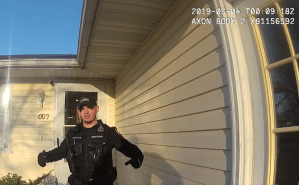

One of the first to arrive at the scene, Officer David Heckman provided support and surveillance for over 8 hours. This was just the beginning of the many hours of police work that would go into creating a solid case against Marcus Anderson that I detail in the book. Crucial evidence gathering would take investigators as far as Arizona.
To pre-order “Murder in a Small Town: The Kyson Rice Case” . . . Go to this link for paperback.
Or pre-order you Kindle ebook copy here:
Posted in Uncategorized
Leave a comment
The Kyson Rice Case
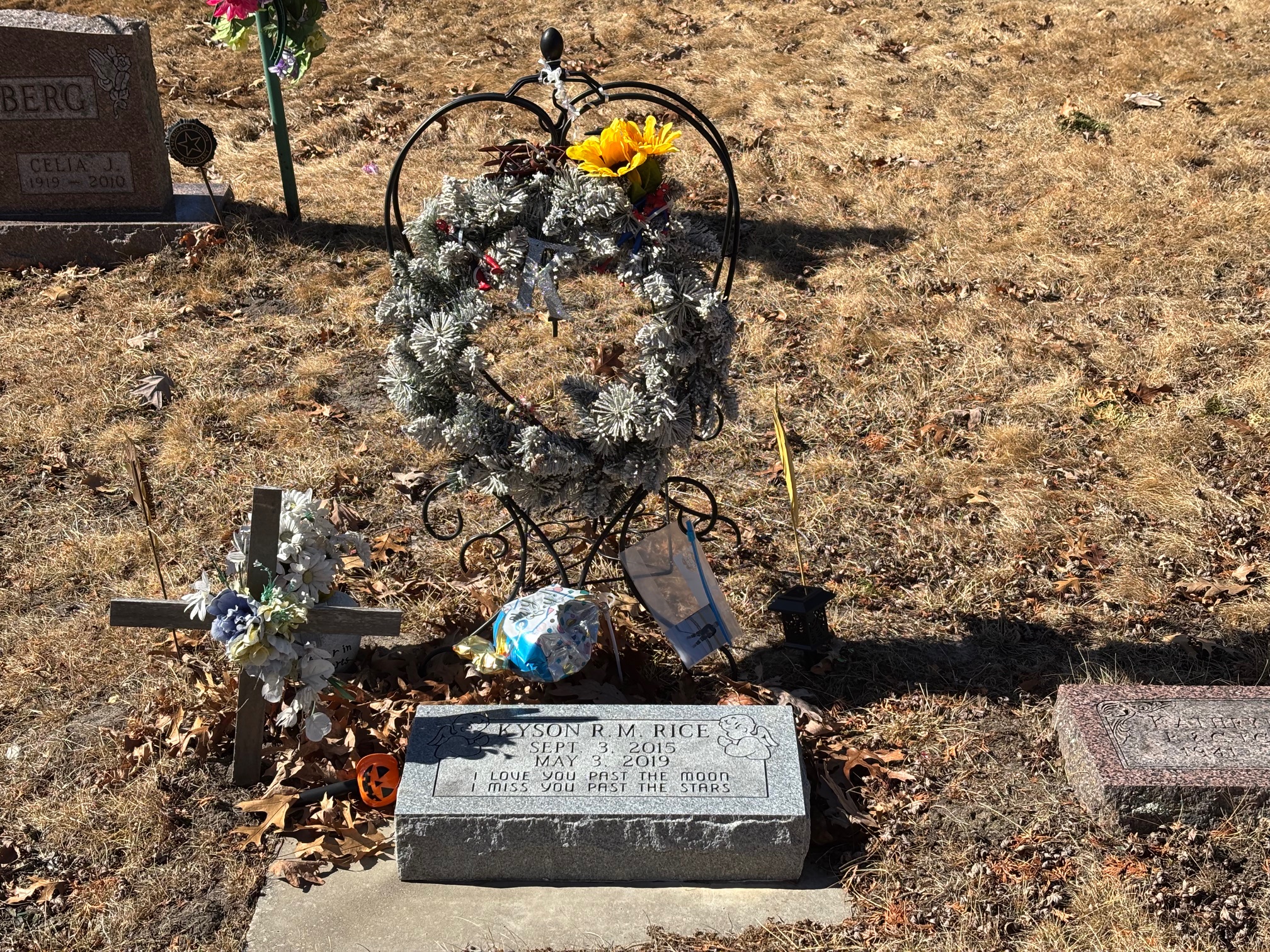 My publisher urges me to blog every three days about the book, Murder in a Small Town: The Kyson Rice Case. Release date is May 1. We are having a Book Launch gathering at Taphouse Twenty on May 1 from 5-7 pm. Kyson would be six years old and in First Grade. His story needs to be told. Domestic and child abuse should not be happening, but sadly, it is.
Posted in Uncategorized
1 Comment
Murder in a Small Town: The Kyson Rice Case
| The police work on this case was first rate, detailed and methodical at every step. Here the Tomah Police nd Monroe County Sheriff’s Department work together to apprehend the suspect Marcus Anderson on Superior Avenue in Tomah the day of the murder. |
https://www.barnesandnoble.com/w/murder-in-a-small-town-larry-scheckel/1147103010?ean=9798992238303
To pre-order your kindle ebook, click this link:
https://www.amazon.com/Murder-Small-Town-Kyson-Rice-ebook/dp/B0DWPX9VR7/
Posted in Uncategorized
Leave a comment
House of Murder
T his house, left side, was the scene of a vicious murder in 2019. A three-year-old boy beaten mercilessly by a convicted felon with a long rap sheet. There were warning signed ignored. The book, Murder in a Small Town: The Kyson Rice Case, details this horrific crime. To pre-order, go to this link for paperback.
| To pre-order “Murder in a Small Town: The Kyson Rice Case” . . . Go to this link for paperback. |
| https://www.barnesandnoble.com/w/murder-in-a-small-town-larry-scheckel/1147103010?ean=9798992238303 |
Posted in Uncategorized
Leave a comment
Murder in a Small Town
| Excerpt from “Murder in a Small Town: The Kyson Rice Case.” From the foreword provided by his great uncle John Glynn: “Use what you learn in this book to make yourself spend more time with kids, be grateful for the children you have in your life. Stand up for children. Value their lives. Hug them, protect them, and love them. Make a difference in your community and make your community a safe place for children. Support your Law enforcement, EMS, and Justice system. Answer the call to jury duty and get involved. I pray for all touched by this tragedy, I pray for you the reader that you can learn from Kyson’s tragedy and make things safer for all children who are still with us today. Remember that praying is the most powerful tool a person has to deal with situations like this. Sometimes evil wins battles but love wins wars. Remember Kyson for his love, laughter, and for finding joy in others. Trust me, Kyson would like that.” |
Posted in Uncategorized
Leave a comment
Murder in a Small Town
Releasing on May 1, 2025!
This crime was one that shocked us all with its sheer brutality right here in the community where we live. I was compelled to document the story because of its far-reaching impact.
This is a story of how a small city, well-trained police force apprehended the perpetrator, secured the crime scene, thoroughly assessed, and meticulously investigated the crime. It’s an inside look at how that city police force worked together with a county police force and investigators, who question the killer and his relatives, friends, and contacts. It’s also the story of an ambulance crew and a hospital trauma unit laboring feverishly to restore life.
It’s an account of an award-winning District Attorney and an award-winning Assistant District Attorney who skillfully weaved together a prosecution that guaranteed a killer will never again walk freely, or buy, use, and sell drugs, and, to employ the informal colloquial term, never again “beat the crap” out of little kids.
It’s a narrative of a mother who lost her only child and is not likely to have another, and of brutality, loss, shame, and families torn apart.
It’s the story of an eight-day trial that cost tons of money, but in the words of the sentencing judge, “money well spent, and worth every penny.” And finally, it is about our society that won by putting away a criminal who was totally bereft of feelings and empathy.
To pre-order in paperback, go to this Barnes & Noble link:
https://www.barnesandnoble.com/w/murder-in-a-small-town-larry-scheckel/1147103010?ean=9798992238303
To pre-order your kindle ebook, click this link:
https://www.amazon.com/Murder-Small-Town-Kyson-Rice-ebook/dp/B0DWPX9VR7/
Posted in Uncategorized
Leave a comment
 Larry Scheckel