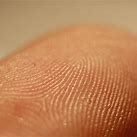
Do identical twins have the same fingerprints?

 A lot of people wonder about this. The answer is “No”.  Our DNA contains the instructions for making us who we are. Identical twins have DNA that is almost indistinguishable, that is, identical.  Identical twins form when a single fertilized egg splits into two after conception. They have the same genetic makeup (genotype). But there are subtle differences. Enough differences that people, especially parents, can tell them apart.

Fingerprints are not the result of genetics alone. Fingerprints, along with such characteristics as height, weight, body form, reflexes, metabolism, and behavior are determined by a person’s individual genes and by the interaction with nature (phenotype).

It’s that age old “nature vs. nurture” question. How much of what we are as humans is the result of our genetic make-up (nature) and how much is determined by our interaction with the environment (nurture).

By environment, we’re talking about how you’re raised, your home situation, what you eat, how you sleep, your siblings, and the air you breathe. In short, everything and everyone around you.

Here’s where it gets really interesting. Fingerprints are one of those traits that are the result of development of the baby during pregnancy. Those factors include blood pressure, nutrition, position in the womb, and growth rate by the end of the first trimester.

The creation of the patterns of the fingerprint are caused by stresses in a sandwiched sheet of skin called the basal layer. The basal layer grows faster than surrounding layers.  This basal layer buckles and folds in several directions, forming complex shapes. It’s a very random process.

The fingerprints of both identical twins are quite similar, but there are differences in the pattern of arches, whorls, and loops. These differences are caused by the random stresses in the womb. Even the length of the umbilical cord has an influence. There’s also differences between the fingers on any individual’s hand.

Probably the most celebrated case were the Dionne quintuplets born in Ontario, Canada in 1934. The five identical (same DNA) girls all had different fingerprints and handprints.

Fingerprint and handprints are now being used by security people to correctly identify persons. It is said to be as accurate as a retinal scan.

It is worth adding that fraternal twins develop from two different eggs. Fraternal twins are no more closely related than ordinary siblings. They just happen to share the same growing space for nine months.



Posted in Uncategorized | Leave a comment

QUESTION

Why do some people find it hard to remember things when they have a head injury?

ANSWER

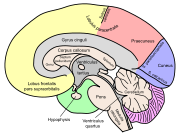
There are different types of memory and they are stored in different parts of thebrain. We have short-term memory and long-term memory.

Short term memory is good for just a few minutes. Someone gives you a seven-digit telephone number to call, you put that in short term memory. Most of us will have forgotten it an hour later.

Long term memory is something you remember for a year, five years, ten years, or a lifetime. If short-term memory items are practiced enough times, it moves into long term memory. That’s the reason most people know their Social Security number “by heart”. They have been required to write it down or “practice it” quite often.

Most people with any head injury have a problem with their short-term memory. Their long-term memory tends to be pretty good. They will say to their doctor “I can remember something that happened in great detail 10 years ago, but I can’t recall something from 10 minutes ago”.

It is common for brain-injured people to forget events right before, during, and right after the injury. This temporary loss is caused by the swelling of the brain. The brain is pressed against the skull. Memory usually returns when the swelling goes down.

Why is short-term memory affected? It has to do with how the brain processes information. Info from our senses goes through a filtering process, sort of like how mail is sorted at the post office.

When the brain is injured, the areas that do the processing get pressed or squeezed due to swelling. A large amount of information and sensory data is coming into the brain and it is not getting processed. The info is not sent to the right places. The mail room of the brain can’t do its job.

The brain can have another type of memory problem. Once data is stored in the brain, it must be able to retrieve it. You meet someone on the street. You know who they are but can’t quite come up with their name. A few minutes or hours later, you recall the name. The brain has been searching and trying to retrieve that bit of information. We’ve all had this type of problem, only in the brain-injured person it is much worst.

Most brain injuries are caused by car accidents, motorcycle and bicycle accidents and  falls around the house. Head injuries to our soldiers in Iraq and Afghanistan from those IED’s (improvised explosive device).

Also, there is now a lot of concern about brain damage in head to head collisions in football causing concussions, confusion, drowsiness, nausea, disorientation, lack of coordination, and slurred speech. The NFL is rightly concerned.

References: http://www.sportsinjurybulletin.com,  http://www.braininjury.com,  familydoctor.org/online


Posted in Uncategorized | Leave a comment

Memories and the Brain

QUESTION

Why do some people find it hard to remember things when they have a head injury?

ANSWER

There are different types of memory and they are stored in different parts of the brain. We have short-term memory and long-term memory.

Short term memory is good for just a few minutes. Someone gives you a seven-digit telephone number to call, you put that in short term memory. Most of us will have forgotten it an hour later.

Long term memory is something you remember for a year, five years, ten years, or a lifetime. If short-term memory items are practiced enough times, it moves into long term memory. That’s the reason most people know their Social Security number “by heart”. They have been required to write it down or “practice it” quite often.

Most people with any head injury have a problem with their short-term memory. Their long-term memory tends to be pretty good. They will say to their doctor “I can remember something that happened in great detail 10 years ago, but I can’t recall something from 10 minutes ago”.

It is common for brain-injured people to forget events right before, during, and right after the injury. This temporary loss is caused by the swelling of the brain. The brain is pressed against the skull. Memory usually returns when the swelling goes down.

Why is short-term memory affected? It has to do with how the brain processes information. Info from our senses goes through a filtering process, sort of like how mail is sorted at the post office.

When the brain is injured, the areas that do the processing get pressed or squeezed due to swelling. A large amount of information and sensory data is coming into the brain and it is not getting processed. The info is not sent to the right places. The mail room of the brain can’t do its job.

The brain can have another type of memory problem. Once data is stored in the brain, it must be able to retrieve it. We’ve all had this type of problem, only in the brain-injured person it is much worst. You meet someone on the street. You know who they are but can’t quite come up with their name. A few minutes or hours later, you recall the name. The brain has been searching and trying to retrieve that bit of information.

Most brain injuries are caused by car accidents, motorcycle and bicycle accidents and  falls around the house. Head injuries to our soldiers in Iraq and Afghanistan from those IED’s (improvised explosive device).

Also, there is now a lot of concern about brain damage in head to head collisions in football causing concussions, confusion, drowsiness, nausea, disorientation, lack of coordination, and slurred speech. The NFL is rightly concerned.

References: http://www.sportsinjurybulletin.com,  http://www.braininjury.com,  familydoctor.org/online


Posted in Uncategorized | Leave a comment

How does a lie detector work?

A lie detector, often referred to as a polygraph machine, is a combination of three or four medical devices that are used to monitor changes in the body. The body functions are heart rate, blood pressure, breathing rate (respiratory), and galvanic skin resistance (sweatiness).

The examiner is looking for changes in comparison to normal levels. The concept here is that a person who is being deceptive will have significant involuntary responses occurring when subjected to stress.

Several tubes and wires are connected to the subject. Two air filled rubber tubes (pneumographs) are placed around the person’s chest. These tubes are measuring breathing rate. The tubes are connected to a bellows. The bellows are connected to mechanical arm, which is connected to an ink-filled pen that makes marks on a scrolling paper. As the proposed liar’s chest is expanding and contracting, the pressure of the air in the tubes is changing.

That’s the analog kind you see in movies. Today’s digital machines use a transducer to convert the amount of displaced air into an electronic signal.

A blood pressure cuff is attached to the subject’s upper arm. Tubes go from the cuff to the machine. Changes in blood pressure cause changes in the amount of air in the tubes, connected to bellows, now a transducer, and moves a pen on the machine. The systolic (high number) and diastolic (low number) blood pressure are being monitored, same as the sphygmomanometer the doctor uses at the clinic or hospital.

Of course, this pressure cuff is keeping track of heart rate at the same time. Heart rate is the number of beats per minute, usually around 72.

The galvanic skin resistance is measuring the sweat on one’s fingers. The fingers are the most porous places on the human body. Electrodes are placed on the fingers. The machine measures the skin’s ability to conduct electricity. Skin conducts electricity much better when it is wet (sweat) compared to being dry. We sweat more when under stress. Some machines detect arm and leg movement.

How good are lie detectors? Not very good at all. Imagine you are asked to take a lie detector test. Think how intimidating that can be. All these tubes and wires hooked up and the examiner starts asking questions. A normal person would be afraid the machine will interpret a truthful response as a lie. That is called a false positive.

Trained liars, like spies, can easily fool a lie detector. They can use tacks placed in shoes, biting the tongue or lip, use sedatives, or put antiperspirants on their fingertips.

How good is the examiner? Lots of subjective judgment involved in looking at the results of any lie detector test.  Lie detectors are seldom admissible in court, especially in local and state courts. At the federal level, it is usually up the judge involved.

Robert Hanssen was one of the FBI’s most trusted agents. For 20 years, from roughly 1980 to 2000, Hanssen was a mole and sold the Russians our most vital secrets, in what has been described as “the worst intelligence disaster in U.S. history”.  Hanssen took a lie detector test and passed it. The 2007 movie “Breach” does a pretty good job of how he was caught. It does not go deeply into the tremendous damage he caused. A 2002 made-for-television movie Master Spy: The Robert Hanssen Story is excellent. If interested, “google” in Robert Hanssen and see why he was given a 150-year sentence and sits in solitary in a federal prison in Colorado.


Posted in Uncategorized | Leave a comment

Saw a Lady in Half

It was a classic magic trick first performed in London in 1920 and later executed  by Harry Blackstone, Doug Henning, David Copperfield, Criss Angel and a host of lesser knowns.

There are several variations on this illusion. The basic trick is one in which the lady lies down in a box. The box, with lady inside and head and arms sticking out one end and feet out the opposite end, is sawed into two halves.

Each half is on a dolly or wheeled table. The halves are separated, indeed showing the lady has been sawn into two parts.  Then, with great fanfare, the two separated boxes are rejoined. With immense flourish and thunderous applause, the lady rises up out the box and stands beside the magician.

How is it done? The box is deeper and wider than it appears. The woman climbs in the box and folds her legs up into a fetal position. Her head sticks out one end of the rectangular box. Fake legs stick out the other end. Her entire body is actually in one half of the box. She can wriggle the legs with ropes. Some newer illusions use remote control radios and motors to operate the legs. Some versions use a second scrunched up girl on the other side of the box to provide the legs.

The magician, with loud music, much noise, fog, smoke, and wild gestures, “saws” through the lady with a large circular buzz saw or a chain saw. Metal plates are inserted into grooves, one on each side of the saw cut. The magician pulls the two halves apart and swirls them in circles. The lady smiles, waves her hands, and wiggles her feet. The two halves are joined together, the two metal plates are removed, and the agile young miss pops out of the box, waves again, and bows.  The appreciative audience lets out a sigh of relief.

Some magicians actually saw through a piece of wood to enhance the effect and heighten believability. Some will station a doctor or nurse nearby. Goldin would have an ambulance parked outside or bring one onto the stage if the facilities could handle it.

Goldin made the mistake of taking out a patent on his illusion. In so doing, he revealed how he did the trick. Patents are public domain and open to anyone who wants to read them.

Some feminists have criticized the “sawing the lady in half” trick. A few magicians have responded by placing a male assistant in the box. Magician Dorothy Dietrich uses a male assistant and bills herself as the “First Woman to Saw a Man in Half”.

In India, the magician P.C. Sorcar used a buzzsaw to cut his wife in two during a televised show. Just as he finished the dastardly deed, the television host quickly signed off and the show ended. The shocked and horrified viewers thought she had accidently been killed. Actually, it was a live broadcast and the time had run out.


Posted in Uncategorized | Leave a comment

Quiet after a snowstorm

In this blog we are returning to some of the early columns of Ask Your Science Teacher,  published in 2009. The columns are updated and revised. Many originally ran in The Tomah Journal

Why is it so quiet after a snowstorm? Ah, what a keen observer you are! Yes, it is the epitome of serenity and peacefulness after a fresh snowfall. The newly fallen snow absorbs the sound. A dog’s distant bark seems muted and subdued. Passing cars, trucks, and snowplows are barely heard. This snow-induced silence may last for an entire day.

Snow is soft and acts as an effective sound damper. The snow behaves the same way that a carpeted room will be quieter than a room with bar wood floors.

It is the arrangement of the flakes that dampens sound. Snowflakes come in all shapes and sizes with varying weight and water content. Some crystals have pointy stars, some are flat plates, and each snow flake consists of dozens or hundreds of these crystals.

Snowflakes don’t fit together like a jig saw puzzle. They loosely pile up and have plenty of air spaces in between. It is these hole, spaces, or pores that absorb the sound, just like the pores in acoustic ceiling tile.

Even sound travelling parallel to the snow is absorbed because the pressure of a passing sound wave pushes air down into the spaces between the flakes. Much of the sound wave energy is lost.

Later, as the snow compacts by gravity and some of the surface crystals melt, it no longer muffles sound effectively. Blowing wind, sunlight, and a tad of rain can quickly render sound absorption useless. You no longer hear that softer muffled sound.

Soon the surface of the snow is more like a whiteboard on the schoolroom wall rather than the overhead acoustical tile. The hard-packed snow acts like bare ground, or blacktop, or concrete, reflecting and transmitting sound. Noise level return to normal.

John Greenleaf Whittier’s 1866 epic poem “Snow-Bound” alluded to the quiet of the countryside after a classic New England snow storm.

The Army is interested in this question. They can use sound waves to measure snow depth to an accuracy of one inch. The Forest Service, Bureau of Land Management, Interior Department, and ski resorts all use this information. Sound waves have increased the accuracy of spring runoff and flooding predictions.  Ice thickness in Arctic and Antarctic regions are monitored.


Posted in Uncategorized | Leave a comment

Personality traits

Question:

Are personality traits hereditary or is it because of what goes on around us in every day life?

Answer:

This question touches on the controversial nature vs. nurture puzzle. How much of our intelligence and personality is based on heredity (nature) and how much comes from our environment (nurture)?

The most definitive work on the question of nature vs. nurture comes from the famous Minnesota Twin study started at the University of Minnesota in 1979. Over the past three to four decades, this study has found pairs of identical twins that had been separated at birth. These pairs of twins have the same genetic make-up (nature) but were raised in different environments (nurture).

The pairs of twins were given exhaustive physical and psychological exams. The study yielded fascinating results. What was so startling was the similarities and not the differences. The twins often shared the same dreams and fears. It was found that leadership, shyness, aggressiveness, willingness to take risks, and conformity were based mainly on heredity and not on how they were raised. Whether a person was introverted or extroverted seemed to be passed on by their parents, and not on the kind of household they grew up in.

It takes about 100,000 genes to make up a human being. The mapping of the entire gene field of a human being, the Human Genome Project, was completed in 2003.

Scientists don’t really know exactly how much of what we are as humans comes from our parents (nature) or from our environment (nurture). There is increasing evidence that heredity plays a greater role than previously thought.

Intelligence is the controversial trait. It arises when authors or scientists try to define where intelligence comes from. The best-selling book, The Bell Curve, by Charles Murray, published in 1994, was very been much in the news because the author makes some statements about which races have higher or lower I.Q. scores and he ranked them.

So kids, if you fail a math test, it just might be your parents fault. You didn’t get the right genes! On the other hand, if you got an A, you can’t take credit for it. You got the right genes!

Try this little mental floss on your kin or friends. Question: A die is lying on a table. What number is on the side that is face down on the table.

Answer: Dice are always made with the numbers on the opposite sides add up to seven. One and six are on opposite sides, two and five are on opposite sides and three and four are on opposite sides. If the number on the top of the die is 2, then the side down on the table is 5.


Posted in Uncategorized | Leave a comment

In this blog we are returning to some of the early columns of Ask Your Science Teacher,  published in 2009. The columns are updated and revised. Many originally ran in The Tomah Journal at the behest of John Kenny, Publisher. We hope you enjoy them, and please give feedback.

Question:

In our science class, we learned that black is not a color, so how do we get black ink or black paper?

Answer:

            Most things we see in everyday life do not give off light. Their color depends on the light waves they absorb or reflect. For example, grass is green because the chemical chlorophyll reflects principally green light. Grass absorbs the other colors such as blue, red, and yellow. Indigo is a dye put in blue jeans that reflects blue, but absorbs red, green, and yellow.

            Objects that are black absorb most all the colors of the sun’s spectrum or what we call the seven colors of the rainbow. If a number of chemicals are mixed that will absorb nearly all colors, that object will appear black.

            Try this experiment to separate the chemicals used in black ink. You need a cup of water, two coffee filters, and a water-soluble black felt tip pen. Cut a hole in the middle of a coffee filter. Put some ink spots around the hole. Make a cone-shaped wick from another coffee filter and insert it through the hole. Set the coffee filter on top of the water-filled cup with the cone shaped filter sticking into the water and acting as a wick. Observe the water advancing up the wick and spreading across the ink spots. Lift the coffee filter off the cup and set it across an empty cup to let it dry. How many different colors do you observe? The experiment you performed is called chromatography.

Posted in Uncategorized | Leave a comment

How Long Will the Earth Exist?

Our fourth science book was published in late 2018. New ones are coming out in May 2019 and November 2019. In this blog we are returning to some of the early columns of Ask Your Science Teacher,  published in 2009. The columns are updated and revised. Many originally ran in The Tomah Journal at the behest of John Kenny, Publisher. We hope you enjoy them, and please give feedback.

Question: How much longer will the Earth exist? 

Answer:  The earth has been around for almost 5 billion years and will continue to be a planet for another 5 billion years. Most scientists believe that our Sun and nine planets were formed at the same time from a huge cloud of dust and gas. The cloud shrank under the pull of its own gravity, forming the Sun and a disk of material that swirled around the sun. Friction caused the disk to collect into huge whirlpools that formed into planets. 

            Earth is a vibrant and dynamic planet. It is always changing, with the surface crust moving around on huge plates. Continents rise and fall. Climate and weather sculpt its features. But the ultimate fate of our Earth is determined by the Sun.

            The Sun is an ordinary star in our Milky Way galaxy that is made up of 100 billion stars. Stars are born, live out their lifetimes, and die. The fate of any star depends on its mass. Massive stars end up as supernovas that may create black holes. Small stars end up as a big piece of cinder. Our Sun is a medium size star.

            The Sun converts hydrogen to helium. This fusion will continue until the hydrogen fuel is all gone. The Sun in now in a stable state, where gravity wants to make it smaller  and radiation wants to push it outward. These two forces are now in balance.

            But look out! Danger is just around the corner! In about 5 billion years from now, the core will contract, get hotter, and the outer layers expand. The Sun will expand to the red giant stage and engulf the inner planets of Mercury, Venus, Earth, and Mars. Earth will have a fiery death. All life will cease on Earth.           

            If you look in the constellation of Orion, you can see the reddish star Betelgeuse that is right above the belt of Orion. Betelgeuse is a sun like ours that is now in the red giant stage. Below the belt of Orion is a hot young blue-white star named Rigel. Rigel is a baby in the evolution of stars.

             Find Orion in the night sky.Orion is a winter constellation, but you will find it in the eastern sky in the early morning hours of July, August and Sept. Look for the three bright stars that make up belt of Orion. Look above the belt for Betelgeuse and below the belt for Rigel.

Follow the three belt stars to the left to find Sirius, the brightest star in the Northern Hemisphere. Sirius is in the constellation of Canis Major, the Big Dog.

Posted in Uncategorized | Leave a comment

How high do birds fly?

Our fourth science book was published in late 2018. New ones are coming out in May 2019 and November 2019. In this blog we are returning to some of the early columns of Ask Your Science Teacher,  published in 2009. The columns are updated and revised. Many originally ran in The Tomah Journal at the behest of John Kenny, Publisher. We hope you enjoy them, and please give feedback.

Question:

How high do birds fly?

Answer:

            According to the Guinness Book of Records, the highest recorded flight for a bird was in November of 1973 when a vulture collided with a jet airliner over the Ivory Coast in Africa. The passenger jet was cruising at 37,000 ft when the vulture was sucked into one of the jet engines. The U.S. Museum of Natural History identified the bird by examining the feathers.  The jet landed safely.

            The highest recorded altitude for a bird in the United States was a mallard duck that was ingested into the engine of a commercial jet over Nevada in 1963. The duck was flying at 21,000 feet. The plane crashed killing all on board.

            Most migrating birds fly at less than a 1000 ft above the ground. Scientist believe that the less dense air at high altitudes poses a problem for most birds. The lighter air at high altitudes gives birds less lift. It is to their advantage to fly low. The air pressure difference between the cavities in the head of the bird and the outside pressure cause problems of discomfort. The same thing happens to people when airliners land with a high rate of descent.

Posted in Uncategorized | Leave a comment