
There is no more fitting symbol and sign that spring has arrived than the birth of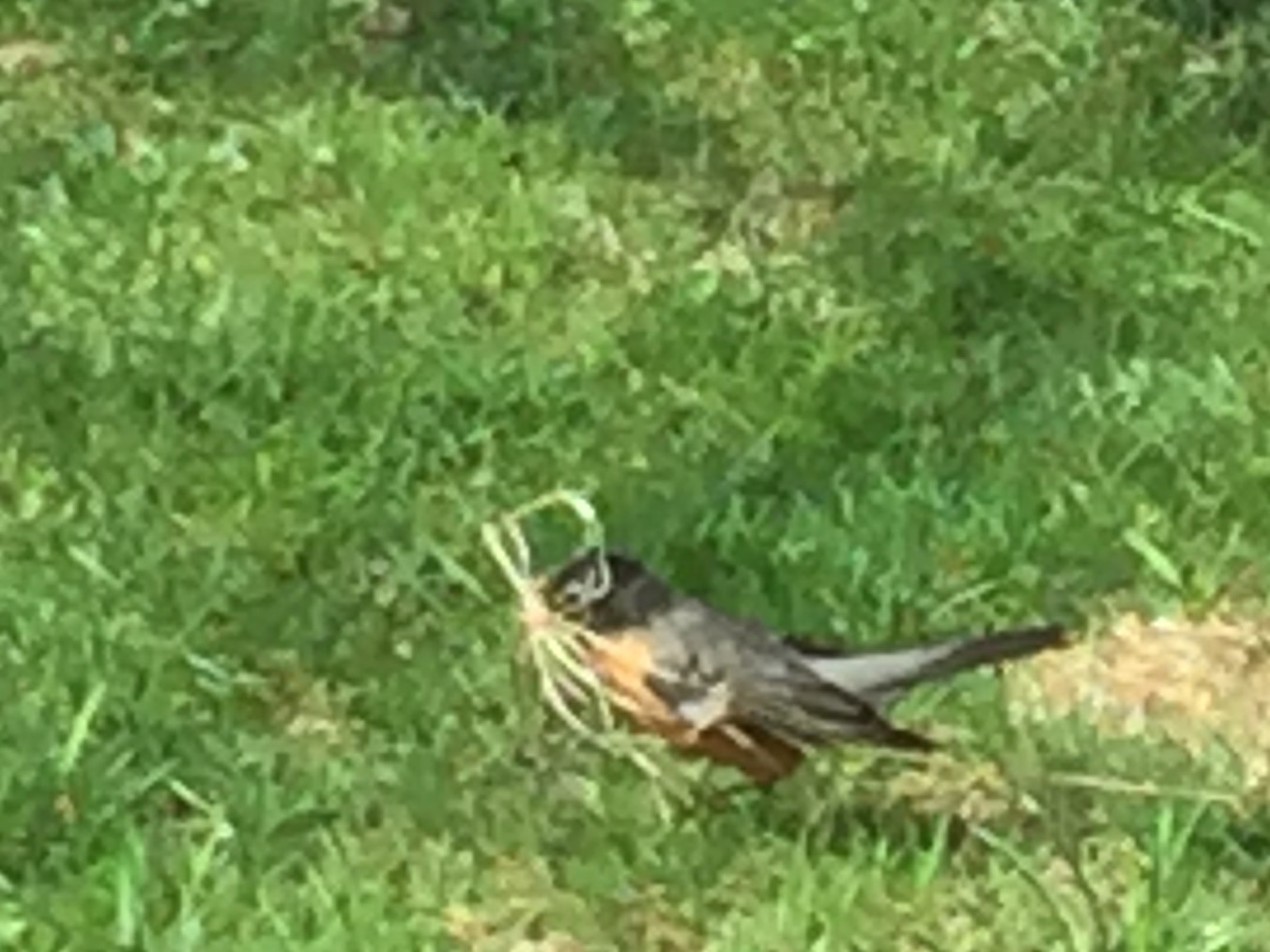 livestock on the farm. New life and new beginnings. A promise of longer and warmer days. Piglets are being born, baby chickens start arriving, and the ewes are lambing. I never could tell when spring had arrived. The calendar said the first day of spring was March 21, or close to it, and called the vernal equinox. As a kid, I never understood what “vernal” was, but I knew the equinox had something to do with equal and I was told it meant equal amount of daylight and darkness. Then we had Ground Hogs Day on February 2, which just happens to be my oldest brother Ed’s birthday. The folklore is that if the groundhog sees his shadow when he pokes his head out of his burrow, there would be six more weeks of winter. We did not have groundhogs on Oak Grove Ridge, but we had plenty of woodchucks. I figured that the smart woodchucks, or groundhogs, did not come out of their holes on February 2. They stayed in the warm sweet slumber of hibernation until at least April. Only the stupid or mentally retarded groundhogs would make an appearance in the dead of winter. It was the same with birds. We Scheckel kids were keen to spot the first robin, if only for bragging rights. And sure enough, sometime in early March the first shivering red-breasted feathery friend would be spotted on a fence post or electrical wire around the farmstead. All my siblings agreed that these were the dumbest robins that God put on Earth. The intelligent ones stayed down in Texas or at least southern Missouri for another three or four weeks. Even if it was snowing, we would see robins scratching the ground searching for seeds to eat.
Spring On The Farm
Posted in Uncategorized
Leave a comment
Bees Make Honey
QUESTION:
Why do bees make honey?
ANSWER:
Bees make honey to prepare for winter. Honey is the food bees rely on when the weather turns cold. Bees live in highly socialized communities where each bee has i ts own job. The worker bees go from flower to flower gathering the nectar. A single bee may visit as many as a thousand flowers. Her load arriving back at the hive is about half her weight. Very impressive!
The nectar does not go into the bee’s stomach. It is collected in a special storage sac called the honey crop. As the worker bee swallows the nectar, she adds enzymes to it from special glands. This starts the process of breaking down the complex sucrose into simple sugars, like glucose and fructose.
When the worker bee gets to the hive, she passes the nectar to a hive bee that swallows it again, adding more enzymes. The hive bee puts the nectar into a honeycomb cell.
In its present state, the honey contains too much water. If left untreated, the honey would ferment and spoil. The hive bees fan the stored honey with their wings and cause much of the water to evaporate away. With the aid of air movement and heat, the water turns from liquid to a vapor. Bees figure that eighteen percent water is about right.
When the bees think the honey is ready, they cover the cell with wax to seal it. That’s when the beekeeper comes along and steals the honey.
The flowers also get something out of this deal. Plants use nectar as a way of attracting bees. As the bees gathers nectar, they also transfer pollen grains from one flower to another, thus pollinating other flowers.
Honey is a very stable food source. It resists bacteria, fungi, mold, and a host of other microbes. Honey can be stored for years without refrigeration.
Mention was made of female worker bees. They are not able to reproduce. Worker bees live only six weeks in the summer and four to nine months in winter. They literally work themselves to death. A hive will have about 50,000 worker bees in the busy season. They can sting once, but then they die.
The hive does have some male bees, called drones. They come from eggs that have not been fertilized. The word drone is derived from an old English word “dran” which literally means idler or lazy worker. The drone can’t sting. The sole job of the drone is to mate with the queen bee.
The drone has a barbed sex organ. Mating is followed by death. That’s death of the drone, of course. Hives will have several hundred drones. Come winter, they are of no use and are expelled from the hive.
If you choose to be a bee, be a queen. There is only one queen bee per hive. Queen bees live from three to five years. She mates once with several drone bees and remains fertile for life. The queen bee lays about 1500 eggs per day. Fertilized eggs become female worker bees and unfertilized eggs become the male drone bees.
When the queen dies, the other bees make a new queen by selecting a young larva and feeding it a special royal jelly. This milky substance, made from digested pollen and nectar, is loaded with vitamin B. Long live the queen!
Posted in Uncategorized
Leave a comment
Calf Born
Most of the time our cows would freshen and have a calf in the barn. But sometimes if the  cows wandered into the woods bordering the pasture, we would have to go look for the calf. The knoll field was a pasture that had extensive woods bordering the tillable field. The half-acre knoll was close to the farm buildings and had an outcropping of rock among a dozen tall oak trees. The spot provided an ideal location for us to play hide-and-seek or crack walnuts for making home-made fudge. It also served as a refuge for a farm boy who just wanted to get away from siblings and sit and talk with his pet dog.
Once when we brought the cows in for milking, one of them turned up missing. Phillip, Bob and I were sent off to find it. My brother Phillip was a year older than me, and Bob was a year and half younger.
Even though we yelled, “Here cow, here cow,” we did not get a response. We held a pow-wow. We pretended to be cows and tried to think like one. We imagined where we would want to hide if we were bringing a little calf into the world.
Phillip thought of the deep woods below the old potato patch. “There’s a lot of sumac there, just the place for a cow to give birth.”
Bob said that he’d search the woods over by the Cruzan fence line. I headed for the woods below the big cottonwood trees.
We searched for about 20 minutes before Phillip yelled, “She’s over here.” Cows keep places like this, among the sumac, a secret and do not like anyone knowing where they’re hiding.
The cow was licking her new-born calf, a ritual that we had witnessed many times before. We knew that the calf should start nursing very soon and helped it get its footing. The Hereford’s brown and white fur was soft and silky. But when I reached toward its mouth, the calf licked my fingers with a tongue that felt like sandpaper.
Bob said, “Let’s call her Patches,” because of the brown fur on her white forehead.
Phillip and I could not argue with that. Patches started to nurse, and the bonding between mother and infant began. We waited ten minutes before we herded them back to the barn. Patches wobbled slowly, so Phillip picked her up and cradled her in his arms. The mother trailed close behind. I am still amazed at how soon a calf is able to get up and walk after it is born. Whereas most humans take about a year, calves are up and about in less than an hour.
There is no more fitting symbol and sign that spring has arrived than the birth of livestock on the farm. New life and new beginnings.
Posted in Uncategorized
Leave a comment
Why learn science?
Science is the study of the world around you. Science explains the world we live in, how things work, how living things come to be and how things happen the way they do.
Everything around us concerns science and science processes. Science starts with observation, moves to a hypotheses (educated guess), and ends with a prediction or a theory. Science is one of the basic human pursuits in life, much like music, art, and literature.
Science is the study of logic. It figures things out. Science teaches us how to learn by using the scientific method, experimentation, and research. Anything you learn makes you smarter, and science fosters logical and critical thinking.
Science makes our life much better, easier, and longer. Science can make life more enjoyable and pleasant and the world a safer place to exist through construction, navigation, transportation, agriculture, and medicine.
Of course, one can argue that there is a downside to science. We humans have developed weapons that can destroy each other very quickly and in huge numbers. The knowledge of how we get along with each other lags our ability to destroy each other.
People study science so they can better understand planet Earth and the larger universe. Biology is study of living things. Physics explains how the world works. Chemistry explains how the universe is put together. Earth science encompasses climate, weather, geology, astronomy, and geomorphology.
For example, knowing how the atmosphere works allows us to address global warming. Knowing about how the body works with cells and systems and life functions, may lead to prolonging life and creating vaccines and cures for diseases. Knowing how the Internet works provides us a pathway and access an unlimited amount of information.
Each of these main topics of study has a host of subtitles. If you “Goggle” the phrase “list of sciences ” you find that 633 science titles pop up. The list ranges from acarology (the study of mites) to zymurgy (the chemistry of brewing and distilling).
Science can make you less gullible. There is a lot of wrong or misleading information on television, the Internet, magazines, and yes, even from politicians and government leaders.
Science helps us filter through the claims of advertising and helps us spot the hoaxes, scams, schemes, and cons that are out there.
And finally, science is a lot of fun. It can be bizarre, bewildering, exciting, and satisfying. Science complements literature, art, music, and religion. While religion allows us to believe in things that are not provable, science is an avenue to prove things that are hard to believe.
Posted in Uncategorized
Leave a comment
Rooster Story part 2
We talked strategy. Bob had a plan. “Phillip, you stay here on this side, and Lawrence and I will go to around the chicken house and come in on the other side, and we’ve got Rooster trapped between us.”
That sounded like a good arrangement. Phillip was bigger than Bob and I, much more agile, faster, and athletic than both of us put together. Surely this plan was foolproof. Our two teams closed in. Rooster stopped scratching and raised his head. He sensed danger. The two teams approached slowly, quietly, keeping Rooster between us.
Each team was about five feet from its quarry. But wily Rooster would have none of this. He jumped up, squawked loudly, wings flapping and went right between Bob and me.
Phillip yelled, “You let him get away”. Of course, we knew that. Oh, the shame of it all! We had a plan, a good plan, but Rooster overwhelmed Bob and me and made an escape. Now the chase was on. All three of us boys, and we’re now joined by our sisters, Catharine, Rita and Diane.
Diane, we figured, was of no help at all. She was only three. She would only be in the way. But that did leave a posse of five. Certainly, five Scheckels could outthink, outsmart, outrun, and finally capture Rooster. We all wanted Rooster to be the centerpiece for our Sunday dinner just waiting to be carved up!
We thought we had Rooster cornered several times. Each time Rooster rose up, flapped his wings wildly, squawked loudly, and escaped. We lost sight of Rooster several times. But with five pairs of eyes he was quickly spotted.
Now it was plan two or perhaps it was plan three or four. Phillip and Catharine would chase Rooster around the hen house. Bob, Rita, and I would stay put, hide around the corner. When we heard Rooster approaching, we’d jump out in Rooster’s path and one of us would grab him.
Aw, it worked to perfection. Bob caught the wing of Rooster who put up a desperate struggle. But the rest of us closed in and finally got hold of his two feet, at which time the extraordinary bird was doomed. Even on death’s doorstep Rooster put up a fight. He bent his head around and up so as to bite his captors. It was to no avail, Rooster had met his end. I do believe he raised his head just in time to see the axe blade coming down. That Sunday meal was one of the best we’d ever had.
Posted in Uncategorized
Leave a comment
Seneca Seasons-continued
We talked strategy. Bob had a plan. “Phillip, you stay here on this side, and Lawrence and I will go to around the chicken house and come in on the other side, and we’ve got Rooster trapped between us.”
That sounded like a good arrangement. Phillip was bigger than Bob and I, much more agile, faster, and athletic than both of us put together. Surely this plan was foolproof. Our two teams closed in. Rooster stopped scratching and raised his head. He sensed danger. The two teams approached slowly, quietly, keeping Rooster between us.
Each team was about five feet from its quarry. But wily Rooster would have none of this. He jumped up, squawked loudly, wings flapping and went right between Bob and me.
Phillip yelled, “You let him get away”. Of course, we knew that. Oh, the shame of it all! We had a plan, a good plan, but Rooster overwhelmed Bob and me and made an escape. Now the chase was on. All three of us boys, and we’re now joined by our sisters, Catharine, Rita and Diane.
Diane, we figured, was of no help at all. She was only three. She would only be in the way. But that did leave a posse of five. Certainly, five Scheckels could outthink, outsmart, outrun, and finally capture Rooster. We all wanted Rooster to be the centerpiece for our Sunday dinner just waiting to be carved up!
We thought we had Rooster cornered several times. Each time Rooster rose up, flapped his wings wildly, squawked loudly, and escaped. We lost sight of Rooster several times. But with five pairs of eyes he was quickly spotted.
Now it was plan two or perhaps it was plan three or four. Phillip and Catharine would chase Rooster around the hen house. Bob, Rita, and I would stay put, hide around the corner. When we heard Rooster approaching, we’d jump out in Rooster’s path and one of us would grab him.
Aw, it worked to perfection. Bob caught the wing of Rooster who put up a desperate struggle. But the rest of us closed in and finally got hold of his two feet, at which time the extraordinary bird was doomed. Even on death’s doorstep Rooster put up a fight. He bent his head around and up so as to bite his captors. It was to no avail, Rooster had met his end. I do believe he raised his head just in time to see the axe blade coming down. That Sunday meal was one of the best we’d ever had.
Posted in Uncategorized
Leave a comment
Fingerprints of Twins
Do identical twins have the same fingerprints?
A lot of people wonder about this. The answer is “No”. Our DNA contains the  instructions for making us who we are. Identical twins have DNA that is almost indistinguishable, that is, identical. Identical twins form when a single fertilized egg splits into two after conception. They have the same genetic makeup (genotype).
very much alike. But there are subtle differences. Enough differences that people, especially parents, can tell them apart.
Fingerprints are not the result of genetics alone. Fingerprints, along with such characteristics as height, weight, body form, reflexes, metabolism, and behavior are determined by a person’s individual genes and by the interaction with nature (phenotype).
It’s that age old “nature vs. nurture” question. How much of what we are as humans is the result of our genetic make-up (nature) and how much is determined by our interaction with the environment (nurture).
By environment, we’re talking about how you’re raised, your home situation, what you eat, how you sleep, your siblings, and the air you breathe. In short, everything and everyone around you.
Here’s where it gets really interesting. Fingerprints are one of those traits that are the result of development of the baby during pregnancy. Those factors include blood pressure, nutrition, position in the womb, and growth rate by the end of the first trimester.
The creation of the patterns of the fingerprint are caused by stresses in a sandwiched sheet of skin called the basal layer. The basal layer grows faster than surrounding layers. This basal layer buckles and folds in several directions, forming complex shapes. It’s a very random process.
The fingerprints of both identical twins are quite similar, but there are differences in the pattern of arches, whorls, and loops. These differences are caused by the random stresses in the womb. Even the length of the umbilical cord has an influence. There’s also differences between the fingers on any individual’s hand.
Probably the most celebrated case were the Dionne quintuplets born in Ontario, Canada in 1934. The five identical (same DNA) girls all had different fingerprints and handprints.
Fingerprint and handprints are now being used by security people to correctly identify persons. It is said to be as accurate as a retinal scan.
It is worth adding that fraternal twins develop from two different eggs. Fraternal twins are no more closely related than ordinary siblings. They just happen to share the same growing space for nine months.
Posted in Uncategorized
Leave a comment
Seneca Seasons: A Farm Boy Remembers
Not all roosters are created equal. Once every few years a regal bird, so much bigger and haughtier than any other rooster, came on the farm. I was twelve years old, when one such specimen developed out of our-300 rooster flock. This noble rooster strutted around the buildings, sporting a big bright red comb with a massive drooping wattle. The wattle is that fleshy piece of skin hanging down under the beak and combs. It helps cool the rooster by redirecting blood flow to the skin.
Oh, we kept our eye on this splendid rooster! He was high entertainment for us six youngest Scheckel kids living on that 238-acre farm near Seneca, in the heart of Crawford County, Wisconsin. We simply called him “Rooster”, and Rooster ruled. Other roosters moved out of his way. Hens cowered when Rooster appeared. My dog Browser wouldn’t go near Rooster. Rooster was invincible. Or so he thought.
It was a Saturday in August 1954 and the whole family was gathered around the morning breakfast table. The usual routine was to get out of bed, do chores, milk cows, and come in for breakfast, and subsequently, the farm day work began. Mom announced that we needed a hen or rooster for Sunday dinner.
I don’t recall who said it first. But Rooster’s name came up. I do believe it was brother Bob. Yes, we all agreed. It was time for Rooster to become a Sunday meal. Rooster was big enough to feed six kids and two adults. Imagine the size of his wishbone. That would be a real prize! We gulped down our last bit of Oat-Meal, bacon, and bread.
There was a problem. Before Rooster was to become Sunday dinner, he had to be caught. That would not be an easy task. Rooster was fast. Rooster was cunning. We had our work cut out for us. Phillip went to the garage to fetch the chicken catcher. It was a tool with a wooden handle on one end and a hook on the opposite end.
We spread out and walked around the barnyard, hen house, hog house and corn crib. We were quiet and stealthy. Bob hid the chicken-catching-tool behind his back, lest Rooster was smart enough to figure out what was going on. Perhaps Rooster had witnessed what had happened to his White Rock cousins.
Phillip spotted Rooster between the red hen house and the red corn crib. He was majestically scratching the ground. Phillip put out the call, “I’ve found him”. There was an alley of about 10 feet wide between the corn crib and hog house with a fence on one side and hen house on the opposite side. To be continued.
Posted in Uncategorized
Leave a comment
Why are some people tone deaf?
QUESTION
Why are some people tone deaf?
ANSWER
The technical term for tone deafness is amusia, and one in twenty people have it. Tone deafness is the inability to distinguish between musical notes. To clarify defi nitions: tone, pitch, and frequency all mean the same thing. There is not much correlation between a good singing voice and ability to hear tones accurately. Some people who have bad singing voices hear music just fine.
The inability to keep time with music, or lack of rhythm, or the inability to recognize common songs are indications of tone deafness.
There has been some recent and intriguing research on this subject. New brain imaging techniques can measure the density of the white matter, consisting of nerve fibers, that provides paths between the right frontal lobe and the right temporal lobe.
The right frontal lobe is where higher thinking occurs. The right temporal lobe is where sound processing takes place. On tone deaf people (amusics) the white matter is thinner, making a weaker connection. Findings also indicate the thinner the white matter, the worse the tone deafness. For a tone-deaf person, the neural highway is a dirt road and not a four-lane interstate!
There is a line of belief that says there is an overlap between how the brain handles music and how it handles speech. Other researchers believe that musical perception and thinking occur separately from other functions. Most indicate there is a strong genetic component to tone deafness.
You can go online and check your ability to perceive tones. Go to http://www.delosis.com/listening. This British site presents 2 sets of 30 musical tones that you try to match. They give you a score when you are done.
Charles Darwin, General Ulysses S. Grant, Theodore Roosevelt, and William Butler Yates were all tone deaf. On the scale of mental and physical maladies that people have, tone deafness is way down there at the bottom.
References: http://www.sciencedaily.com
Posted in Uncategorized
Leave a comment
Stainless Steel
Why doesn’t stainless steel rust?
ANSWER
Stainless steel contains iron, chromium, manganese, silicon, carbon and in some cases, nickel and molybdenum. The presence of those elements prevents iron oxide from forming.
The common term for iron oxide (Fe2 O3) is rust. Rust is the reaction of iron and oxygen in the presence of water or any moisture. Rust is that reddish brown color we see when iron or steel undergoes corrosion. Any iron mass will eventually convert entirely to rust and completely disintegrate, given enough time, oxygen, and moisture.
The elements listed above react with the oxygen in water to form a very thin stable film over the underlying metal. This layer is thinner than a wavelength of light. It is so microscopic it cannot be seen by the eye. But this passive layer of corrosion is impervious to air and water and protects the metal underneath.
Indeed, stainless steel does “rust” into a protective barrier layer to make the iron or steel “stain less”. Stainless steel has a high proportion of chromium compared to carbon. Advantage: less resistant to rusting. Disadvantage: chromium makes the steel more brittle.
This idea of forming a passive corrosion protective layer is not unique to steel. Titanium and aluminum also rely on an extremely thin film formation to resist corrosion.
Because stainless steel does not rust, has great durability, and looks good, it is widely used in kitchen sinks, utensils, razor blades, vehicle trim, surgical instruments, and food processing equipment. We see a lot of those 10,000-gallon stainless steel bulk tank trucks on the Interstate.
Most, but not all, stainless steel is not magnetic. So stainless steel is used in MRI (magnetic resonance imaging) units in hospitals and clinics.
Stainless steel is not a good conductor of heat. Copper is one of the best conductors of heat. But copper cookware is quite expensive and not found in too many home kitchens. That’s why you often see stainless steel cookware with a copper bottom and stainless steel sides and top. Or the stainless steel pots and pans have an inner core of aluminum or copper.
There are trade-offs. Stainless steel cookware is cheaper, durable, and easy to clean, but not the very best material for cooking. Cooper is the best material for conducting heat, but it is expensive, reacts with acidic foods, and needs all that polishing.
Stainless steel conducts electricity, but much poorer than gold, silver, copper, aluminum, steel, iron, and lead. You don’t see stainless steel used in wiring.
Posted in Uncategorized
Leave a comment
 Larry Scheckel