Running Cattle down in Kettle Creek

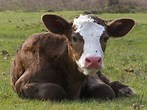
This was their new home for the next six months, before being sold and shipped off to the slaughterhouse. But our job was not done. These young cattle did not know where Kettle Creek was located.

We would let them graze for roughly a day. By that time they got really thirsty. The calves came up to the fence where they were herded a day earlier and start bawling “like a sick calf.” My brothers and I had to drive them down to the water. There were two possible paths. One was an old road that led from the farmland plateau, the other was an abandoned road along the northern side of Kettle Hollow pasture.

With yelling and walking sticks, we chased the livestock down into the valley. When they got close enough to Kettle Creek, they could smell the water, and eagerly bolted to the running stream. Amazingly, we only had to do this one time, because they were able to remember where the water was located.

Counting the cattle was important. We heard there were rustlers about. Not the Old West rustlers on horseback that cut out a few cattle from a herd and were rebranded. Modern rustlers used pickup trucks, a cattle chute, and the dead of night. Cattle ended up missing over in Iowa. On another occasion, six cows were “lost” up in Vernon County.

Every few days one of us was assigned the task of counting the herd. I liked the job. The chore gave me a chance to escape harder jobs, like digging fence post holes or pulling weeds or working in the garden. I sure took my time! I recall walking to Kettle Hollow often. Not just to count cattle, but I also enjoyed looking for pretty rocks, cutting wood, or hunting squirrels.


Posted in Uncategorized | Leave a comment

Where did the first tree come from?

The Earth’s earliest plants were believed to be ferns and mosses that were only a few inches tall. About 400 million years ago, during the Devonian Period, plants formed stems, grew taller, competed for air, developed root systems, vascular growth, and secondary growth. Scientists believe that there was no single moment when trees started, but rather a slow developing process over millions of years.

Trees are really quite sneaky. Most have no branches at the lowest levels. The object of the trunk is to raise the height of the branches that grow the leaf canopy. Any plant that has leaves sticking way up there can get more sunlight than its neighbors.

And by branching, a tree can spread its leaves to cover more area, hence gather more sun. A tree also spaces its leaves to prevent the leaves from shading each other.  Further, the tree shades its root area to suppress any competition.

Sunlight is everything to a tree. Through the process of photosynthesis, the tree uses energy from the sun, plus water and carbon dioxide and chlorophyll to manufacture sugars. Here’s the chemistry: Six molecules of water plus six molecules of carbon dioxide produce one molecule of sugar plus six molecules of oxygen.

You just got to love trees. They provide shade, of course. They hold the soil in place, preventing erosion. Trees provide sap for maple syrup. (There’s some little sap in every family tree!!). Plus nests for birds. Trees provide wood for burning, for building houses, and providing paper and fruit.

Trees are marvels of engineering. They can transport water up hundreds of feet to the top of the tree by the process of capillary action.

One third of the United States is covered by trees. And one third of that is set aside as our National Parks and National Forests. We have more trees today than 70 years ago.

Trees were not evenly distributed across the United States in the past and it is the same situation today. New England states are covered with forests. But Lewis and Clark  “observed a vast treeless prairie” in the present day Dakotas. There were so few trees in parts of the Dakotas that the pioneers built their houses out of sod.

Do visit Redwoods National Forest or Muir Woods in California and Sequoia and Kings Canyon National Parks. Stand in awe of the largest tree on Earth, the General Sherman tree.

Who cannot love and be moved by the poem “Trees”, written by Joyce Kilmer, who was killed by a German sniper at the Second Battle of the Marne in 1918 at the age of 31 ?  “I think that I shall never see, A poem as lovely as a tree. A tree whose hungry mouth is prest,  Against the Earth’s sweet flowing breast;  A tree that looks at God all day, And lifts her leafy arms to pray.”


Posted in Uncategorized | Leave a comment

Young Cattle on the Farm

Our milk cows “freshened” in the late winter and early spring. The calves were weaned in a few weeks and put out to pasture down in Kettle Hollow. Kettle Creek ran through the 238-acre farm that Dad bought out on Oak Grove Ridge. It was one of the reasons he selected our farm over several others. A farmer “could run cattle” during the summer months. Kettle Hollow and its surrounding hillsides offered plenty of grass and fresh water. All a farmer had to do was mend fences, put out a salt block, and count the cattle every few days.

Dad went to cattle auctions and bought calves at a low price: Black Angus, Holstein, Hereford, Guernsey, or just plain old mixed breed. He would often take my two brothers and me with him. I remember going to the livestock auction barn near Sparta a few times. He would buy some calves and stop at Rising Sun tavern to have a beer or two at Bernie’s before continuing home.

Every spring, about mid-May, we had the big “cattle drive.” Everyone was needed. Some 30 head were put in the cow yard. The big gate would open, and the curious young livestock started out of the cow yard. They were an odd-looking bunch. They followed the wide path past the two barns, the granary, the garage, across the highway, and into a lane that led to Kettle Creek.   Continued…..


Posted in Uncategorized | Leave a comment

Why People Sweat

Sweating is the body’s method of cooling itself. Humans sweat to maintain a healthy normal body temperature. The water and salt solution that sits on the surface of the skin, evaporates away, causing the body to cool. So sweating is good and necessary. Sweating is our body’s radiator.

Evaporation, going from a liquid to a vapor state, is a cooling process. It takes 540 calories to turn a gram of water into a gram of vapor. That heat has to come from somewhere. It comes from the person’s body. Adults have between three million and four million sweat glands. This evaporation takes place faster if the air is dry and cool. It helps if there is a breeze. That’s why you see people fanning themselves in hot, “sticky” situations.

People sweat mostly due to physical exertion. But embarrassment, anger, or stress, can also cause a person to sweat.

Excessive sweating is termed “hyperhidrosis”, and under sweating is called

“anhidrosis.”  If a person does not sweat enough, the core temperature of the body goes too high.  As a rule, men sweat more than women. Keep in mind that women do not really “sweat.”  Men sweat. Women gleam, or glow, or perspire!

Sunstroke, sometimes called heat prostration or hyperthermia, is an elevated body temperature. A body temperature above 104 degrees can be dangerous. Fevers can cause these extremely high temperatures, but that is quite different than hypothermia. The body is producing or absorbing more heat than it can get rid of.  Overexertion, adverse drug reaction, and prolonged exposure to high heat and humidity can result in overheating the body. The elderly are especially prone. So are workers who wear protective clothing, such as fire fighters, bomb squad personnel, and haz-mat employees.

The astronauts that walked on the moon, a total of twelve Americans, had a space suit fitted with 300 feet of small tubes that carried chilled water. The Liquid Cooling Garment removed the excess heat as the water circulated around the astronaut’s entire body.

On June 7, 1984 the Gillette Company brought out their line of “Dry Idea” antiperspirants  in which famous personalities would mention three “nevers” in their profession. The third “never” was always “Never let them see you sweat”.   Fashion designer Donna Karan, actress Lauren Hutton, and comedian Elaine Boosler each had a television ad.

The viewer favorite was Dan Reeves, head coach of the Denver Broncos. His three “nevers” for a winning coach were: “Never let the press pick your starting quarterback. Never take a last-place team lightly. And really, no matter what the score, never let ’em see you sweat.”


Posted in Uncategorized | Leave a comment

The Farm Bull

There was no artificial insemination in the 1950s. Most every farmer had a bull. We had a big Hereford bull, reddish in color. We simply called him “Bull.” Bull’s job was to impregnate the cows or “to service.” Bull had a ring in his nose. He had horns that were about six inches that curled down and outward. Bull was kept in the Small Barn annex and later in a stall in the horse barn, a section of the Big Barn.

When we were very young kids, Dad would attach a leash with a snap hook to Bull’s nose ring, put us on top when he led him to water at the cow tank. Then Dad staked Bull in the pasture. A rope ran from his nose ring to a stake in the ground, allowing Bull a range of about 25 feet. His usual haunt was in the triangular piece of grassland south of the brooder house. In the evening Bull was led from his grazing area to the cow tank for watering, then to the horse barn and his overnight accommodations.

When I turned 14, taking care of Bull was added to my list of chores. I never worried about Bull turning angry and hurting anyone because every bull we had seemed to be gentle. Still, we heard stories of farmers being gored by a bull and killed. Continued…..


Posted in Uncategorized | Leave a comment

Superman X-ray Vision

QUESTION

If Superman has X-ray vision, why can’t he see through lead?

ANSWER

Ever wonder why Lois Lane wore those lead lined dresses? Perhaps to keep Clark Kent wondering and speculating?  Oh yes, Superman was ” more powerful than a locomotive”,  and “able to  leap tall buildings in a single bound”, and “faster than a speeding bullet”.  And he could see through solid objects, but not lead.
There is good physics behind Jerry Siegel and Joe Shuster’s 1930’s cartoon character. X-rays are a form of electromagnetic radiation, same as light, microwaves, cell phones, radio, and television waves.  All these energy waves are bouncing up and down and sideways as they all move at the speed of light.

The higher the frequency (more vibrations per second), the higher the radiation energy. The higher the energy, the deeper any rays will penetrate matter. That’s what we want to happen when we get an X-ray at the dentist or doctor’s office. The X-rays go right through flesh, but some are absorbed by the denser bones, and toss a nice diagnostic shadow on a piece of photographic film.

That’s the good news. The bad news is that X-rays, and gamma rays also, are ionizing radiation. They knock electrons off atoms, leaving behind an ion. An ion is an atom that is missing some electrons.

These atoms are not playing with a full deck, so to speak. They can change body chemistry in harmful ways. One such bad outcome is cancer. What can stop X-rays?

Anything that has a lot of atoms with lots of electrons going around the nucleus. Because each time an X-ray knocks an electron out of orbit, it loses energy.

Get a material that has the most electrons per atom and the most atoms per cubic inch, i.e. densely packed. Uranium is an excellent choice.  Uranium has 92 electrons per atom and is 19 times as dense as water. Gold is beautiful, with 79 electrons per atom and 21 times denser than water. Platinum is nice with 78 electrons per atom and 21 times denser than water.

But uranium, gold, and platinum are too expensive. We settle for lead, which has 82 electrons per atom and is 11 times denser than water. Lead is cheap, about one dollar a pound.

The X-ray technician drapes a lead lined vest over the patient at the dental office. Then she stands behind a lead lined wall and looks through a lead laced window before zapping the mouth with X-rays.

Lead is used to stop any kind of ionizing radiation.  Russian KGB officer Alexander Litvinenko fled to London and wrote two books critical of his former spy superiors, including Vladimir Putin. In November 2006, some really bad people put highly toxic and radioactive Polonium-210 in his tea at London’s Mellinnium Hotel. He fell seriously ill and died 3 weeks later from radiation poisoning. He was buried in a lead-lined coffin in Highgate Cemetery.

Those assassins chose wisely. Polonium-210 is an alpha particle emitter. It doesn’t give off much gamma rays. Geiger counters work by detecting beta particles and gamma rays. Because alpha particles can be stopped by a piece of paper, skin, or a few centimeters of air, the Polonium-210 can be carried around in a suitcase or pocket and not be detected nor be harmful to the carrier. But once inside the human body, the massive alpha particle causes enormous damage to cells, tissue, and organs.

Google in “Litvinenko” and read more about this plot, the investigation, arrests, evasions, denials, and the whole sordid affair.

 

Posted in Uncategorized | Leave a comment

Milking Cows on the Farm

There was one constant with life on the farm: milking cows twice a day. Milking is the reason some farmers never went on vacation their entire life. Milking tied you to the land and the farm. It was also the most onerous task as I was growing up.

The cow barn could be hot and sweaty in the summer and quite chilly in the winter. My hands always seemed to be too small for milking cows. The cow swished her tail in your face, and that tail was sometimes laden with manure. Flies were a constant menace in the summer. I was always amazed that cows could give off so much heat. It could be a bitter cold morning, as much as 20 below zero, and you open the sliding doors of the milking area and a blast of warm air would hit your face.

We washed the cow’s teats, grabbed a milk pail from the milk house, picked up a wooden stool, and started milking. Milking a cow took about five minutes.

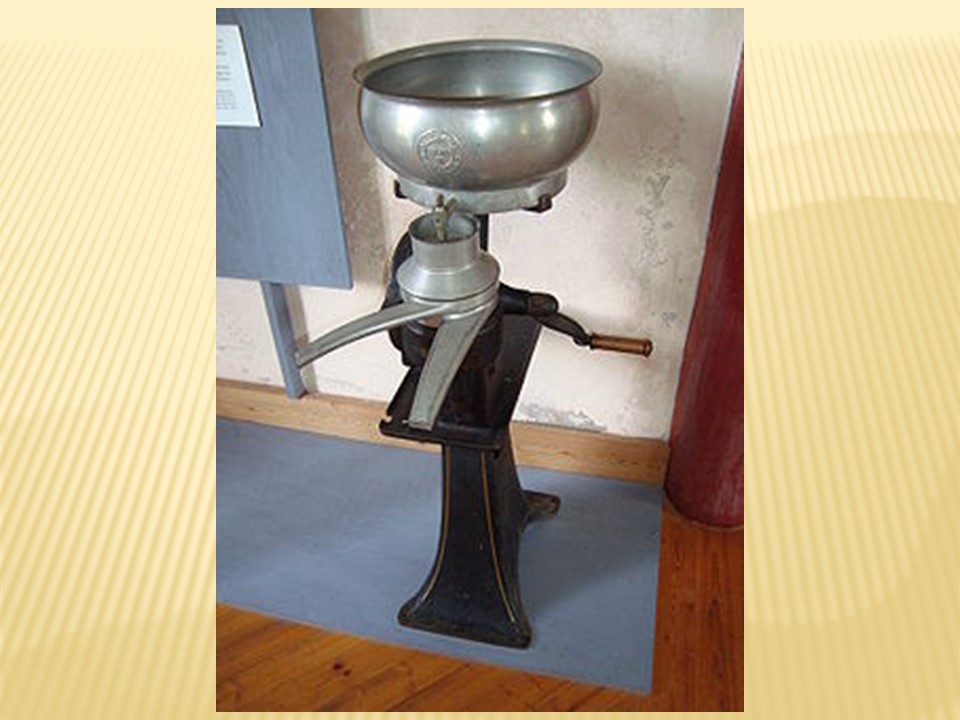
We carried the milk pail to the milk house and poured it in a large funnel that had a gauze filter in the bottom. We used a cream separator. Dad or Mom poured the filtered milk into the cream separator

Posted in Uncategorized | Leave a comment

Speed Traps

QUESTION:

Where was the first speed trap set up?

ANSWER:

The first speed trap was set up in 1905 when New York City Police Commissioner Bill McAdoo was caught going 12 mph in an 8-mph zone in New Hampshire. Two dead tree trunks spaced one mile apart each contained a deputy inside with a stopwatch and telephone.  When a speedster appeared to be going too fast, a deputy would start the stopwatch and telephone his comrade in the other dead tree trunk and another deputy manning a roadblock.

Commissioner McAdoo was so impressed he asked the local sheriff’s department to devise similar systems for New York City.

So called speed traps are entirely legal not necessarily evil devices. Enforcing traffic laws are a normal part of police operation. Knowing that traffic laws are enforced causes people to slow down and drive prudently.

Speed limits are enforced by using a variety of devices and instruments, including, VASCAR, radar, lidar, cameras, or sensors imbedded in the roadbed,

VASCAR (Visual Average Speed Computer and Recorder) marries a stopwatch to a simple computer. The operator on the ground or in the air presses a button as the car passes  two landmarks that are a known distance apart. Those large white stripes along the Interstate are used by both the “bear in the air” and units on the ground. Sometimes the two landmarks are posts or signs along the highway. VASCAR makes radar detectors useless. The police aren’t sending out any radar beams.

Radar (Radio Detection and Ranging) sends out a series of microwaves and times how long it takes for the beam to go to the target and return. Doppler radar analyzes how the frequency of the returned signed has been altered by the cars motion. Lidar is similar to radar except a laser light beam is used instead of a radio signal.

Radar detectors are legal in most all of the United States, but not in Canada. However, trying to jam police radar or lidar is illegal. Drivers have been known to flash their lights to warn approaching drivers of a speed trap. Some places this practice is tolerated, in others it is deemed illegal.

Increasingly, people tend to think that radar detectors are useless and a waste of money. That’s why radar detector sales are way down. Radar detectors are simple radio receivers, or light receivers. Many police do not have their radar sets on continually, but rather turn them on when they see a suspected “Mario Andretti”. They’ve registered your speed by the time you can even take your foot off the accelerator.

Lots of places are installing those unmanned roadside radar units that flash the speed of approaching vehicles. Some are now powered by solar cells. They are highly effective in making people aware of their speed and hence slowing down in critical areas, for example, where kids are walking to school. Wife and I saw many of those units in Colorado, Wyoming and South Dakota on a recent trip. Locally, one of those radars was recently installed on Butts Avenue near Tomah High School.

The National Motorists Association blog lists the “worst speed trap in Wisconsin”

as Rosendale, a small community ten miles west of Fond du Lac along Highway 26. Motorists going between Madison and the Green Bay, Oshkosh, Appleton area often use Highway 26. Rosendale has also been dubbed as “The Speed Trap Capitol of North America”.  Rosendale police are said to issue about 1500 tickets per year.

There is a surefire way to avoid getting speeding tickets: slow down.

Posted in Uncategorized | Leave a comment

Which type of snake is the deadliest? 

 There is not a simple answer. It’s like asking “Who was the best baseball player ever?”  or “Who was the best president we’ve ever had?’ Lots of different ways to arrive at an answer. People will come up with different answers and lists.

For World’s Deadliest Snakes, one must look at several criteria. Those might be; the toxicity of the venom, the number of deaths per year, the size of the adult, the amount of venom per bite, and the aggressive nature of the snake.

The Black Mamba would be on everyone’s Top Ten list. This “bad boy” snake is found in all African countries, except the desert countries of the north. The Black Mamba averages over 8 feet in length and can travel up to 12 miles per hour.

The Black Mamba is olive green in color. The inside of the mouth is black, hence the name. This snake is very territorial, does not like intruders, and will strike or bite repeatedly, up to 12 times in a row.

When  threatened or cornered, the Black Mamba will hiss, flatten its neck, and display its inky mouth and 2 large fangs. It can rear up to one-third of its body from the ground, a distance of up to 4 feet.

Most snake poisons are hemo-toxic and travel slowly through the blood stream. This allows time for a tourniquet to isolate the poison, or to get treatment by using a snakebite kit.

The Black Mamba poison is neuro-toxic. It rushes right to the nerves, attacks the central nervous system, and shuts down major organs.  A single bite from a Black Mamba is enough to kill 10 adults. A victim would be comatose in an hour, dead in 6 hours. You do not want a Black Mamba for a pet!

The Inland Taipan, sometimes called the Fierce Snake, is native to Australia’s central arid areas. Its venom is the most toxic known, a single bite could kill a 100 people.  Fortunately, this Fierce Snake is rather timid and will strike only if provoked. These snakes live in holes and feed on mice and rats.

Wisconsin has 21 species of snakes, but only two are venomous, the Eastern Massasauga rattlesnake and the Timber Rattlesnake. The Massasauga rattlesnake is on the Endangered  List and the Timber Rattlesnake is on the Protected Wild Animal list. It is illegal to hunt or own either snake. The Timber rattler lives mostly along the rocky bluffs of the Mississippi and Wisconsin Rivers.

When I was a kid growing up in rural Crawford County, there was a bounty on rattlesnakes, gophers, and moles. Rattlesnake tails fetched as much as $5.00. Mole feet were 25 cents and gopher tails earned a nickel.  Most of the bounties were taken off in the mid 1970s.

Sources: dnr.wi.gov/eek/critter/reptile/snakes.htm   and animals.nationalgeographic.com/animals/reptiles/black-mamba


Posted in Uncategorized | Leave a comment

Gathering Walnuts

The Scheckel farm on Oak Grove Ridge near Seneca in Crawford County had 10 walnut trees in the hill pasture along ShortCut Road. We always looked forward to the annual gathering of walnuts in the late 1940s, early 1950.

As fall approached, we kept track of the walnuts falling off the trees.  We traveled past the walnut trees several times a week on our way to Seneca.  When it was time, we gathered up milk pails and gunny sacks from the granary, the burlap bags we used for corn and oats.  Off we would go to the hill pasture.

Our hill pasture was special.  We drove our milk cows on the gravel road and pastured them during the day in spring, summer and fall. The hill pasture was just a few feet less than the highest point in Crawford County.  A few years after I left the farm, several agencies, including the Wisconsin State Patrol, built a relay tower on the highest point, which was just a few hundred yards from our property line.

Looking north from our vantage point on the hill pasture, we could see the steeple of Utica Church on Highway 27 north of Mt. Sterling.  The top of the Lansing bridge could be spotted above the terrain to the northwest.   We could see all the way back onto Oak Grove Ridge, the farmlands of Bernier,  Ingham, Suttons, and Fradette. The Payne, McAreavy, and Aspenson farms were fairly close. Further to the east was the Elmer Stove farmstead with its immaculate white buildings and white board fences. They kept their bright red Massey Harris ’44 tractor in spic and span condition.

Phillip, Bob, and I would pick up a bucket full of walnuts, pour them in a gunny sack, and tie off the gunny sack with binder twine. We’d walk home and ask Dad to take the tractor and wagon or the pickup truck to load up the gunny sacks and bring them back to the farm.   When we were old enough to drive, we boys could retrieve them ourselves.  Age did not determine when we could drive a truck or car.  If your feet reached the pedals, you could drive.  Dad and Mom didn’t allow us to drive to town, but we could drive on Oak Grove Ridge Road and on the roads around our farm.  “Fearless Fred” Brockway, Crawford County deputy sheriff,  would not be patrolling on Oak Grove Ridge.

The walnut sacks were unloaded on the cement apron east of the Big Barn.  The walnuts might stay in the sacks for several days until we had time to tend to them.  Then the shucking began.  Walnuts were poured out of the sacks onto the concrete, and beaten with a board, that loosened the shell or peeling around the black/brown walnut. Walnuts were picked off of the broken casings and put in a pail or bucket.  Our hands got really badly stained, almost pitch black.  That stain would not come off in soap and water, so we wore our walnut stained hands for several days as sort of badge of honor. Even went to school with stained hands.

The shucked walnuts were stored in metal tins in the basement.  We cracked walnuts in the wintertime, and put them in fudge candy that we made on the stove. Some went into brownies and cakes.


Posted in Uncategorized | Leave a comment