Who invented the computer?

Computers developed from mechanical calculating machines. One of the earliest mechanical machines, still used today, is the abacus, a wooden frame with parallel rods on which beads are strung.
In 1642, Blaise Pascal, while still a teenager, invented a simple mechanism for adding and subtracting.  In the mid 1850’s, Charles Babbage had the idea of a machine that would undertake any kind of calculation, driven by steam, the entire program of operations would be stored on a punched tape. It was never built, but the idea is used in modern computers. Babbage enjoys the title of “the father of the computer”.

Punched cards were a way of programming or giving instructions to a machine. It was used to do automated pattern weaving on a loom.  Cards with holes directed threads on the loom, with wire hooks passing through the holes to grab and pull specific colored threads to be woven into the cloth.

The use of punched cards was used in the 1890 United States Census. Metal pins in the machine’s reader passed through holes punched in the card, momentarily closing an electric circuit. The resulting pulses advanced counters assigned to details, such as income and family size.

The company that developed this tabulated machine became IBM in 1924. Their 80 column, 7.375 inches by 3.25 inches, card became the standard of the industry. The reminder:  “Do not fold, spindle, or mutilate” was printed on each card.

The earliest programmable electronic computer was the brainchild of Alan Turing, built by Newman and Flowers in 1943, called “Colossus”. It had 1500 vacuum tubes and frequently broke down, but the British were able to break the German code generated by their “Enigma” machines.

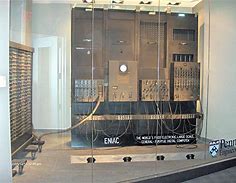
The United States made a mammoth computer using vacuum tubes and drum memories, called ENIAC, right after WWII. It had over 17,000 vacuum tubes, (a really fancy light bulb), weighed 30 tons, measured 100 feet long, 8 feet high, and 3 feet deep, and used over 15 kilowatts of power. Los Alamos labs used an ENIAC to develop the hydrogen bomb in the early 1950’s.

The transistor was developed in 1948 and greatly reduced the size, complexity, and power requirements of electronics, and increased the speed at the same time.  In the early 1960’s, silicon chips packed thousands of transistors and circuit components onto a wafer.

There is some new stuff coming out.  Gallium arsenide has greatly increased switching speed.  Organic polymers, used for liquid crystal panels and other flat screen displays, has nvast potential.  Optical chips, that push light around instead of electrons, have shown promise.

To answer the question “Who invented the computer?”, a honest answer would be “a whole bunch of people”. It was a steady progression of knowledge, research, advancing technology, and material development by a host of smart and motivated people.
 

Posted in Uncategorized | Leave a comment

Fanning Oats part 2

Those gunny sacks full of oats were heavy. Gunny sacks are burlap bags woven from jute, hemp, or sisal fiber. Later in life, I encountered the same material in handbags. But for a kid on the farm, gunny sacks were for feed, seed, ear corn, or sack races at the school picnic. Some gunny sack or burlap material covered water canteens. When the water-filled canteen was soaked on the outside, the evaporation of water from the burlap material cooled the water inside.

The bad oats, light oats, chaff, bits of straw that didn’t make the cut, were fed to the hogs as part of their slop.

Fanning oats was a chore that had to get done before going to school. Usually, we spent a half hour after morning chores and before breakfast. Off to the granary we would go to fan oats. Turning the fanning machine was hard work. Trying to keep it at a steady speed was not easy. We bantered over our efforts.

“Lawrence, you’re not turning the handle at a steady speed,” Phillip would complain.

“Well, why don’t you do it.” I’d pause and wait for Phillip to take over.

“I just had my turn. Now turn it at the same speed, and a bit faster wouldn’t hurt at all.”

What hurt was big brother’s comments about my work ethic, which I must admit, needed some improvement.

Five minutes was enough for any of us, and another Scheckel boy or Dad would take over. I often wondered why it was not motor-driven. Our cream separator had a motor. Small electric motors didn’t cost much and could have saved lots of back-breaking labor. But our granary didn’t have electricity, so an extension cord would have had to run from the power pole to the granary. Looking back, I shouldn’t have expected an electric motor. Not when Dad had three able-bodied kids to do the work!


Posted in Uncategorized | Leave a comment

Color Blindness

Total color blindness is extremely rare. The most common type of color blindness is the inability to distinguish between red and green. Light enters the eye through the cornea, lens, eye fluid, and hits the retina, a meshwork of tightly packed nerve cells.

There are three types of receptors packed near the center of the retina. The light fires the nerve impulses and the electrical signals travel to the brain via the optic nerve. The center of the retina is lined with nerve cell receptors called cones that respond to red, green, and blue light. Red-green color blindness is due to a lack of those red receptors.

Color blind people learn by experience to compensate for their defect by associating certain colors with changes in the brightness of the light. Therefore, many colorblind people don’t know they have the defect. That’s why we take those ink blot tests at the drivers license bureau.

Colorblindness is hereditary and is caused by a recessive gene on the X chromosome. Only one healthy or dominant gene is needed for correct color vision. Since boys get a Y chromosome from their father and an X chromosome from their mother, boys who are colorblind must receive it from their mother. About 8% of men are colorblind, and about one-half of one percent of women are colorblind. These men cannot pass on their colorblind condition to their sons, since they pass on only a Y chromosome, not an X, to their son. Because females have two X chromosomes, if one is deficient or recessive, the other one is likely to be dominant and makes up for it. Again, males have an X and a Y chromosome, so if a boy is colorblind, he got it from his mother, who gives him only X’s. He can’t get colorblindness from his colorblind father, because he gets a Y chromosome from his father.

In order for a girl to be colorblind, she must receive a recessive X from the mother and a recessive X from the father. That rarely happens, so colorblindness is sixteen times more prevalent in boys compared to girls.

Colorblindness is not contagious. It is a lifelong condition, and there is no way to prevent it and no way to treat it. It is just something people learn to live with.

Sources: WebMD


Posted in Uncategorized | Leave a comment

Fanning Oats

“And other seed fell into good soil and brought forth grain, growing up and increasing and yielding thirtyfold and sixtyfold and a hundredfold.” Mark 4.8

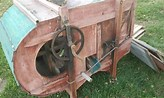
Oats was the first crop planted in the springtime. The Scheckel family had to “fan oats.” That meant taking “oats right out of the bin” and shoveling the grains into a fanning machine. It was no fun turning the metal hand crank on the machine. We stored the reddish wooden fanning mill in the east wing of the granary, the same wing that housed the grain binder and tractor. Every year in March, that brutish machine was carried out of the east wing and placed in the aisle of the granary.

These days fanning mills are found in farming museums, or serve as decorations in restaurants such as The Cracker Barrel Old Country Store and the The Machine Shed. Most fanning machines used on a farm got scuffed up badly, covered with dust and grime. But they look quite eloquent in museums and restaurants, with their colors restored. Some had painting on the side and sported lathe-turned knobs on top. Almost like a piece of furniture.

Fanning machines got rid of chaff, straw, small stones, dirt, weed seeds, and light immature seeds from the oats or wheat seed you wished to plant. In short, the machine separated the wheat from the chaff.

A fanning machine used an air-blowing fan and two screens to clean the grain. Fanning mills were highly prized, and farmers took good care of them. Two common brand names were Cargill and Clipper. Some of those machines were used for a hundred years to clean oats and wheat used for spring planting.

It took at least two people to run a fanning mill, but three or more was better. One of us would scoop grain from the bin into the hopper of the red fanning machine. A shovel or five-gallon pail was used. Another one of us would turn the crank and the old machine would vibrate and shake as it came alive. Seeds passed over the scalping screen and removed large material. Then the seed moved over the sifting screen, which separated out the small debris.

The oats passed over two screens, one on top of the other. The smaller pieces fell through the holes of the top sieve. Bits of straw and larger chaffy oats didn’t get through the top sieve and collected on the fall. Bits of soil and rock fell through the bottom sieve, and were also discarded. The seeds fell past an adjustable blower that removed very light trash such as chaff.

The good oats seed was shoveled into gunny sacks. One of us would hold the sack, while the other scooped up the good grain and placed it in the bag. The top of the bag was twisted and fastened with binder twine. The seed oats were then ready to be planted.


Posted in Uncategorized | Leave a comment

Bone Stimulation

Bone is one of the tissues in the body that has the ability to mend itself when injured in much the same way as skin and other tissue. Fractured bones go through a natural healing process that includes the growth of both bone mass and density. Most of the time a break will repair itself into a solid union within a few months.

But that doesn’t always happen. The normal process of bone calcification does not take place, as scar tissue and cartilage fill the gap where new bone was expected to grow.

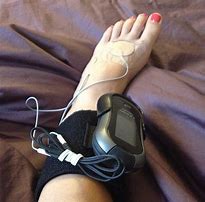
Various technologies exist to stimulate bone growth. One is ultrasound and another is electrical bone stimulation. The most common unit of electrical stimulation uses capacitive coupling technology. This technology employs a stimulator unit with two lightweight, electrodes placed on either side of the bone break or bone fracture. A tiny electrical current passes between the electrodes. The patient cannot feel the current.

Electrical stimulation causes bone cells to proliferate. The idea is to increase the flow of calcium ions into osteoblasts, the cells that deposit new bone.

Electrical stimulation has been used successfully on breaks and fractures of the humerus,  the bone from the elbow to the shoulder, ulna and radius, the bones from elbow to hand,  the femur, the bone from hip to knee, tibia and fibula, the bones from ankle to knee.

Electrical stimulation is especially useful on scaphoid fractures. The scaphoid bone is one of eight small bones that make up the wrist. These eight bones are in two rows, but the scaphoid bone links the two rows together, making it at high risk for injury.  Fractures of the scaphoid occur when a person falls on an outstretched hand. This injury happens a lot with athletes.

Another type of unit uses pulsed electromagnetic field technology. A treatment coil is incorporated into the cast or placed directly on the skin over the fracture site. The unit can be programmed to the patient’s needs. A small electric current travels to the treatment coil and produces a pulsating electromagnetic field around the fracture.

The system is very safe, the patient feels nothing, and no surgery is required. There are no known risks and no side effects. About ten hours is the recommended time each day and the unit can be used while the patient is sleeping.

Electrical stimulation is used for spinal bone fusion. Spinal bone fusion is a term used to describe the surgical procedure designed to eliminate motion across a spinal segment. The technique involves the placement of a bone graft across the spinal segments. Two types of bone stimulators can be employed.

One device to promote spinal bone growth can be implanted during surgery. It consists of a battery pack which provides direct current to four electrodes. The battery pack is implanted just below the skin.

The second type uses a corset-like device that has magnetic coils implanted in it. The patient wears it while sleeping. Pulsating electromagnetic energy induces weak electrical current in the underlying tissue.

Smoking cigarettes has a significant effect on bone healing. Smoking causes blood vessels to constrict about 25 percent of the normal amount. Nutrients, minerals, and oxygen levels are reduced.  Smokers take over 2 months longer for their bones to heal compared to non smokers.

Sources: WebMD and Medscape.com


Posted in Uncategorized | Leave a comment

Black Boxes on Airplanes

Those data recording Black Boxes are actually painted orange, so that they will show up better in any wreckage. There are usually two of them and they are stored in the tail of the airplane. Stored back there in the tail improves their chances of survivability. Did you ever hear of an airplane backing into a mountain?  Doesn’t happen.

The casing of a Black Box consists of two shells of stainless steel with a heat protective material between the shells. The case must withstand a temperature of 2,000 Fahrenheit for 30 minutes.

Inside the case, on shockproof mounts, are the plane’s flight data and cockpit voice recorders. The flight data recorder is continually fed information on the speed, direction, altitude, acceleration, engine thrust, engine performance, and position of the flight controls.  A total of about 100 different parameters. The data is recorded on stainless steel tape which has the thickness of aluminum foil. When the tape is played back, it generates a computer printout.

The cockpit voice recorder records the previous 30 minutes of the crew’s conversation and radio transmissions. This is a continuous loop tape, so only the last 30 minutes is saved.

New planes joining the airline fleets are using solid-state recorders, essentially stacked arrays of computer chip boards about 2 inches by 1 inch. No moving parts, greater reliability, less maintenance, and less chance of anything breaking in a crash. These newer units record 25 hours of flight data and 2 hours of cockpit conversations. Up to 700 sets of data can be recorded.

The cockpit voice recorder has 4 microphones; one in the pilot’s headset, one in the co-pilot’s (first officer) headset, one in the third crewmember’s headset, and one mounted in the center of the cockpit, so it can pick up alerts and alarms. Many modern planes have a cockpit crew of 2, instead of 3.

Black Boxes are also equipped with an underwater locator beacon. If the plane crashes into water, the beacon sends out an ultrasonic pulse that can be detected by sonar and acoustical locating equipment. A sensor is activated when touched by water. It pings once per second for 30 days.

Air France Flight 447 from Rio de Janeiro to Paris, a wide body Airbus A330, crashed into the Atlantic Ocean in June 2009, killing all 228 people abroad. It took nearly 2 years to find the Black Boxes in deep water. It required an advanced robotic submersible and millions of dollars to find and retrieve the Black Boxes.

So now the thinking has changed. Why not stream the data in real time to either satellites or ground stations? The technology already exists. Anyone with a smart phone can receive streaming data from the stock markets.

In 2013, the Canadian airplane maker, Bombardier, started transmitting telemetry data in real time, as well as recording it the traditional way on Black Boxes.

A recent patent, called Safelander, would enable a ground-based pilot to take remote control of an airplane in flight. This system, had it been in place, could have foiled the 9/11 hijackers. The military routinely flies drones in surveillance and combat missions. There are now discussions about cargo-only aircraft, such as United Parcel and Fed Ex, being flown by remote control, with no cockpit crew whatsoever. We are living in truly exciting and wondrous times!


Posted in Uncategorized | Leave a comment

Sheep Shearing on the Scheckel Farm

Each spring the sheep-shearing crew came around. Shearing is a once-a-year process in which all the woolen fleece is removed. Phillip, Bob, and I herded the sheep into an enclosure. Shearing was done in the horse barn because it had electric outlets for the clippers.

The shearing man would spread a big tarp over the floor. The tarp kept the area clean and aided in gathering the wool and tying it into bundles. The shearing man would set the sheep up on its rump and shave the underside first. Then the man, aided by Dad, would throw the sheep on its side, so its legs were off the floor and useless for moving around. Now both sides and the back were sheared.

The shearing men used a cutting blade that was about four inches wide. It appeared to be much like the hair clippers our barber used. My brothers and I were too small to help with the shearing. Our job was to open and close gates, get drinking water, and act as “go-fers.” Shearing day was very exciting. The shearing transformed the sheep from thick wooly creatures to stark-naked “baaing” creatures. I thought we were doing the sheep a favor with hot weather approaching. Who in their right “sheep-mind” would want to go through the hot, humid Wisconsin summer wearing an extremely thick wool coat?

The shearing crew “uncoated” about 30 ewes. The wool was wrapped into big bundles ready for market. Eventually, we stopped raising sheep as we started raising more hogs. I missed the sheep, though. They were so gentle, and I loved watching them graze on the hillside. To this day, I do not eat mutton.


Posted in Uncategorized | Leave a comment

Typewriter or Keyboard Letters

The first typewriters were made in the mid 1870’s by the Remington Company. Mark Twain was one of the first writers to use one. The standard keyboard (QWERTY) was designed by Christopher Scholes in 1872. Scholes sold his interest to Remington, the same company that later made rifles.

Typewriters use a mechanism in which the alphabet letters are on the end of a long bar. When a key is struck, the linkage swings the lettered bar into contact with a tape coated with ink. The ink is transferred to paper that is positioned right behind the tape.

Scholes arranged the keys so that the most commonly used letters were on opposites sides of the keyboard. This array tended to cause less jamming.

Typewriters have gone the way of the horse and buggy. Schools now have keyboarding classes, instead of typing classes.  Computer keyboards are laid out much like typewriters, but with a lot more function keys.

The United States keyboard on computers is pretty much the standard for the world. Ireland and the UK have some very slight differences. In Germany, as well as much of Central Europe, the Y and Z are swapped. In France, the A and Q are swapped as well as the Z and W.

Most European keyboards have the  €  symbol for the Euro.  Some newer keyboards in the United States have the Euro (€ ) symbol, but older models  do not. If you want to look at the symbol, hold down Alt, while typing the numbers 0128. When you let up on the Alt key, the Euro (€) symbol appears on your screen.

By the way, this Christopher Sholes fellow has a Wisconsin connection. He moved from Pennsylvania to Milwaukee as a teen, became a newspaper publisher, served in the Wisconsin Senate and Assembly, and campaigned successfully to abolish capital punishment in Wisconsin. Sholes died of TB in 1890.

His daughter, Lillian, became known as the world’s first typist. She worked in her father’s office. Those first machines only did capital letters.

The “fastest typist in the world” title goes to Barbara Blackburn of Salem, Oregon who was clocked in 2005 at 150 words per minute for 50 minutes.  Her top speed was 212 wpm.


Posted in Uncategorized | Leave a comment

Raising Sheep on the Seneca Farm

Raising sheep was labor intensive because lambing occurred in the spring at the same time we were trying to beat the weather and get a crop of oats in the ground. A number of times, a ewe would not make it through lambing.

When I was seven years old, we had a memorable pair of orphans. The mother ewe didn’t survive the birth. We named the lambs Pat and Mike. Both sported black noses and faces with an entirely white fleece. They were fed with a bottle twice a day. As spring approached, Pat and Mike were put out in the pasture east of the house, along with the cows and horses.

Phillip, Bob, and I would take two bottles of milk, walk down to the pasture, and yell, “Pat, Mike.” The twins would come galloping at full speed, even if they were a quarter mile away. They would guzzle a whole baby bottle of milk. When it was gone, they would push against the bottle in an attempt to get more.

Young lambs had their tails cut off, a process known as docking. Docking aided in cleanliness.

We used rubber rings applied to the tail several days after the lamb came into the world. The process was called banding. The band cuts off the blood supply to the tail, causing the tail to fall off in ten days. Just an inch or two of stub remained. It’s a bloodless and pain-free way of removing the tail.

The “unblemished lamb” came up often in the Masses I attended at St. Patrick’s. As a kid, I thought an unblemished lamb was one that didn’t have any disfiguring marks on it. Later I learned that an unblemished lamb is one that had not been docked, castrated, or had its horns removed. I called that a “lucky” lamb.


Posted in Uncategorized | Leave a comment

Why are elections on Tuesdays?

The first Tuesday in November was established as the date for the presidential election of 1848. Zachary Taylor, known as “Old Rough and Ready,” ran as a Whig candidate. He was the last president to own slaves and had a brilliant forty-year military career. Taylor died in office after serving sixteen months.

The first Tuesday in November is standard now, but it wasn’t always that way. In provincial America, before the Revolutionary War, voters had to travel to the county seat. Elections in northern colonies were in the spring and fall so that snow wouldn’t prevent far-flung voters from arriving on time. The crops were in by November. Roads were mostly dry and passable. It could be a trek of twenty-five miles or more by horseback. Polls would stay open for several days.

Election Day was a big deal, with big crowds, much drinking and carousing, and crowd control was a problem. No rooms in the inns!

Mondays and Tuesdays were the more popular days after the Revolutionary War. After 1776, more polling places were established so that would-be voters didn’t have to travel long distances to the county seat. Each locality could set the date and hours of polling.

Monday was not good because people would have to start travel on Sunday. That’s a day of worship, not travel. By the mid-1850s, Tuesday was the most popular day and soon became law.

Congress did not want elections held on November 1 because that was a holy day in the Catholic Church. Also, merchants did their bookkeeping for the previous month on the first day of the month. So they specified “the first Tuesday after the first Monday.”

November seems to be a good time of the year for national, state, and local elections. Crops are in, school is in session, summer vacations are over, Thanksgiving is several weeks away, winter snows haven’t arrived, and stores have been gearing up for Christmas for months!!

There was a saying: “As Maine goes, so goes the nation.”  Maine held its election on the second Monday in September, all the way up to 1949. So it was thought that Maine provided a political barometer, if you will, of how the rest of the nation might vote.

There has been talk of moving Election Day to a weekend so more people could vote. It might be more convenient. Every country has different rules. The English vote on Thursday. Germany votes on a Sunday or holiday. Voting in Australia is compulsory.

Posted in Uncategorized | Leave a comment