Softball at Oak Grove School ….continued

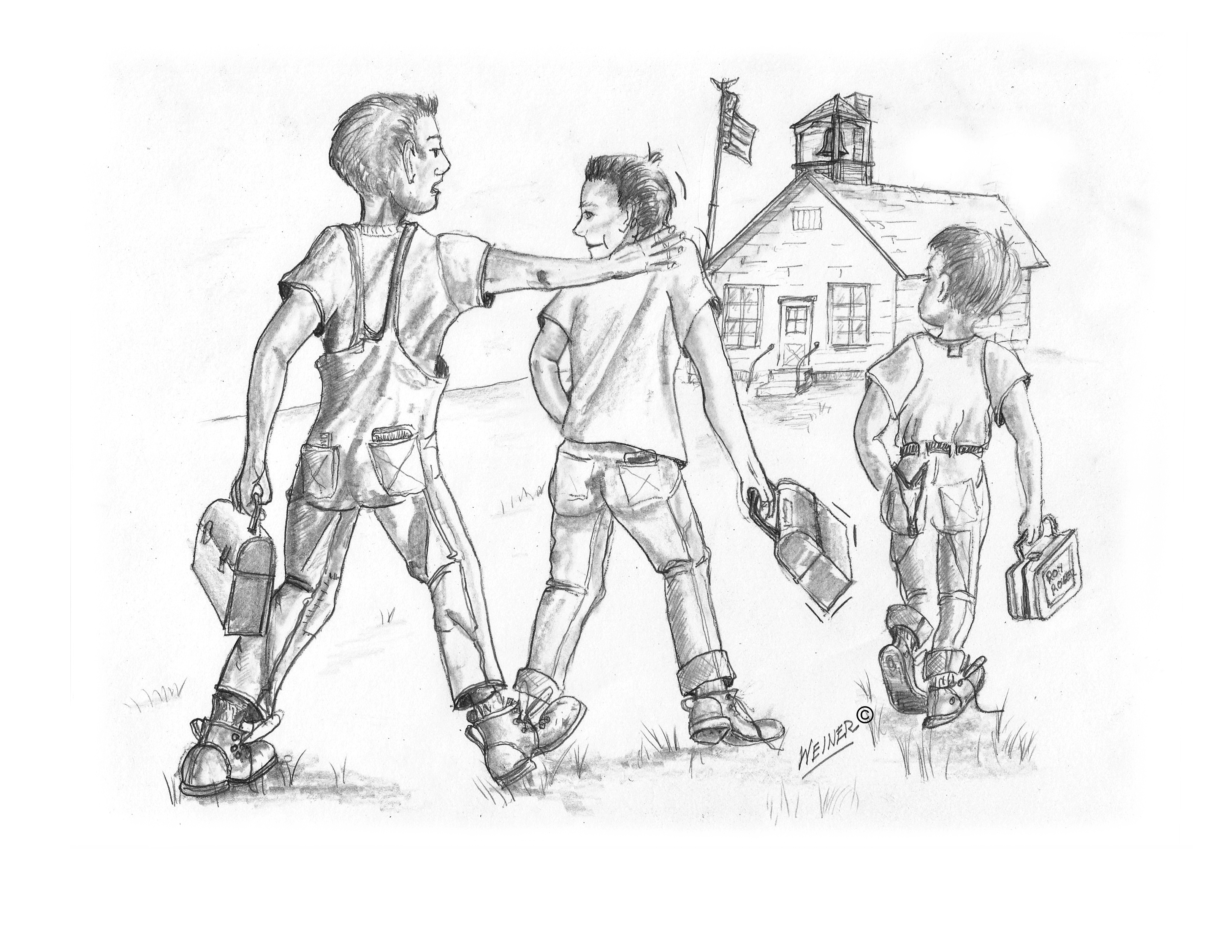
Willard Ray was the best teacher-player. He was a man, of course, and the only male teacher I had at Oak Grove Ridge School. He was fairly big and strong and could hit the ball a mile.

Left field was the road that ran past the school, center field was that triangular patch of grass and weeds where the road divided between Oak Grove Ridge Road and Kettle Hollow Road, and right field… well, there was no right field. There was that road and then the woods. Left-hand batters, like Jimmy Kozelka, enjoyed a right-field fence that was only 40 feet from home plate. A pop-up down the right field line put the ball over the fence.

We made our own rules. We decided that a ball over the right field fence was a ground-rule double. Any ball hit in the road, or gutter, or the tall grass and weeds before reaching the fence was playable. If the ball got lost in the high grass, that was too bad. Next time keep your eye on the ball. The batter could run forever!

Our country school with 28 kids could field two teams consisting of 18 players, nine on each side. The game was still on if we only had 12 players to choose from. But if there were fewer than ten players available, we played “work up.” No time limit, no keeping score, anyone could join or leave at any time. You had to have a pitcher, batter, first baseman, and one fielder. So even four fielders could keep the game going, but it wasn’t easy, eight or nine was much better. A catcher wasn’t needed because the woodshed served as the backstop.

The little ones picked up the game and learned the rules. Some kids were so small they couldn’t swing the bat, so a bigger kid would wrap their arms around the small kids’ and help them grip the bat. That made four hands on that bat to swing at the pitch.

The first- or second-grader would take off to first base. Sometimes the kid would mistakenly toddle down the third base line. Older kids would straighten them out and get them going down the right path. I do believe that is a metaphor for what the one-room schools taught us: “Get them going in the right direction.”
 

Posted in Uncategorized | Leave a comment

Blood Sugar

Is it true that too much glucose in your blood is bad for you, and that glucose can increase aging?

Glucose is a type of sugar that is in the blood. Glucose comes from carbohydrate foods and is the main source of energy used by the body. Insulin, a hormone produced by the pancreas, helps the body’s cells use the glucose.

When we eat, the blood glucose level goes up. This increase signals the pancreas to release insulin so that the blood glucose levels do not get too high. Levels that are too high (hyperglycemia) over time do damage to kidneys, blood vessels, eyes, and the cardiovascular system.

Blood glucose tests are done to check for diabetes. The most common is the 8-hour fasting blood sugar (FBS). A reading between 70 and 100 is good. (The units are mg/dl, which is milligrams per deciliter). Above 100 is reason for concern.

The other end of the spectrum is hypoglycemia, or not enough sugar. Dangers include seizures, unconsciousness, and brain damage.

Many people avoid too much sugar for one very good reason. Eating too much sugar is a sure way to gain weight. But there are several other good reasons to keep blood sugar levels in check.

Too much sugar from too many sweets ages the body in several ways. Too much sugar means a shorter life span. Too much sugar speeds up the aging process and makes the skin look older. Excessive sugar is not good for healthy teeth.

Researchers recently found a link between blood sugar and Alzheimer’s disease. High blood sugar levels lead to a decrease of brain activity in the hippocampus area of the brain. A decrease in brain activity can make Alzheimer’s worst.

So, in short, the answer is yes!  Too much sugar in the blood is bad for you, and yes, too much sugar increases aging. Sometimes it seems that life is just not fair. Many is the person that have asked himself/herself  “Why does something that tastes sooo good, like fudge, be sooo  bad for you”.  Perhaps it comes down to moderation. One piece of fudge, OK. Two pieces ?   too much!

Sources: WebMD  and Gundersen Clinic.


Posted in Uncategorized | Leave a comment

Softball at Oak Grove School

Whoever laid out Oak Grove School did not have softball in mind. We had a terrible field. We thought it was fine at the time and just accepted what we had.

The only level spot on the field was the batter’s box. The woodshed acted as the batter’s box. The bases were pieces of firewood that kept moving around. The batter ran downhill to get to first base, a few feet beyond first base was the gravel road that led to Kettle Hollow. Second base was close to the road that led back onto Oak Grove Ridge. A runner ran uphill to get from second base to third base, which was right next to the hand-operated water pump.

The softball diamond was not square. It was diamond-shaped, like on playing cards. The distance from home plate to second base was almost twice the distance as from first to third base.

Oak Grove School owned a bat for the big kids, and a shorter bat one for the little kids. That was twice the number of bats my brothers and I had at home. The bats were stored in the cloakroom. Some kids wore a softball glove, or mitt, but most didn’t and caught the ball bare-handed.

The battle raged. Yelling, cheering, booing, “You’re out,” “No I wasn’t.” The arguing was always short-lived, but included a lot of name-calling. What wondrous times those were!

Sometimes, the teacher would play. Mrs. Ray (well, she was a girl) threw the ball like a girl and swung the bat like a girl, which didn’t seem an efficient way of playing ball.  Mrs. Ray would take a few swings at the ball and designated another kid to run for her. We decided that it was OK for the teacher to have a designated runner. To be continued…….

Posted in Uncategorized | Leave a comment

Eating and Weight

If a person eats one pound of food, does that mean one pound of weight is put on a person? Yes and No. Yes, if a 180 pound person ate one pound of “Death By Cheesecake”, that person would weigh 181 pounds after ingesting the last morsel.

Same thing for water.  A pint of water weighs about one pound. If you drank a pint of water, you would weigh a pound more.

No, that one pound of cheesecake does not mean a person gains one pound of body weight over time. And a few hours after drinking that pound of water, you would weigh about the same as you did before drinking the water. That’s the essence of what the person really wants to know.

It’s about the calories, not the weight of the food. Calories are the amount of energy in food. A pound of fat is about 3,500 calories. For every 3,500 calories consumed beyond what the body needs for basic functions, you gain one pound of weight.

Some foods have more calories than others. Foods high in fat and sugar are also high in calories. A pound of chocolate pie has more calories than a pound of cereal.   If you eat more calories than the body uses, the extra calories are stored as fat.

In addition, foods high in fat usually are high in saturated and trans fats and increase LDL cholesterol, the “bad” cholesterol, and also increase risk of heart disease.

Another downer of high fat food along with too much food, is type 2 diabetes, or adult onset diabetes. More and more teens and young adults are being diagnosed with type 2  diabetes these days because of lack of activity and carrying excess weight. It is running rampant in our country and is starting to take a toll on our health care system.

The average adult uses or burns 2,000 to 2,500 calories a day. If a person takes in 3,000 calories in a day, he or she could “burn off” that excess 500 calories by being active or exercise to maintain their weight.

Weight loss people are always preaching two concepts about keeping excess weight off. Their advice has not changed in decades. “Eat less, and exercise more”. It is a simple formula. Easy to say, but not so easy to do. But in the end (no pun intended), it’s the only tried and true method that works long term.

There seems to be no magic bullet when it comes to nutrition and weight control. There are lots of commercials and infomercials on television that sell vitamins and diet drugs. A sizable portion of magazine advertising is aimed at weight control. Making lasting changes in eating and exercise habits is the way to lose weight and keep it off. It isn’t about deprivation, it’s about moderation.

Perhaps it comes down to Aristotle’s Golden Mean: “Everything in moderation, nothing in excess”.

Source:  www.mayoclinic.com and Joan Kortbein, Tomah Memorial Hospital Registered Dietitian


Posted in Uncategorized | Leave a comment

Softball at Oak Grove School

The favorite game was softball for fourth-graders and up. But there wasn’t enough time to get a game in. Since recess lasted ten minutes, we had to settle for catch or hit fly balls or grounders.

Noon lunch was longer, though, and allowed us to get a game in. Some days we played as much as five innings. We had to leave a few minutes to gulp down our food. Two boys in either seventh or eighth grade were appointed, or rather self-appointed, to “choose up” sides. Girls were excluded from the “choose sides” privilege. The “choosers” would stand about four feet apart. Winner of the bat toss got first pick to form √a team. Up until fourth grade, I was one of the last picks. But as I grew older, I got bigger and stronger, and therefore higher in the picking order.

Whoever laid out Oak Grove School did not have softball in mind. We had a terrible field. We thought it was fine at the time and just accepted what we had.

The only level spot on the field was the batter’s box. The woodshed acted as the batter’s box. The bases were pieces of firewood that kept moving around. The batter ran downhill to get to first base, a few feet beyond first base was the gravel road that led to Kettle Hollow. Second base was close to the road that led back to Oak Grove Ridge. A runner ran uphill to get from second base to third base, which was right next to the hand-operated water pump.

The softball diamond was not square. It was diamond-shaped, like on playing cards.  The distance from home plate to second base was almost twice the distance as from first to third base.

To be continued………..


Posted in Uncategorized | Leave a comment

Dowsing, divining rods, and water witching

Dowsing is controversial and has many ardent adherents.  There are people that will swear on a stack of Bibles that they have used water witching and dowsing or have witnessed finding water or underground pipes or wires. But controlled tests and studies over many decades yielded results no better than chance.

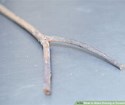
Dowsing is the art of finding hidden things with aid of dowsing sticks, rods, or a pendulum.  A forked stick, a small Y-shaped willow branch, is most often used. The dowser holds the branch by the ends of the Y-shaped branch with the stem end pointed straight ahead and parallel to the ground. The dowser begins to walk over the specified area. When the end is the branch is suddenly and violently drawn downward, the dowser says, “Dig here for water”.

Other dowsers will use two L-shaped metal rods, one in each hand. The short arms are held upright and free to swivel, and the long arm points forward. When something is discovered, the rods cross over one another making an X over the found object. Some dowsers specify brass rods, others use metal coat hangers.

Water can be found anywhere you drill. There is no way to confirm that the spot chosen by the dowser is the best possible spot.

The first bona-fide study of dowsing was done in 1948 and not a single one produced results any better than random luck. A huge German study in 1987 tested 500 dowsers and selected the best 43 for further testing.  The vast number showed no results in excess of arbitrary or hit and miss guesses.

A controlled experiment in Maine in 1949 was run by the American Society for Psychical Research.  A group of 27 dowsers “failed completely to estimate the depth or amount of water to be found in a field free of surface clues to water, whereas a geologist and engineer successfully predicted the depth at which water would be found in 16 sites in the same field”.

Some dowsers make claims of a psychic connection. They will speak of an energy force.  They’re able to tune in to the vibration of an object.  The dowsing twig or tool acts as an amplifier or antenna for tuning into this secret energy source.

Dowsing belongs in the same category as psychics, the Loch Ness monster, Yeti, the Abominable Snowman, Bigfoot, the Bermuda Triangle, visits by UFOs and  aliens, ghosts, haunted houses, ESP, astrology, predictions by Jeane Dixon, John Edwards and Sylvia Brown, and the Grassy Knoll theory.  All possible, but not probable, and no evidence or proof of any of them.

Religion has weighed in on the subject. Martin Luther, in 1518, put dowsing for metals in the same category as occultism. In 1662, the Jesuit, Gaspar Schott, declared dowsing to be “superstitious, or rather satanic.”

Most people, it seems, just enjoy watching a dowser at work and don’t apply any religious connotation or connection. It is fascinating to see that branch dip down or metal rods cross.


Posted in Uncategorized | Leave a comment

Walking to School

After we had completed our fanning oats duty, we went off to school. We walked to schoolwith  the Kozelka kids. Seems we all had nicknames and those would change from time to time. Gloria Kozelka was called “morning glory” after the obnoxious weeds that grew in the cornfields and wrapped around the cornstalks. Morning glories had beautiful flowers that closed up at night and opened in the morning sunlight. There was no known relationship between Gloria and morning glories. We just couldn’t come up with a better name.

We called Nancy Kozelka “Nancy Goat,” a really bad play on “nanny goat.” She was tall and athletic. Calling her “Nancy Goat” would invoke her wrath. Nancy was pleasant most of the time, but she had a quick temper. Oh, could she ever hit a softball! When we chose teams for noontime Oak Grove School softball, Nancy was always the first girl chosen and often ahead of the boys.

Jimmy Kozelka was a neat kid, but a little rough around the edges. He was small in stature, but gutsy. Jimmy would eat dirt on a dare or even swallow a worm. If young Jimmy didn’t want to do something, the teacher permitted him to sit out on the front steps of the school. Jimmie’s siblings claimed that the teacher was “spoiling him.”

Ruth Ann Kozelka got influenza meningitis in third grade and missed most of the school year. She was held back a year, so she could catch up. We were walking home from school when we heard that Ruth Ann had to repeat third grade. Some of us teased or taunted her about “being dumb.” It is one of the childish things I did that I have regretted to this day.

Gary Kozelka was much like his brother, but always had a smile. Good-natured, pliable and pleasant. Nothing seemed to bother him.  Continued…..


Posted in Uncategorized | Leave a comment

Human DNA into another creature?

If we’re talking about a cross between a human and a Holstein cow-well, that’s not going to happen.

But in fact, animal-human hybrid work has been going on for a number of years in labs all over the world.  Thousands of animals contain human cells or DNA. Most of these are mice with a single gene sequence of human origin.

There are mice with human-like livers that allow scientists to study the effects of drugs. Some lab monkeys carry a human form of the Huntington’s disease gene that permits scientists to investigate the development of the disease. There are sheep and pigs with bits of human organs growing inside them.  The goal is that these animals will grow organs that can be used by humans.

Pig heart valves have been implanted in humans for some years now. There is hope that pig cells can be used for diabetes treatment. Fetal pig neurons have been implanted into the brains of people with Parkinson’s disease. Pig liver cells have been used experimentally to cleanse the blood of people with liver failure, hoping to keep them alive until a donor can be found.

Stem cells have been created by inserting human genomes into rabbit eggs. Researchers have made mice with human prostate glands. Several sheep now live with a half-human liver.

DNA from humans is inserted into bacteria to recreate the insulin gene and the insulin is used for many diabetic patients nationwide.

The goal of all this “recombinant DNA technology” research is to save lives and to study drugs and diseases. You can’t use people in gruesome but necessary experiments. In stem cell research, the human cells are the therapy, and under federal (FDA) rules you have to test them in animals before you test them in people.

Some recent research has been truly exciting.  They are doing to brain cells what they have previously done with liver and kidney cells. There are now humanized mice with Alzheimer’s symptoms. Neurological disorders kill 7 million people every year.

What has been described above is not the same as whole body cloning. Cloning is the process of creating an identical copy of an organism. Dolly, the sheep, was cloned in Scotland in 1996. She lived for six years. A cell was taken from her biological mother, transferred into the egg of a female sheep, implanted into the surrogate mother, grew into a fetus, and eventually into an identical baby copy of the original animal.

Dolly was controversial and cloning is not simple. The success rate is terrible. Dolly was born after 277 eggs were used to create 29 embryos, which produced 3 lambs and only one lived.

There is talk about bringing back extinct species by cloning dead specimens and growing them in the wombs of similar animals. The Wooly Mammoth has been extinct since 1700 B.C. and the DNA of these creatures has been preserved fairly intact in the frozen ice of the Russian tundra. This DNA transfer and cloning have raised serious moral and ethical issues. Should we be tampering with Mother Nature? What are the risks and benefits? Is our science ahead of our rules and regulations in this area?

Sources: http://www.livescience.com and  www.ornl.gov/sci/techresources


Posted in Uncategorized | Leave a comment

How does a corn seed know which way to grow? 

  A plant response that involves a specific movement  is  called tropism from the Greek word  “to turn”. And any factor that brings forth such a response is called a stimulus.

Tests done way back in 1806 confirmed that gravity was the primary cause of plants growing in the correct direction. The tests showed that moisture was not the cause.  Plant shoots kept in the dark still grew up and roots grew down, so light was not the primary reason.

How did they prove that gravity was the culprit?  A Dr. Knight put seedlings in a rotating wheel, so they had an artificial gravity-like pull of centrifugal force.  The plant roots grew downward at a 45 degree angle. The 45 degree angle was the result of both centrifugal force and gravity.

The tropism responsible for plants growing in the correct direction is geotropism, a response to gravity.  NASA  uses the term gravitropism.

Thigmotropism is a response to touch. It accounts for the twining or wrapping of a vine around an object and the climbing plants and ivy you see up the sides of buildings and old windmills  out in the country.

Cells that are touched produce auxin, a plant hormone, and transport it to untouched cells. The untouched cells on the outside of a bend grow faster than the touched or contact cells. This causes the tendril or vine to curve toward the side of contact. It’s almost a miracle how that happens!

The Scheckel boys had to go through certain areas of the corn fields on that Seneca farm and pull the Morning Glories that wrapped around a corn stalk. We didn’t know at the time that we were at war with thigmotropism.

Another tropism is phototropism, where light is the stimulus.  Some sunflowers exhibit the phenomena.  The sunflower plant head bends toward a light source, the sun, allowing more light to reach more cells to produce photosynthesis. That same plant growth hormone, auxin, moves to the dark side of the stem. The dark side grows longer causing the plant head to bend toward the light.


Posted in Uncategorized | Leave a comment

Softball at the one-room country school

The Kozelkas had a big brown lab dog that answered to Curly. In his prime, Curly walked to and from school each day. Curly hung out around the school building, and earned his keep by retrieving our softballs that were hit into the woods. However, Curly wore out his welcome when he ate the eggs for the Easter Egg hunt. Curly had his fill of eggs, but we had our fill of Curly. He was literally in the dog house from then on!

The school day dragged on as we kept one eye on the regulator pendulum clock. We looked forward to our recess break at ten o’clock. The teacher wanted us to “get fresh air” and wear off some energy. Only severe cold, rain, or a thunderstorm would keep us indoors.

The favorite game was softball for fourth-graders and up. But there wasn’t enough time to get a game in. Since recess lasted ten minutes, we had to settle for catch or hit fly balls or grounders.

Noon lunch was longer, though, and allowed us to get a game in. Some days we played as much as five innings. We had to leave a few minutes to gulp down our food. Two boys in either seventh or eighth grade were appointed, or rather self-appointed, to “choose up” sides. Girls were excluded from the “choose sides” privilege. The “choosers” would stand about four feet apart. Winner of the bat toss got first pick to form a team. Up until fourth grade, I was one of the last picks. But as I grew older, I got bigger and stronger, and therefore higher in the picking order, same with all the other kids.

Posted in Uncategorized | Leave a comment