
This question was a source of endless argument for the three Scheckel brothers growing up on that Crawford County farm outside of Seneca. We never did come to any definitive conclusion. We even snuck out of the house one summer night and went to the barn to witness if Dolly, Prince, and Lightning were standing in their stalls or lying down. All three were standing, but we couldn’t figure out if they were sleeping or not sleeping.
I finally got an answer straight from the veterinarian’s mouth a few years back. Dr. Steven Doll said that horses have a suspensory ligament apparatus in the lower leg that locks up. Their legs can lock in place, enabling them to fall asleep without falling over. So,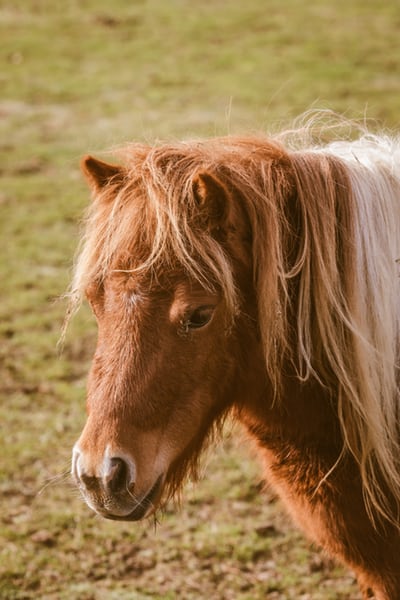 it turns out that horses do sleep standing up, but they also sleep lying down.
Historically, horses were prey for wildcats, lynx, and mountain lions, and did not feel safe sleeping on the ground. Most of their sleeping was done during the day rather than at night, when predators were out hunting. Horses cannot get up quickly. If an enemy mountain lion were to come along while on the ground, the horse might not be able to get up fast enough to make an escape.
When a horse is standing still, it is able to relax such that there is little fatigue. Except for a few minutes each day when it is in deep sleep, the horse can remain upright. If you watch horses dozing with one leg relaxed you’ll see how the stay apparatus works. The horse will rest his weight on three legs at any one time, shifting the non-weight-bearing leg every now and then.
If necessary, a horse can remain upright for several days before it lies down. It can “rest” in the upright position because of that ‘stay mechanism” of the forelegs and hind legs. An adult horse needs about 5 hours sleep but instead of sleeping for a solid five hours, they will spread their sleep out throughout the whole 24-hour period. In fact, it’s rare for an adult horse to spend more than 10 to 20 minutes asleep at any one time.
Horses cannot lie down for long periods of time. Rib cages only allow so much pressure for any amount of time. Average lying-down time for a horse is about 30 minutes. Just like us, horses need to have deep, REM (rapid eye movement) sleep in order to maintain their physical well-being, but they can only do this while they’re lying down. This is because true REM sleep only happens when their muscles are completely relaxed which therefore means the stay apparatus doesn’t work. This inability to use their muscles is one of the reasons why horses will only lie down to sleep when they feel completely safe. Horses do occasionally take short naps lying down during the day. This helps them to rest their legs. You can sometimes find a horse stretched out on its side, asleep in the sun, or lying on the ground with its legs folded under. A sleeping horse should not be disturbed. A startled horse may kick.
 Larry Scheckel