
An onboard fire, and this one hit close to home, right here in Monroe County. On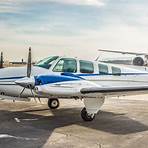 September 16, 1998, a twin-engine Beach 58, operated by the Wisconsin DOA (Department of Administration), crashed near Oakdale in eastern Monroe County. The pilot and two DNR (Department of Natural Resources) employees took off at 6:53 a.m. from Madison’s Dane County Airport intending to fly to Burnett County Airport near Siren, Wisconsin.
At 7:39 a.m., the highly experienced (14,800 hours) 52-year-old pilot, at 8,100 feet altitude, radioed controllers that there was smoke in the cabin that was coming out of a heater. He was in contact with the Volk Field control tower and was advised he could land at Volk Field or the Tomah airport. The aircraft crashed in a cranberry bog about one mile south southeast of Oakdale, Wisconsin and about five miles from Volk Field with its 9,000-foot runway and six miles from the Tomah Airport that has a 3,900-foot runway. Either could handle the distressed aircraft. Two separate witnesses later told investigators they saw black smoke trailing out of the back of the plane that was at about 500 feet altitude. The plane crashed in a cranberry bog and there were no survivors.
A jet engine on fire is not a catastrophic situation on large passenger planes. The first action is to reduce the thrust to idle. Then fuel to the engine is shut off. Most modern jet engines have a built-in fire extinguisher system. Not so on small twin and single engine aircraft and certainly not on a propeller-driven plane like the Beach 58.
All aircraft accidents are investigated by the NTSB (National Transportation Safety Board). This Beach 58 had an inflatable weather-tight door seal installed that was designed to keep water out of the plane when sitting outside and exposed to the elements. A small electric pump inflated the seal. Apparently, a hot resistor started the black seal material burning, filling the plane with smoke.
Pilots of small aircraft are cautioned to get the plane on the ground ASAP at the first indication of fire or smoke. That could mean landing in a field or attempting to land on a highway. A cockpit can fill up with smoke very quickly.
Modern large aircraft are equipped with advanced fire detection systems, including smoke detectors, heat sensors, and fire suppression equipment, but there are no guarantees. ValuJet Airlines Flight 592 was a regularly scheduled flight from Miami to Atlanta. On May 11, 1996, the DC-9 crashed into the Florida Everglades about ten minutes after departing Miami as a result of a fire in the cargo compartment caused by mislabeled and improperly stored hazardous cargo (oxygen generators). All 110 people on board perished.
On September 2, 1998, fire caused by an electrical short circuit in the cockpit wiring led to the crash of Swissair Flight 111 off the coast of Nova Scotia, Canada. The crew’s inability to control the fire due to smoke and loss of critical systems resulted in the loss of all 229 lives on board.
 Larry Scheckel